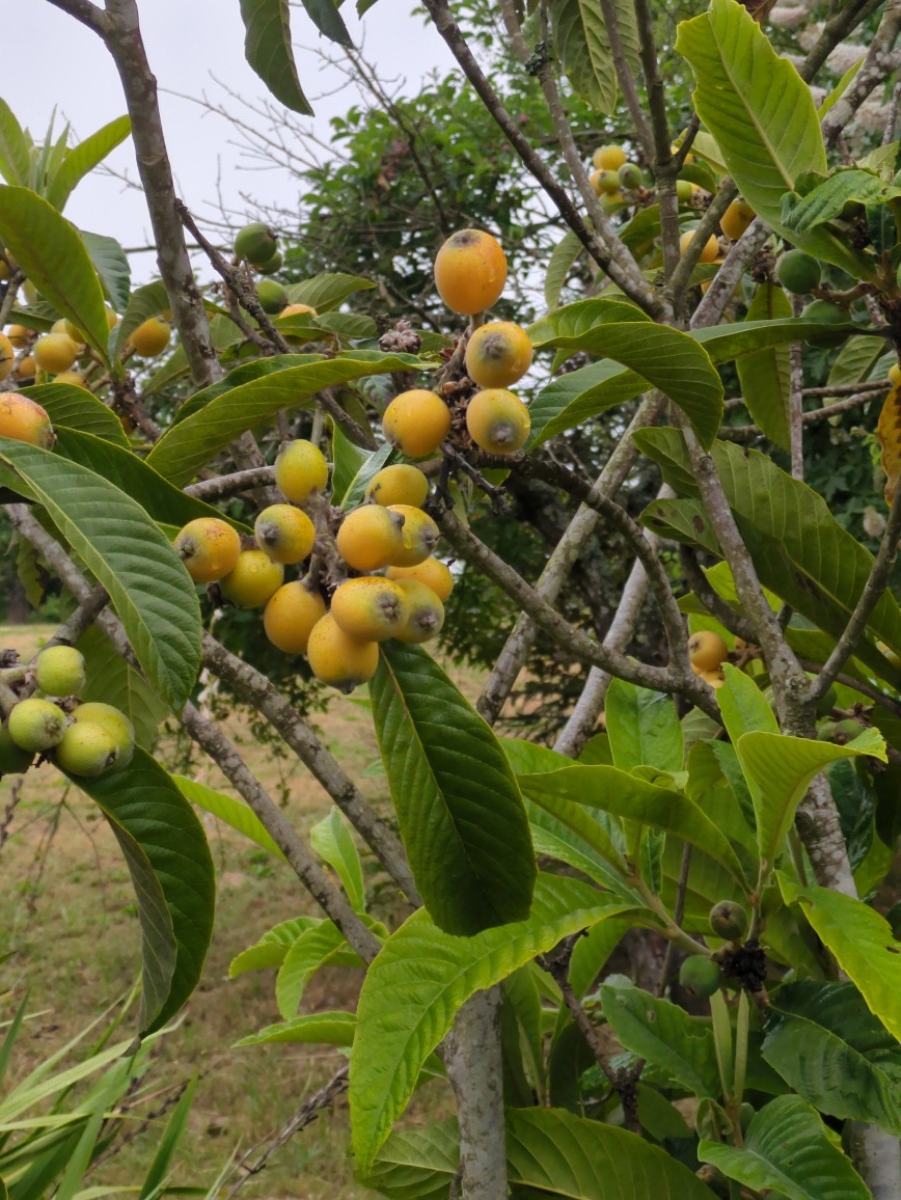
2015 Garth Wadsworth 2023 John Malpas 2023 John Malpas 2023 John Malpas 2010 Daniel Gluesenkamp 2023 John Malpas 2024 Ron Vanderhoff 2024 Ron Vanderhoff 2024 Ron Vanderhoff 2024 Ron Vanderhoff 2024 Ron Vanderhoff 2015 Zoya Akulova
Eriobotrya japonica is a tree that is not native to California.
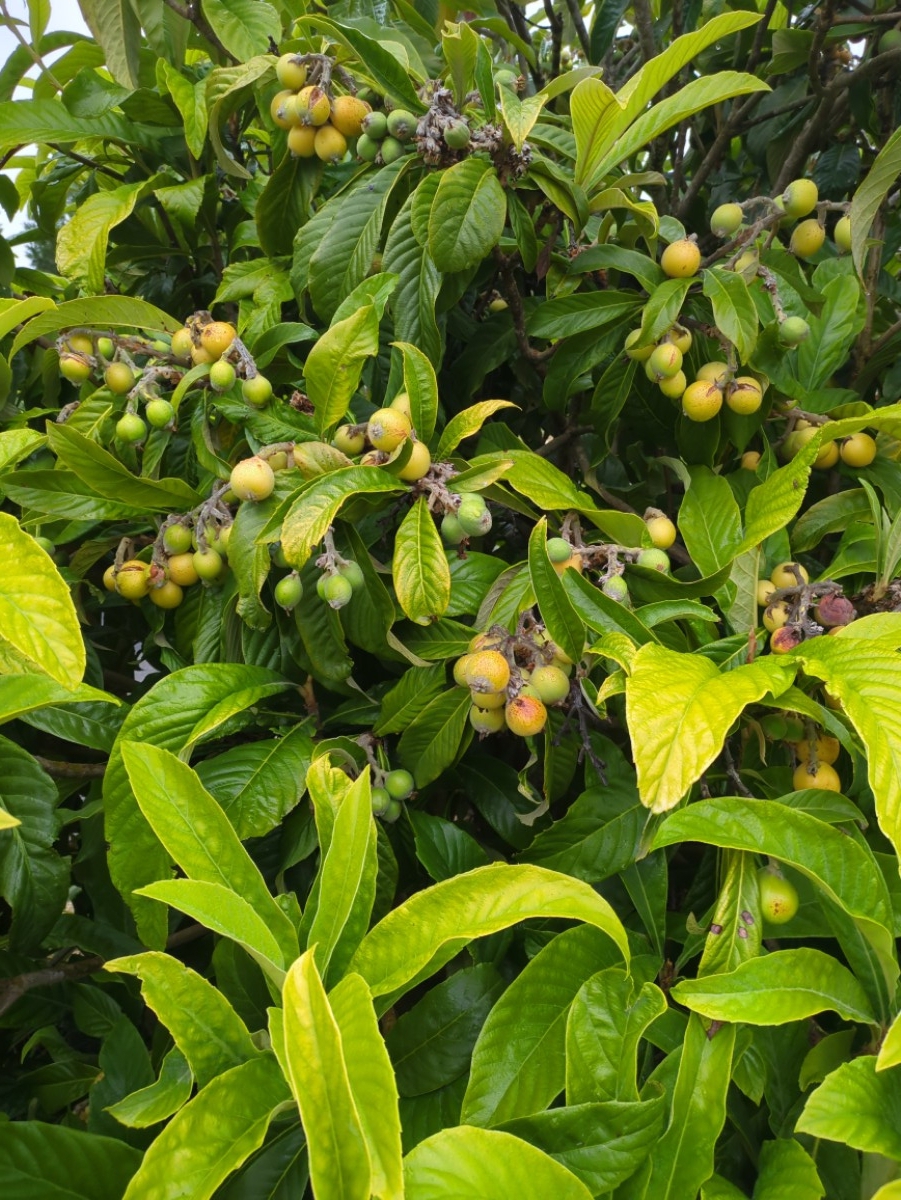
[Wikipedia] China native, Etymology, Description: The loquat (Eriobotrya japonica) is a large evergreen shrub or tree grown commercially for its orange fruit and for its leaves, which are used to make herbal tea. It is also cultivated as an ornamental plant.
The loquat is in the family Rosaceae and is native to the cooler hill regions of south-central China.[2][3] In Japan, the loquat has been grown for over 1,000 years. It has been introduced to regions with subtropical to mild temperate climates throughout the world.[4][5]
Eriobotrya japonica was formerly thought to be closely related to the genus Mespilus and is still sometimes mistakenly known as the Japanese medlar. It is also known as Japanese plum[6] and Chinese plum.[7]
Etymology
Loquat
Chinese name
Traditional Chinese ??
Simplified Chinese ??
Transcriptions
Modern Chinese name
Chinese ??
Transcriptions
Japanese name
Kanji ??
Kana ??
Transcriptions
The name loquat derives from Cantonese lou4 gwat1 (Chinese: ??; pinyin: lújú; lit. 'black orange'). The phrase 'black orange' originally referred to unripened kumquats, which are dark green in color, but the name was mistakenly applied to the loquat by the ancient Chinese poet Su Shi when he was residing in southern China, and the mistake was widely taken up by the Cantonese region thereafter.[citation needed]
Description
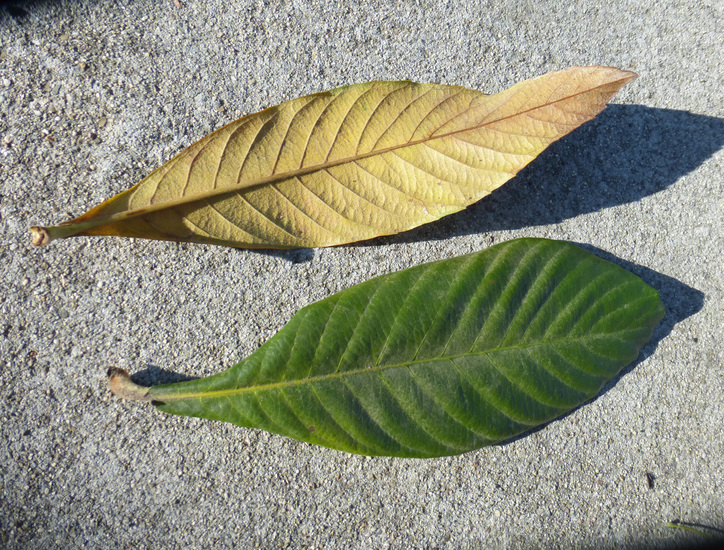
A loquat leaf, shown at a high magnification, illustrating the general appearance of the leaf and the structure of the venation
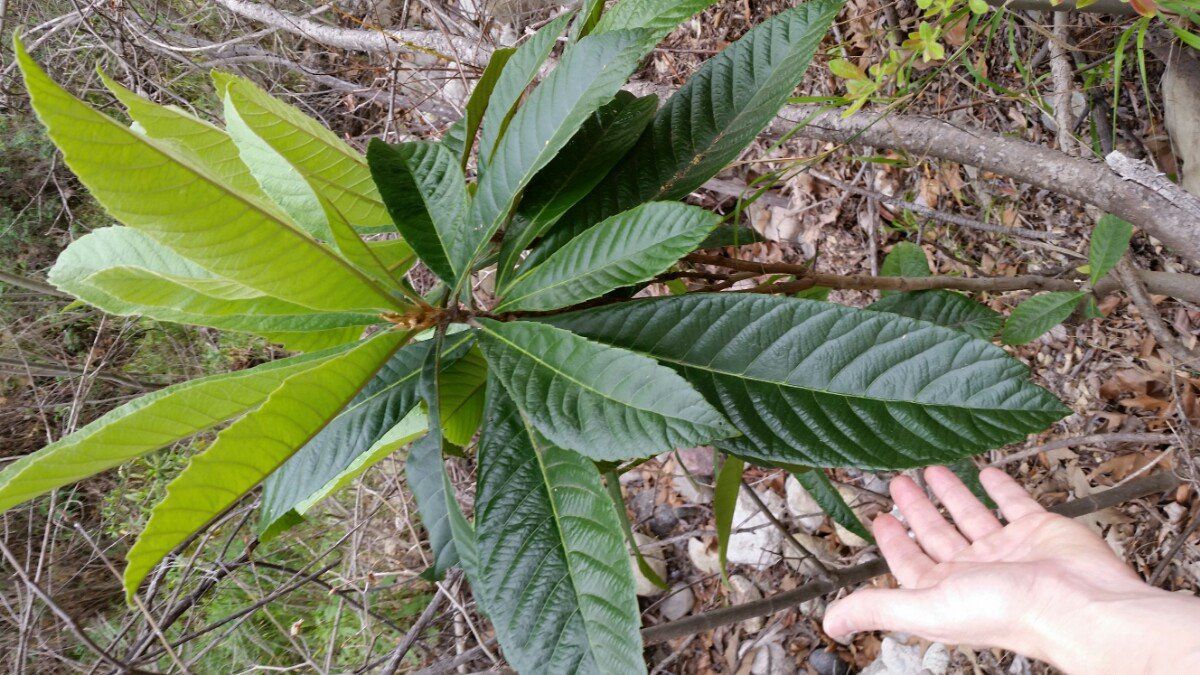
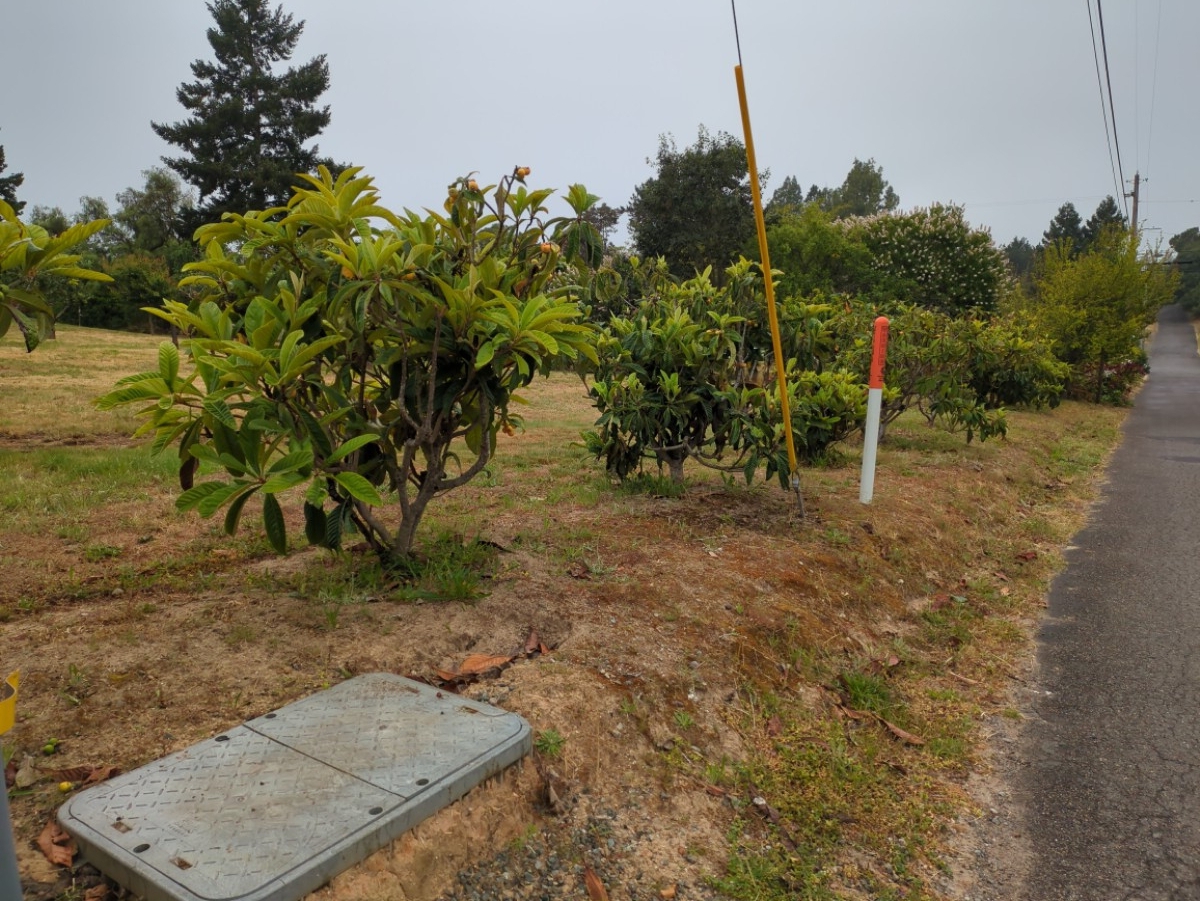
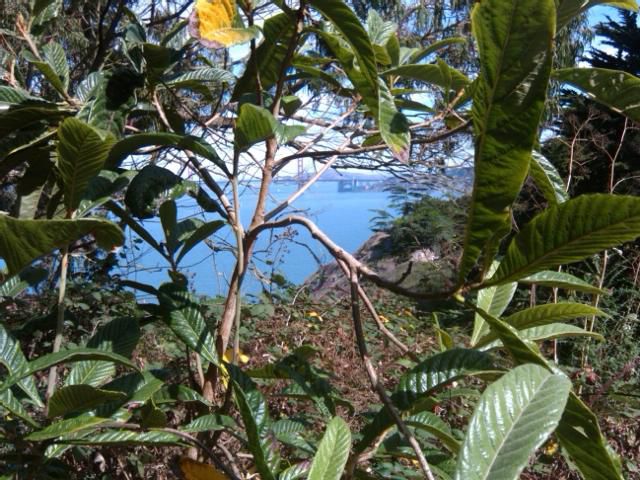
E. japonica is a large, evergreen shrub or small tree, with a rounded crown, short trunk, and woolly new twigs. The tree can grow to 5?10 m (16?33 ft) tall but is often smaller, about 3?4 m (10?13 ft). The fruit begins to ripen during spring to summer, depending on the temperature in the area. The leaves are alternate, simple, 10?25 cm (4?10 in) long, dark green, tough and leathery in texture, with a serrated margin, and densely velvety-hairy below with thick yellow-brown pubescence; the young leaves are also densely pubescent above, but this soon rubs off. (link added by Mary Ann Machi)
/app/up/mg/29/th/mg8789-0.jpg:!/app/up/mg/697/th/mg209144-3.jpg?a:!/app/up/mg/697/th/mg209144-2.jpg?a:!/app/up/mg/697/th/mg209144-0.jpg?b:!/app/up/cbo/8/th/1687.jpg:!/app/up/mg/697/th/mg209144-1.jpg?a:!/app/up/io/472/th/io141601-2.jpg:!/app/up/io/472/th/io141601-1.jpg:!/app/up/io/472/th/io141601-0.jpg:!/app/up/io/467/th/io140324-1.jpg:!/app/up/io/467/th/io140324-0.jpg:!0000 0000 1215 3363:!
2015 Garth Wadsworth:!2023 John Malpas:!2023 John Malpas:!2023 John Malpas:!2010 Daniel Gluesenkamp:!2023 John Malpas:!2024 Ron Vanderhoff:!2024 Ron Vanderhoff:!2024 Ron Vanderhoff:!2024 Ron Vanderhoff:!2024 Ron Vanderhoff:!2015 Zoya Akulova:!
mg8789:!mg209144:!mg209144:!mg209144:!cbo1687:!mg209144:!io141601:!io141601:!io141601:!io140324:!io140324:!null:!
Suggested Citation
Calflora:
Information on California plants for education, research and conservation,
with data contributed by
public and private institutions and individuals.
[web application]. 2024. Berkeley, California:The Calflora Database
[a non-profit organization].Available:
https://www.calflora.org/(Accessed: 10/23/2024).