Calflora Taxon Report
Thuja plicata Donn ex D. Don
Western red cedar
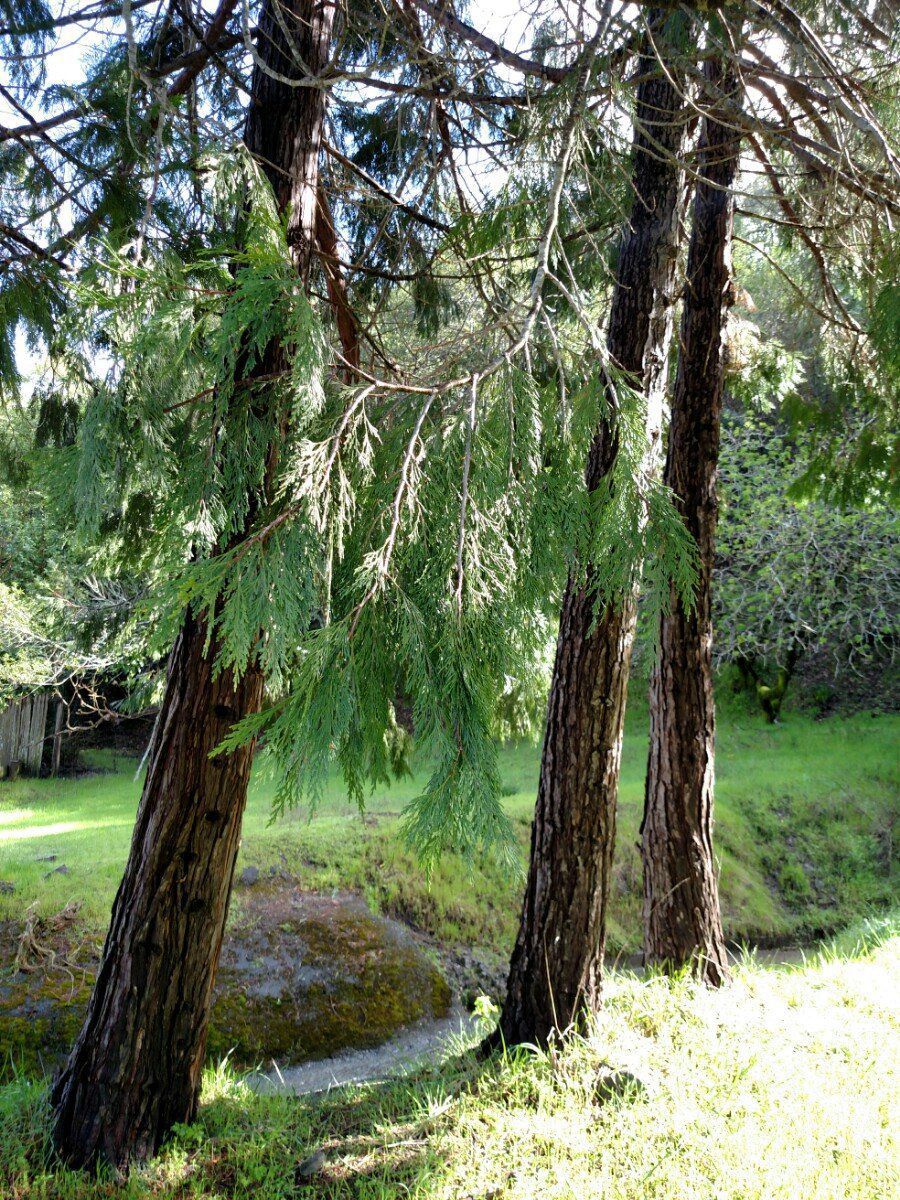
Thuja plicata is a tree that is native to California, and also found elsewhere in North America and beyond.

Alternate Names and Sources:
None
Siskiyou Del Norte Modoc Humboldt Shasta Lassen Trinity Plumas Tehama Butte Mendocino Glenn Sierra Yuba Lake Nevada Colusa Placer Sutter El Dorado Yolo Alpine Napa Sonoma Sacramento Mono Amador Solano Calaveras Tuolumne San Joaquin Marin Contra Costa Alameda Santa Cruz Mariposa Madera San Francisco San Mateo Merced Fresno Stanislaus Santa Clara Inyo San Benito Tulare Kings Monterey San Bernardino San Luis Obispo Kern Santa Barbara Ventura Los Angeles Riverside Orange San Diego Imperial
DJJJASONAFMM

Bloom Period
The blue points on the map indicate observations in Calflora.
Click on the map to view observations within a specific county.


Accepted by: JEPS + PLANTS + POWO
Jepson eFlora section:
gymnosperm
USDA PLANTS group:
Gymnosperm

Equally likely to occur in wetlands and non wetlands
North Coastal Coniferous Forest, wetland-riparian

[Wikipedia] Indigenous People Uses: Indigenous peoples of the Pacific Northwest use the wood of this species for many purposes, such as building canoes, totem poles, and tools. The bark is harvested by indigenous peoples and processed into a fiber, which they use to make items such as rope, baskets, clothing, and rain hats. Because of its wide range of uses, the species is of great cultural importance to these people. (link added by Mary Ann Machi)

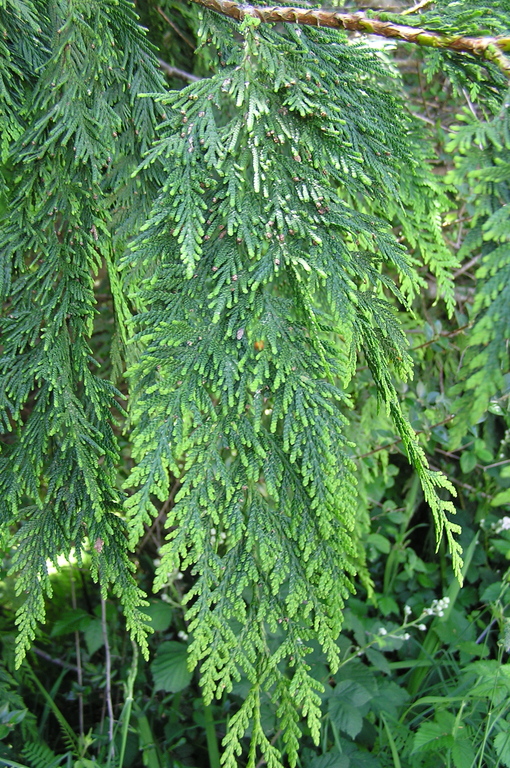
[Wikipedia] Etymology: The species name plicata derives from the Latin word plicare and means 'folded in plaits' or 'braided,' a reference to the pattern of its small leaves. (link added by Mary Ann Machi)

[srs.fs.usda.gov] Range: Western redcedar grows along the Pacific coast from Humboldt County, CA (lat. 40° 10' N.), to the northern and western shores of Sumner Strait in southeastern Alaska (lat. 56° 30' N.). In California, it is common only in the lower Mad River drainage and the wet region south of Ferndale in Humboldt County; it is found elsewhere only in isolated stands in boggy habitats (19). North of the California-Oregon border, the coastal range broadens to include the western slopes of the Cascade Range north of Crater Lake and the eastern slopes north of about latitude 44° 30' N. (12). Optimal growth and development of western redcedar are achieved near the latitudinal center of its range- Washington's Olympic Peninsula. (link added by Mary Ann Machi)

Suggested Citation
“Calflora - Taxon Report.” The Calflora Database, a non-profit organization. .

Accessed:
My Calflora My Observations Add Observations Phone Applications Donate to Calflora HOME About Calflora NEWS Search for Plants Observation Search What Grows Here? Planting Guide NRCS eVegGuide Weed Manager Contact Calflora