Streptanthus bernardinus is a perennial herb that is native to California, and also found in Baja California.
California Rare Plant Rank: 4.3 (limited distribution).
[Wikipedia] Distribution, Description: Streptanthus bernardinus is a species of flowering plant in the mustard family known by the common name Laguna Mountains jewelflower, or Laguna Mountain jewelflower.[1]
Distribution
It is native to southern California and northern Baja California, where it grows in the Transverse Ranges around Los Angeles and the Peninsular Ranges to the south, including the Laguna Mountains east of San Diego and the Sierra de Juarez and Sierra de San Pedro Mártir of Baja. Its habitat includes temperate coniferous forest and chaparral on mountain slopes.
Description
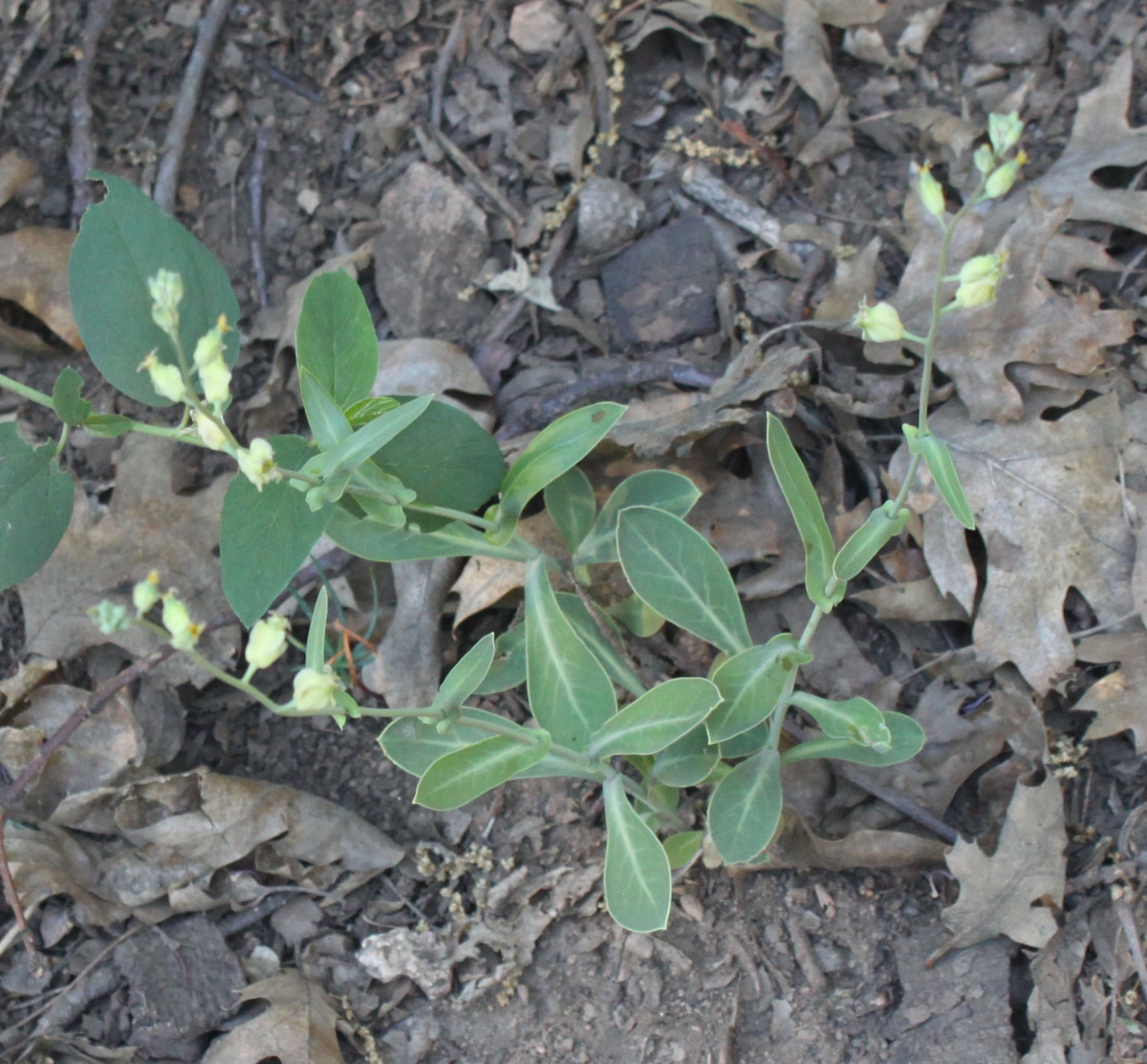
Streptanthus bernardinus is a perennial herb growing from a woody caudex and producing an erect stem up to 60 to 80 centimeters tall. It is hairless and sometimes waxy in texture. The basal leaves are widely lance-shaped and up to 8 centimeters long by 2.5 wide. They are borne on petioles. Narrower lance-shaped leaves occur higher on the stem and may clasp the stem at their bases.
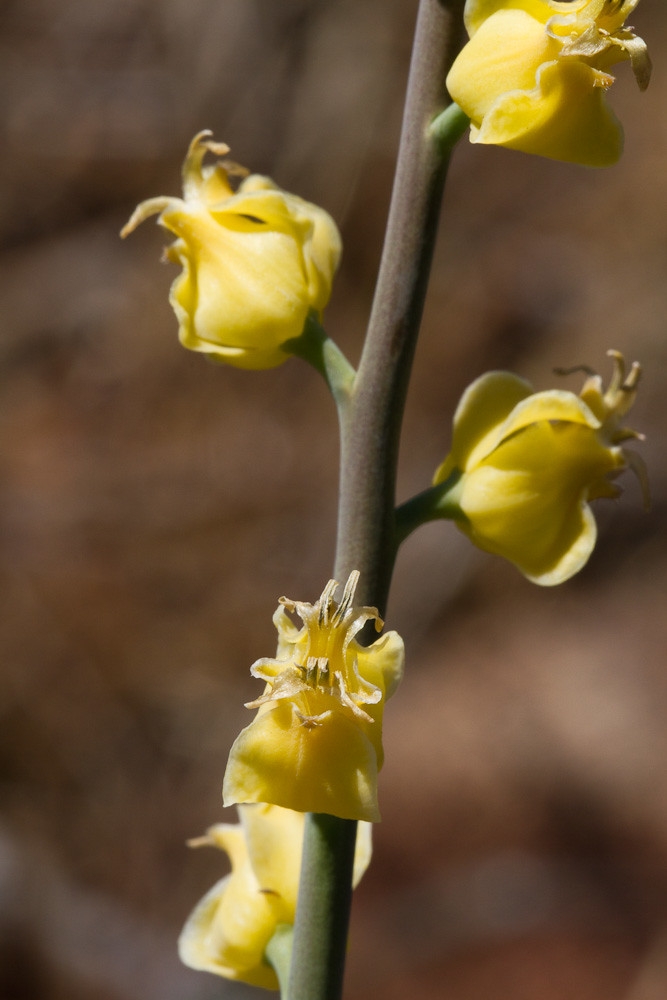
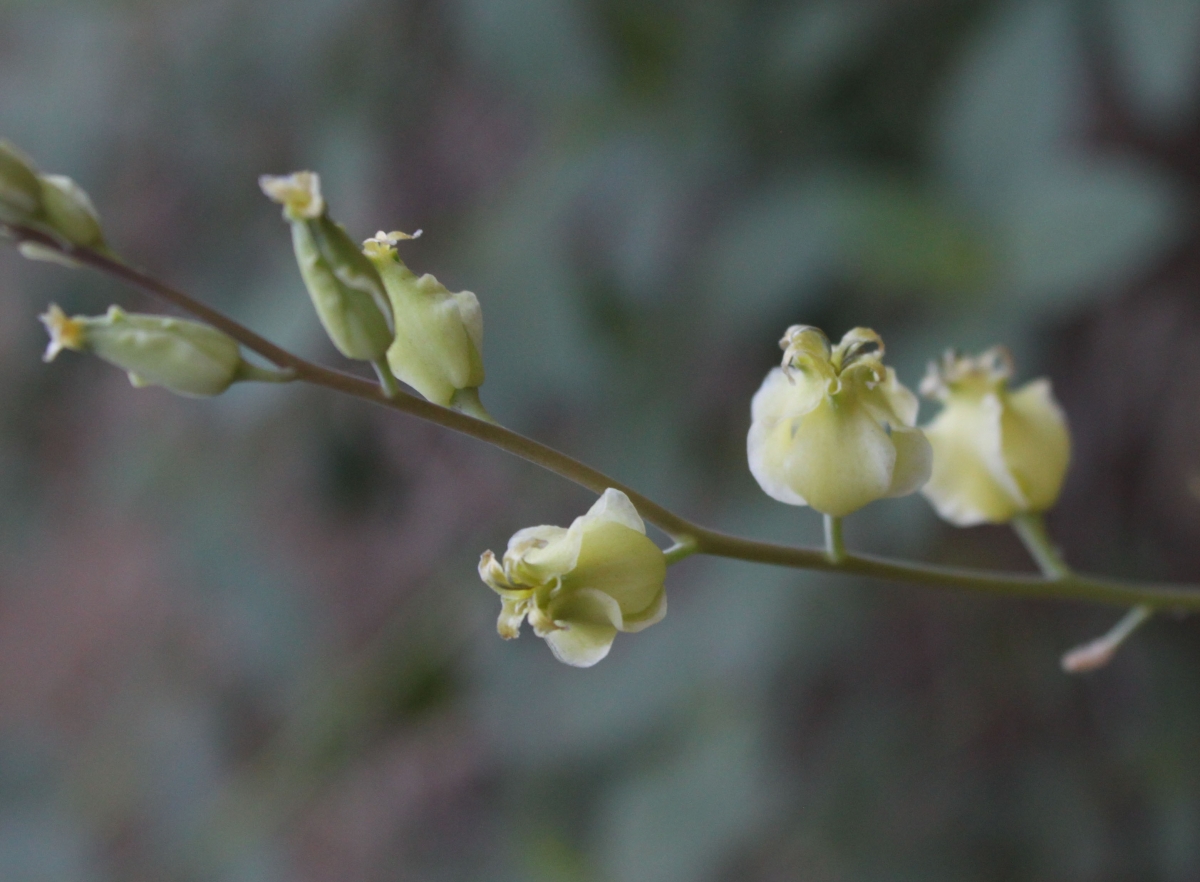
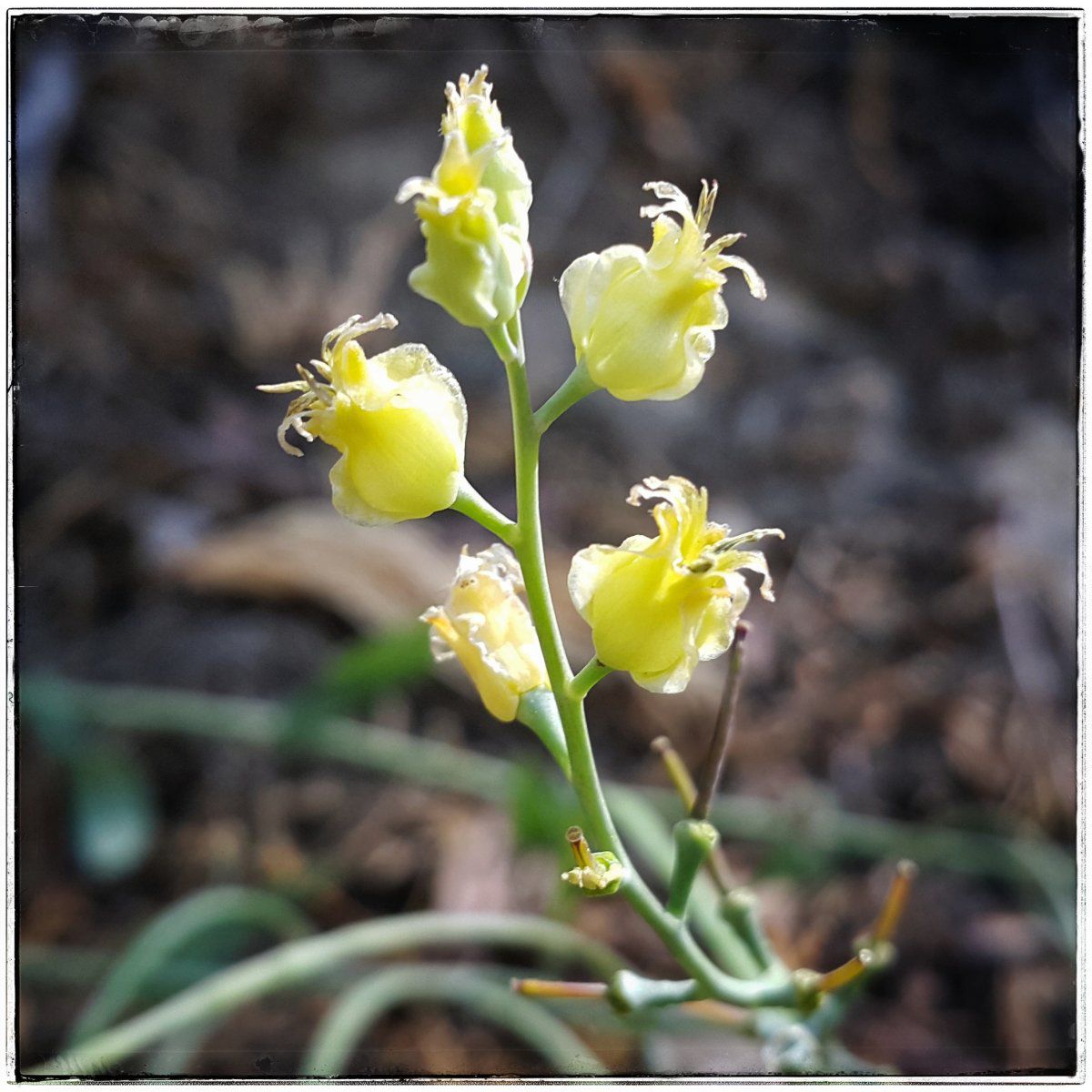
Flowers occur at intervals along the upper stem. Each has a bell-shaped calyx of greenish to yellow or white sepals just under a centimeter long. White petals emerge from the tip. The fruit is a thin, narrow silique which may be 8 to 12 centimeters in length or longer. (link added by Mary Ann Machi)
Calflora:
Information on California plants for education, research and conservation,
with data contributed by
public and private institutions and individuals.
[web application]. 2024. Berkeley, California:The Calflora Database
[a non-profit organization].Available:
https://www.calflora.org/(Accessed: 10/23/2024).



 one or more occurrences