2020 Hunter Breck 2012 Aaron Schusteff 2019 David Greenberger 2017 Hunter Breck 2019 Hunter Breck 2012 Aaron Schusteff 2023 Morgan Cantrell 2017 Hunter Breck 2019 Hunter Breck 2017 David Greenberger 2015 Vernon Smith
Streptanthus batrachopus is an annual herb that is native to California, and endemic (limited) to California.
California Rare Plant Rank: 1B.3 (rare, threatened, or endangered in CA and elsewhere).
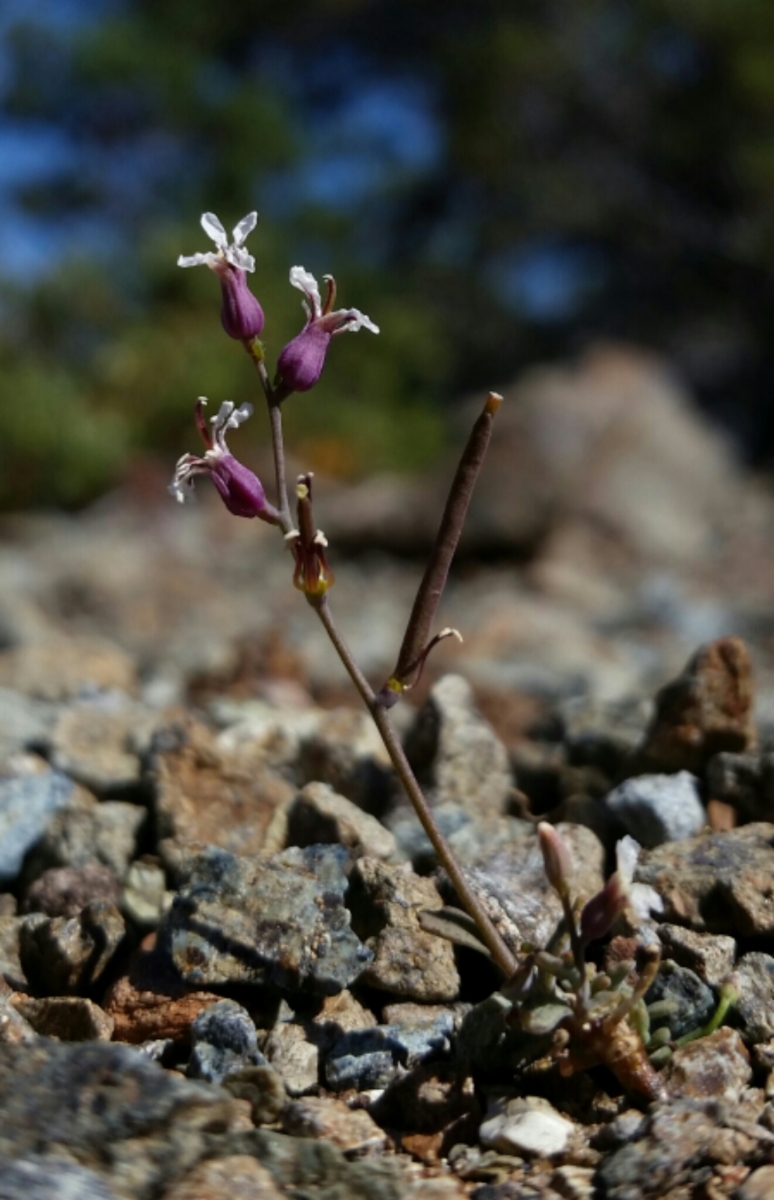
[Wikipedia] Description, Rarity: Streptanthus batrachopus is a rare species of flowering plant in the mustard family known by the common name Mt. Tamalpais jewelflower.[1] It is endemic to Marin County, California, where it is known only from Mt. Tamalpais and surrounding terrain. There are fewer than ten known occurrences.[2]
Its habitat includes chaparral and coniferous forest, generally on serpentine soils.
Description
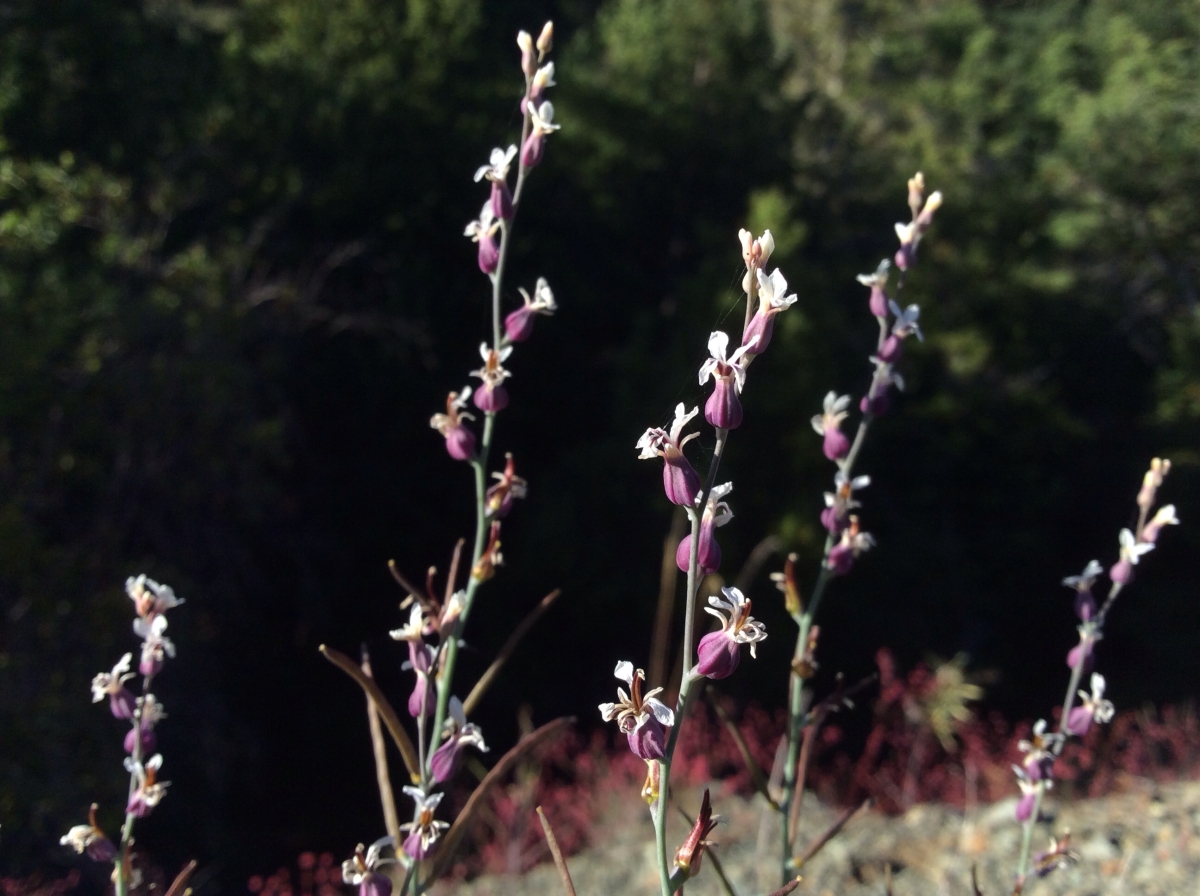
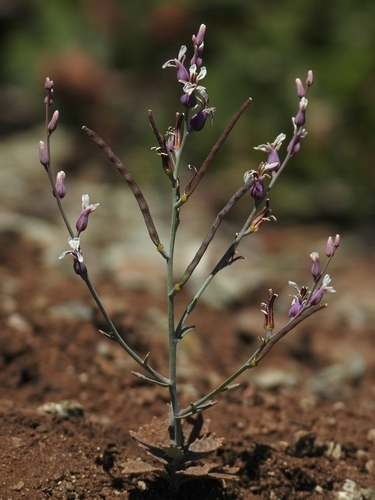
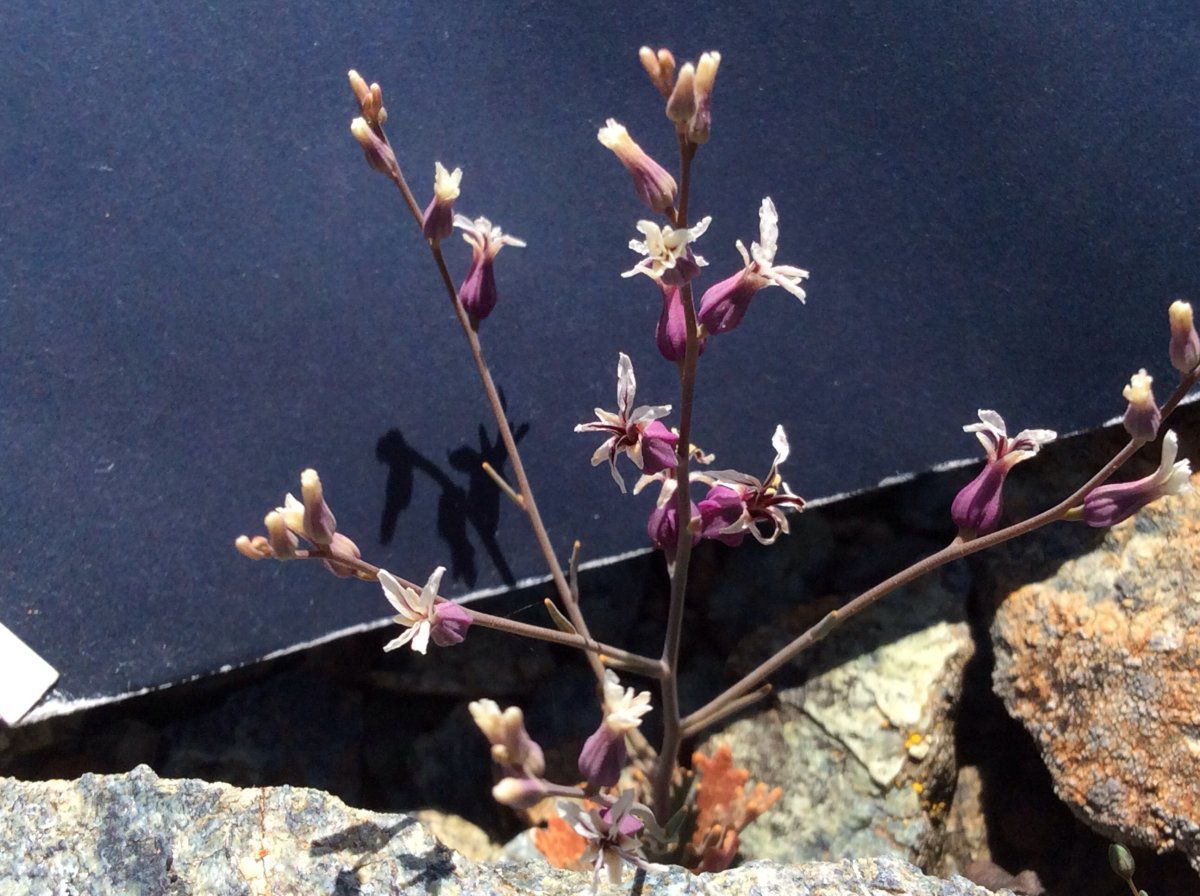
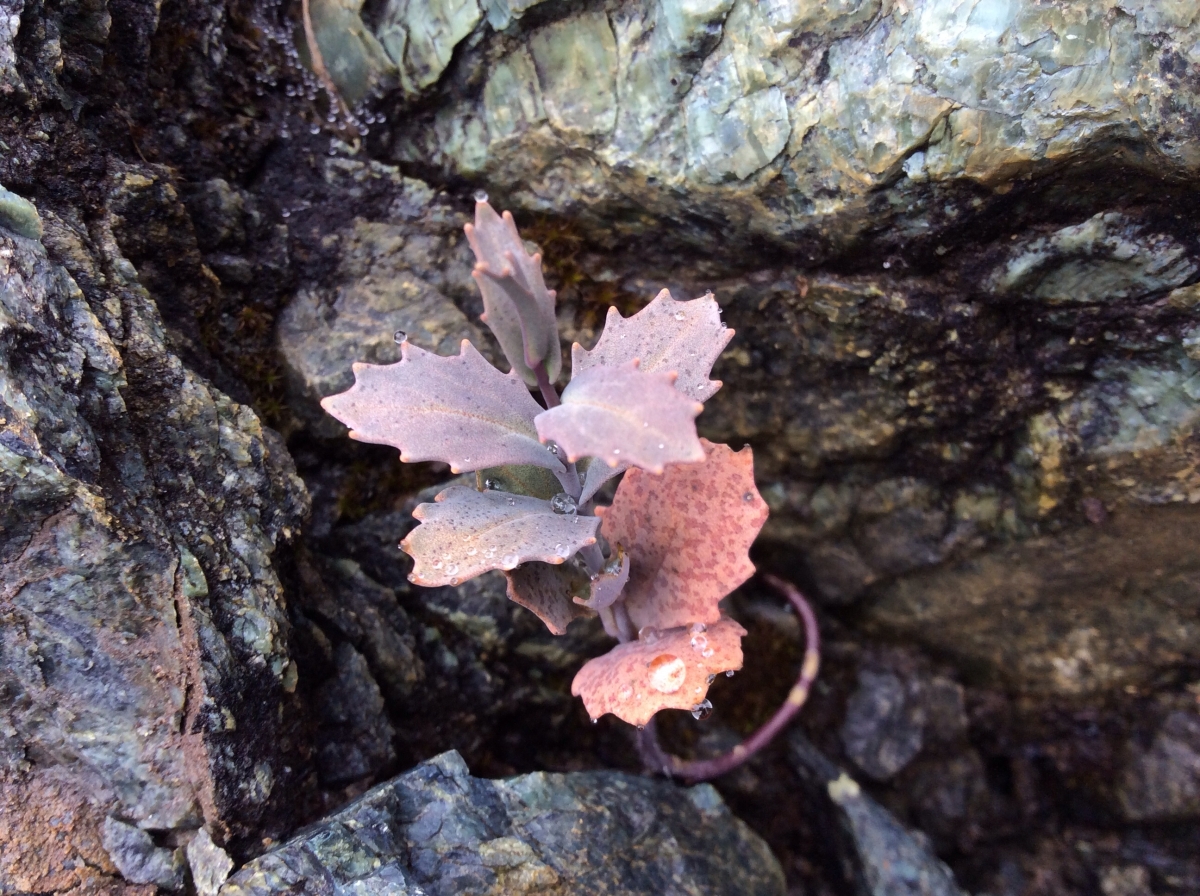
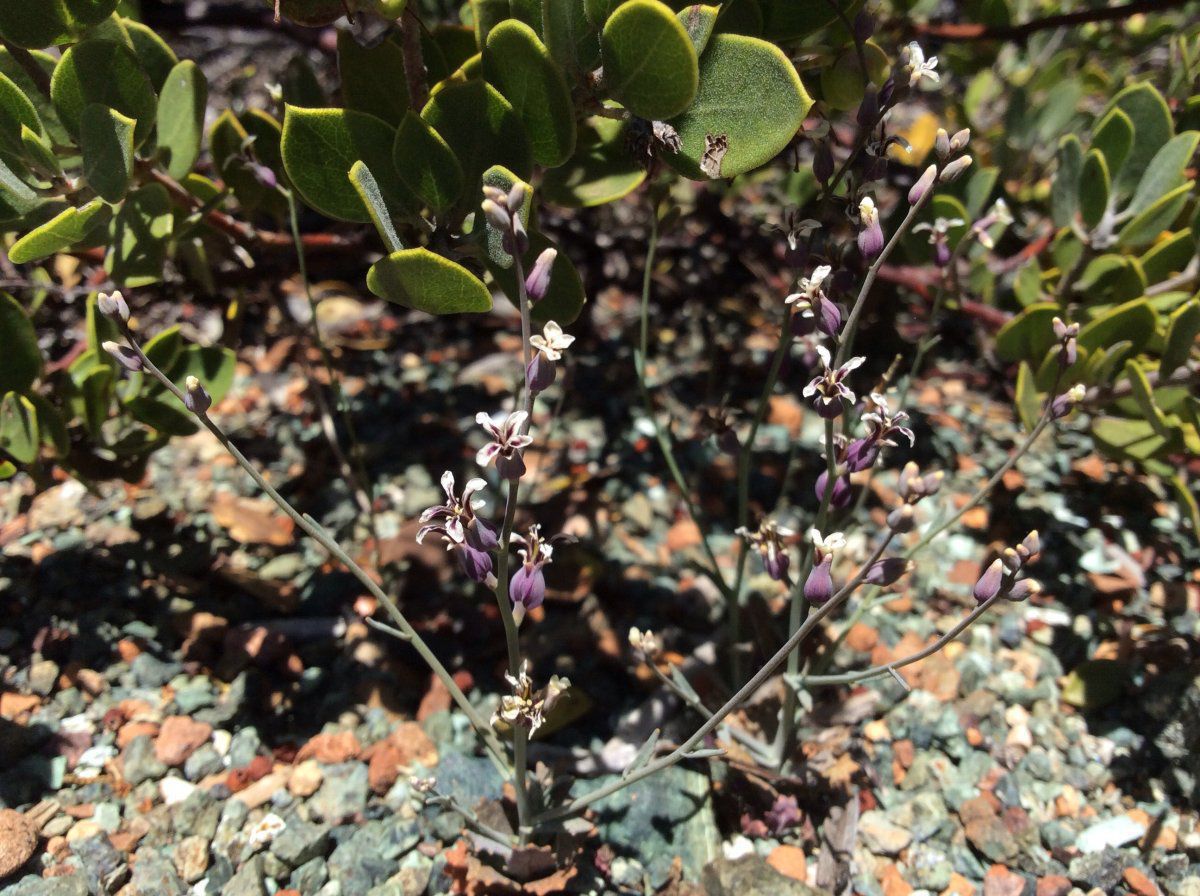
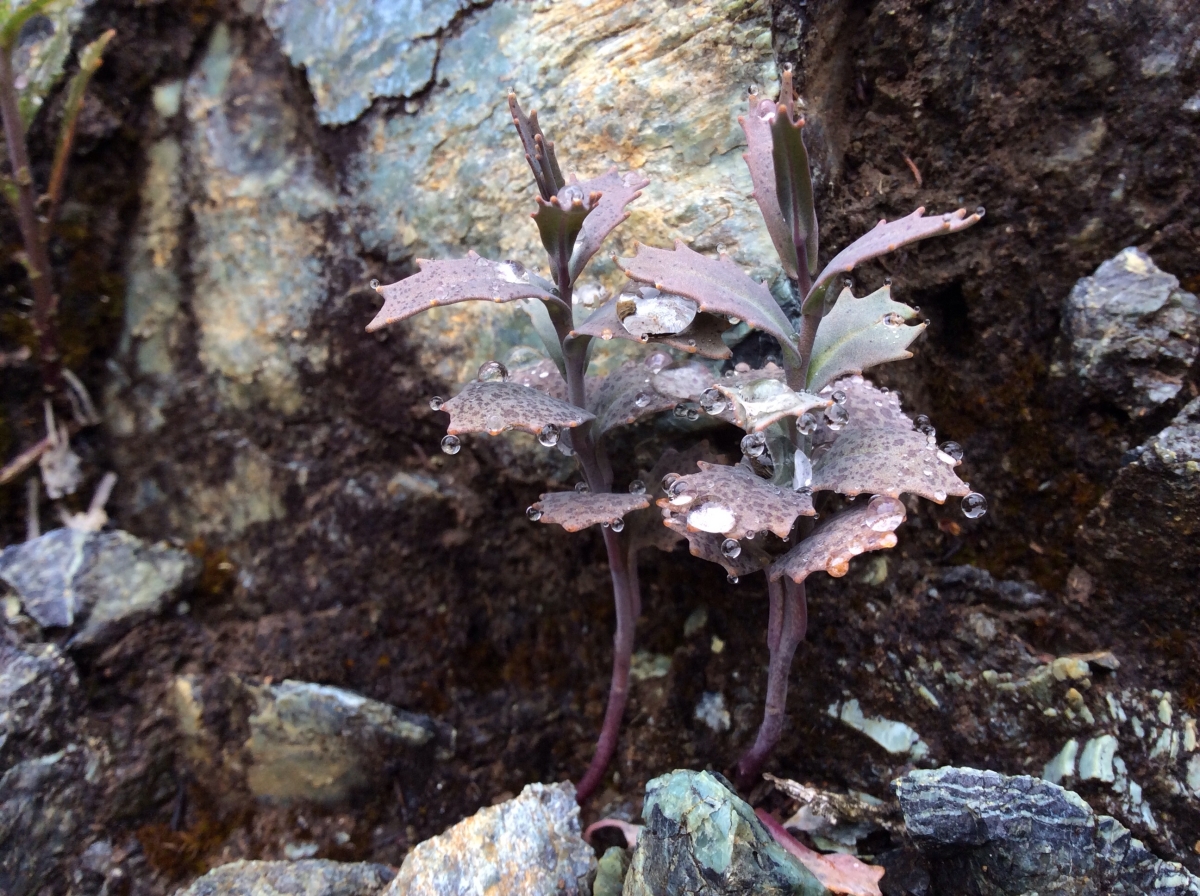
It is an annual herb producing a branching or unbranched stem up to about 20 centimeters in maximum height or slightly taller. Leaves near the base of the stem are oval or lance-shaped with toothed edges, somewhat fleshy in texture with a mottled pattern, and no more than 2 to 3 centimeters long. Leaves farther up the stem are lance-shaped.
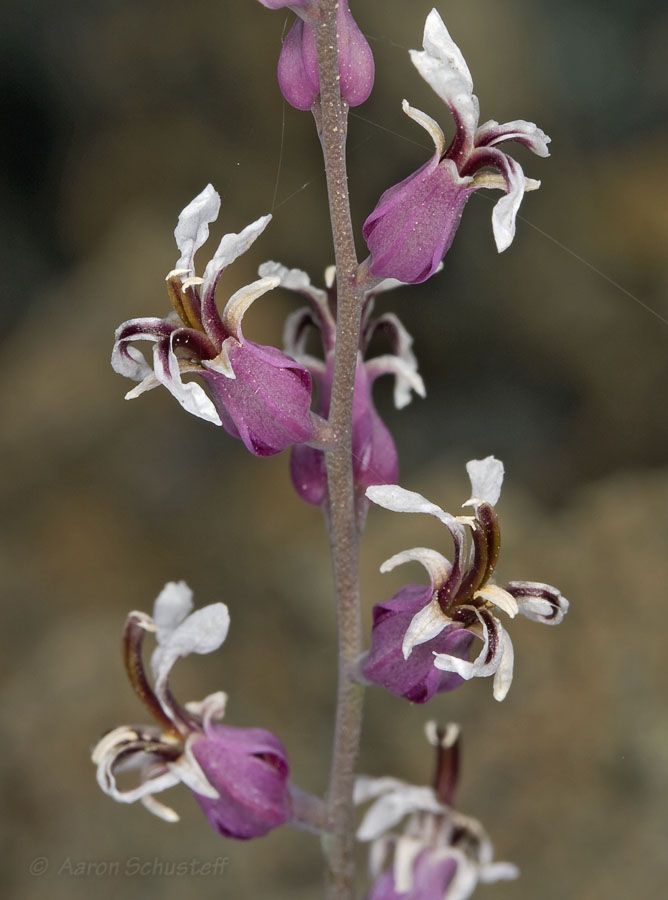
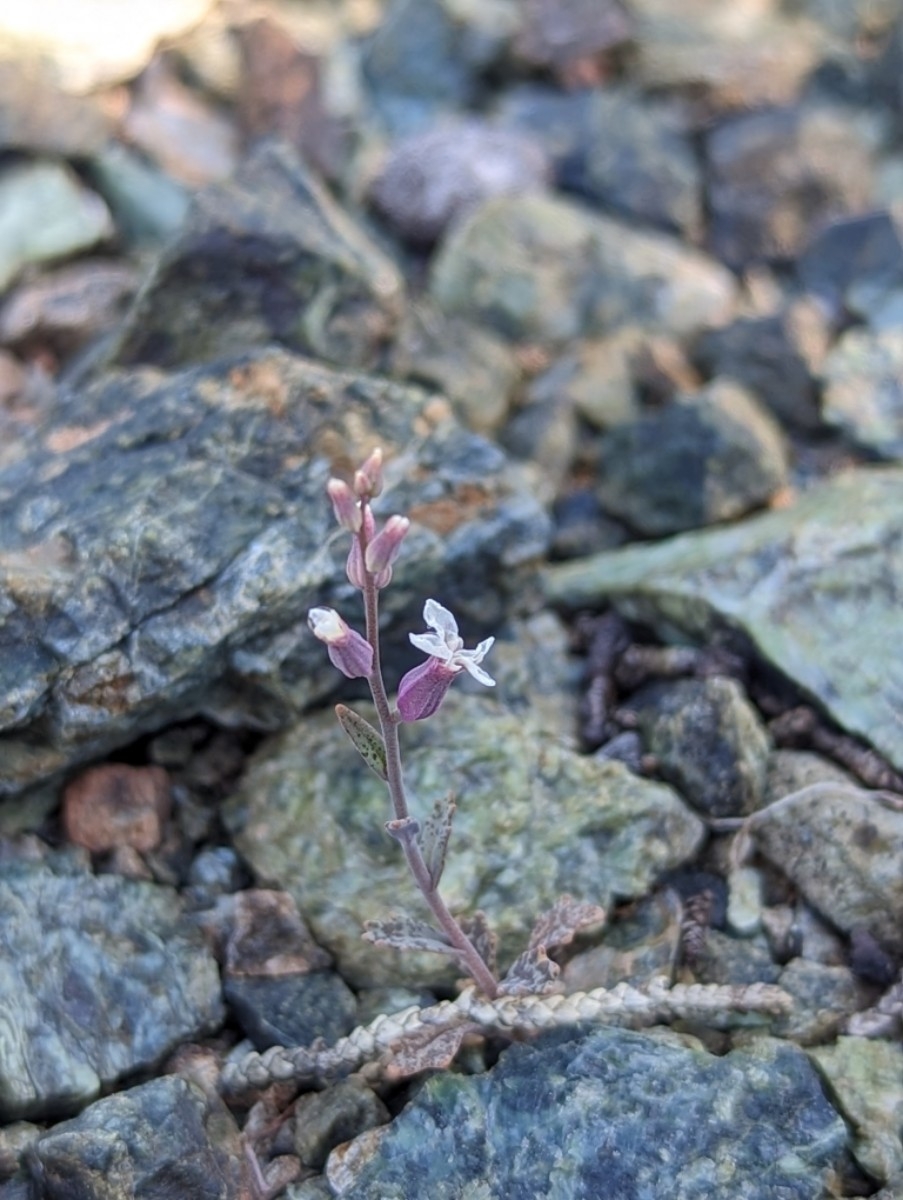
Flowers occur at intervals along the upper stem. Each has an urn-shaped calyx of purple or greenish sepals up to half a centimeter long. Purple or purple-streaked white petals emerge from the tip. The fruit is a straight or curving silique up to 3 centimeters in length. (link added by Mary Ann Machi)
/app/up/entry/182/th/54839.jpg:!0000 0000 0512 2421:!/app/up/entry/238/th/71452.jpg:!/app/up/mg/33/th/10136.jpg:!/app/up/entry/93/th/28174.jpg:!0000 0000 0512 2417:!/app/up/mg/683/th/mg205186-0.jpg:!/app/up/io/36/th/10996.jpg:!/app/up/entry/93/th/28173.jpg:!/app/up/entry/658/th/197480.jpg:!0000 0000 0615 1546:!
2020 Hunter Breck:!2012 Aaron Schusteff:!2019 David Greenberger:!2017 Hunter Breck:!2019 Hunter Breck:!2012 Aaron Schusteff:!2023 Morgan Cantrell:!2017 Hunter Breck:!2019 Hunter Breck:!2017 David Greenberger:!2015 Vernon Smith:!
po161440:!null:!wb2112-80:!po29124:!po133008:!null:!mg205186:!po36471:!po133008:!wb1780-35:!null:!
Suggested Citation
Calflora:
Information on California plants for education, research and conservation,
with data contributed by
public and private institutions and individuals.
[web application]. 2024. Berkeley, California:The Calflora Database
[a non-profit organization].Available:
https://www.calflora.org/(Accessed: 07/26/2024).




 one or more occurrences