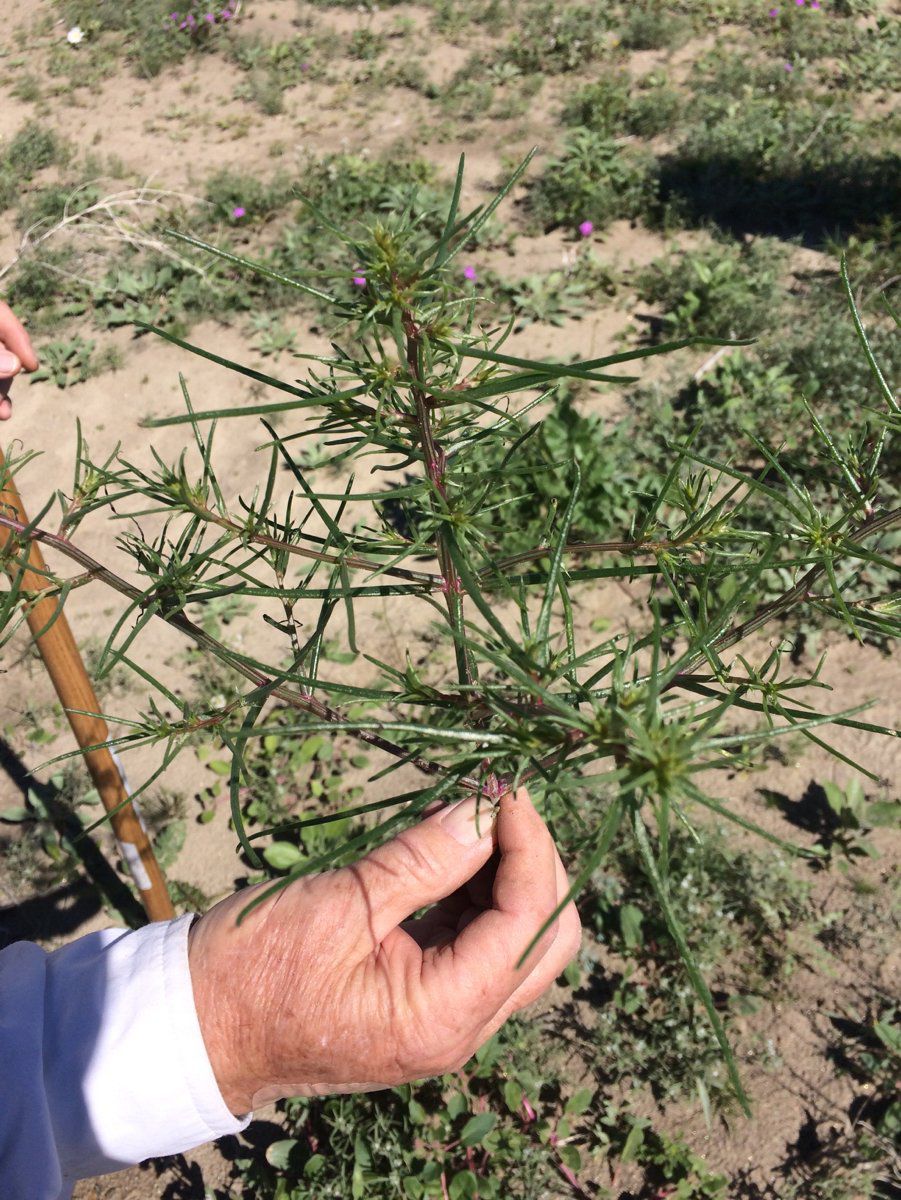
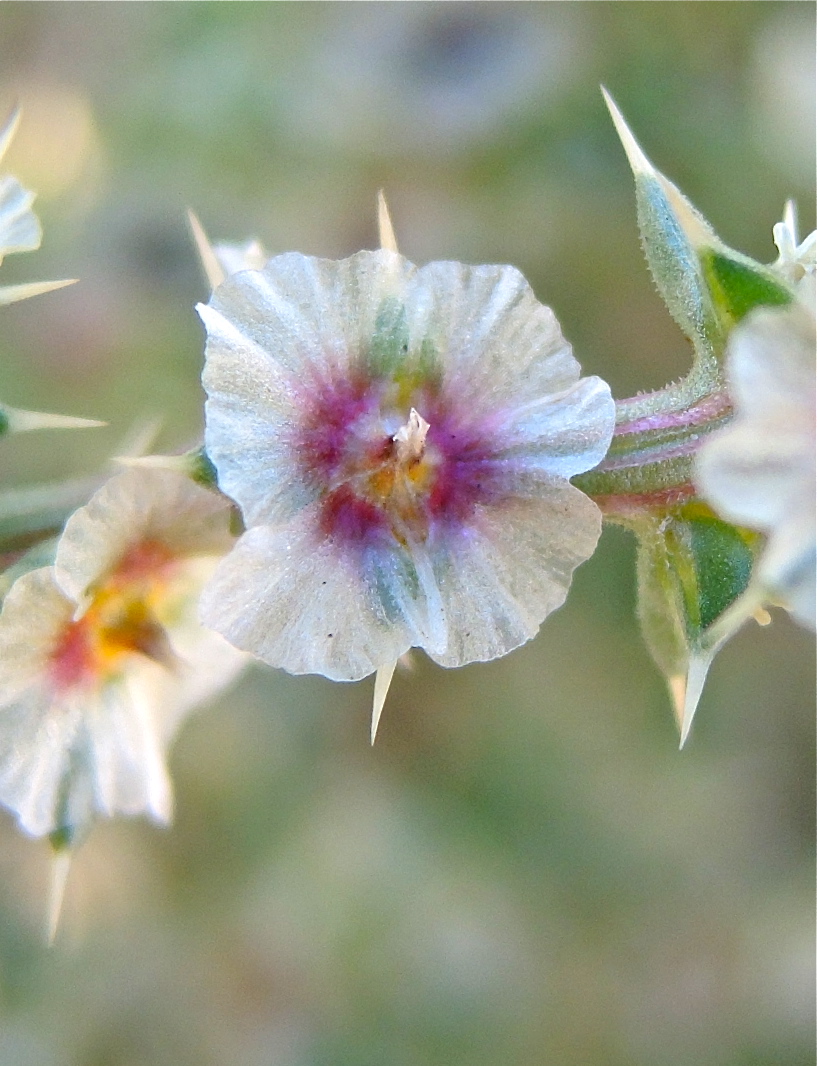
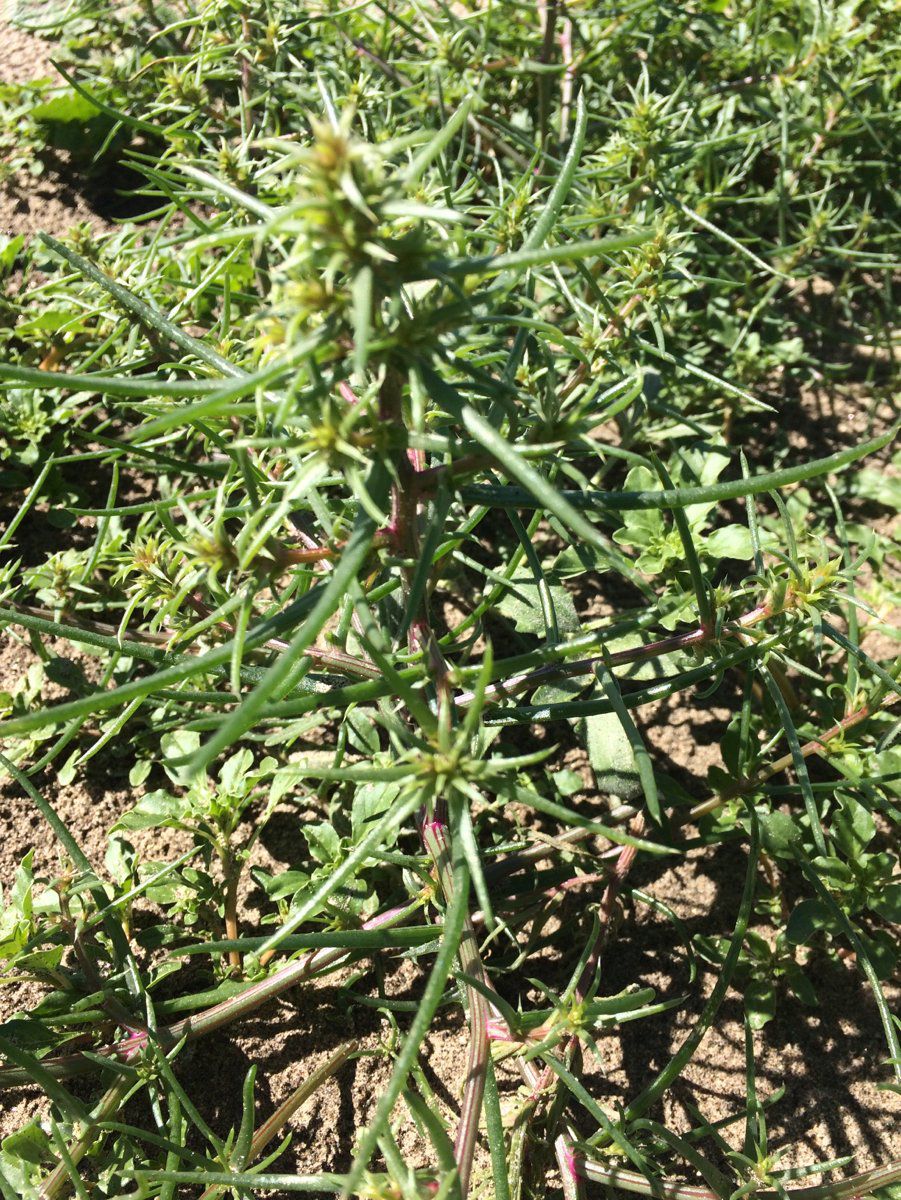
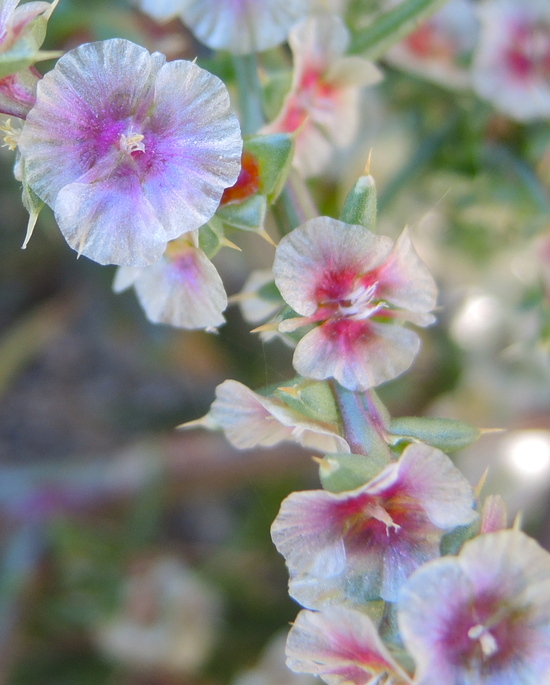
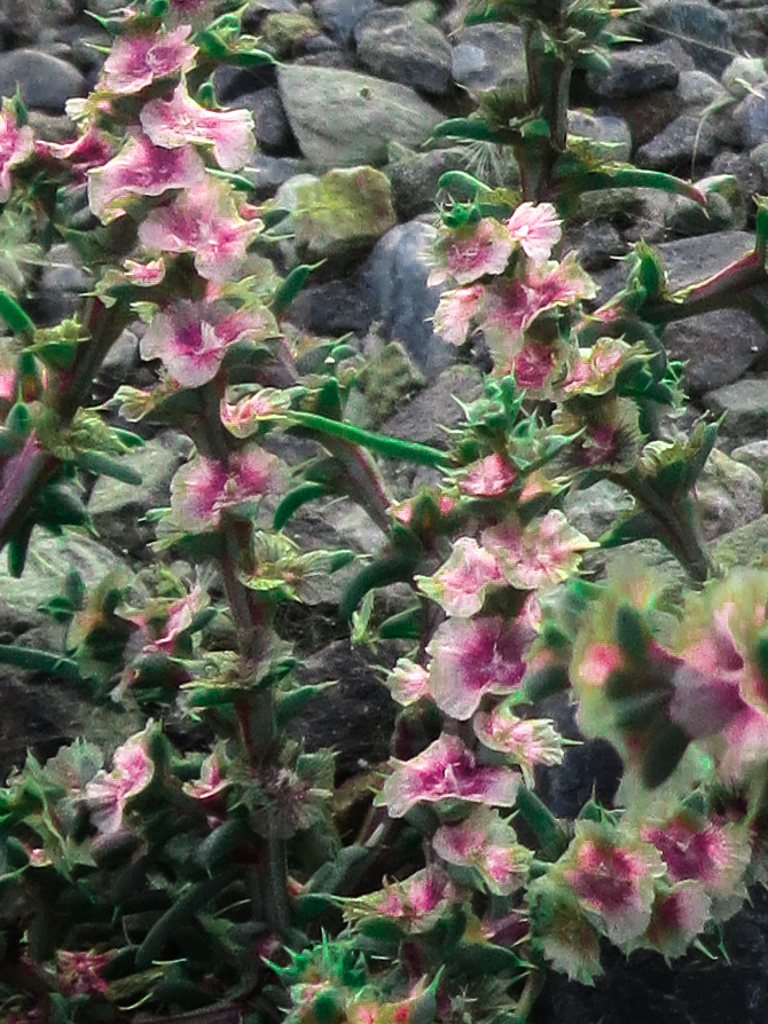
[cal-ipc.org] Europe & Asia Native, Habitat, Control Methods: Salsola paulsenii (barbwire Russian thistle) is a bushy annual (family Chenopodiaceae) found throughout the Mojave Desert of California. It is native to southeastern Europe, central Asia. It prefers loose, sandy soils in desert scrub and disturbed areas, such as roadsides and cultivated fields. Barbwire Russian thistle is easily confused with Russian thistle (Salsola tragus), and the two species can hybridize, making a plant that looks like a mix between the two species. Both species reproduce using seeds which can only survive for up to two years in the soil. Cultivation can effectively control barbwire Russian thistle seedlings, but must be repeated until all seeds in the seedbank loose viability. (link added by Mary Ann Machi)
0000 0000 0605 0595:!0000 0000 0205 0033:!/app/up/cbo/213/th/64134.jpg:!0000 0000 0403 0509:!0000 0000 0218 1997:!/app/up/cbo/213/th/64137.jpg:!0000 0000 1015 2500:!0000 0000 1214 0276:!
2005 Steve Matson:!2005 James M. Andre:!2017 Mason Hyland:!2003 Michael Charters:!2018 John Doyen:!2017 Mason Hyland:!2015 John Doyen:!2014 James Gonsman:!
null:!null:!cbo64134:!null:!null:!cbo64137:!null:!null:!
Suggested Citation
Calflora:
Information on California plants for education, research and conservation,
with data contributed by
public and private institutions and individuals.
[web application]. 2024. Berkeley, California:The Calflora Database
[a non-profit organization].Available:
https://www.calflora.org/(Accessed: 07/26/2024).





 one or more occurrences