Calflora Taxon Report
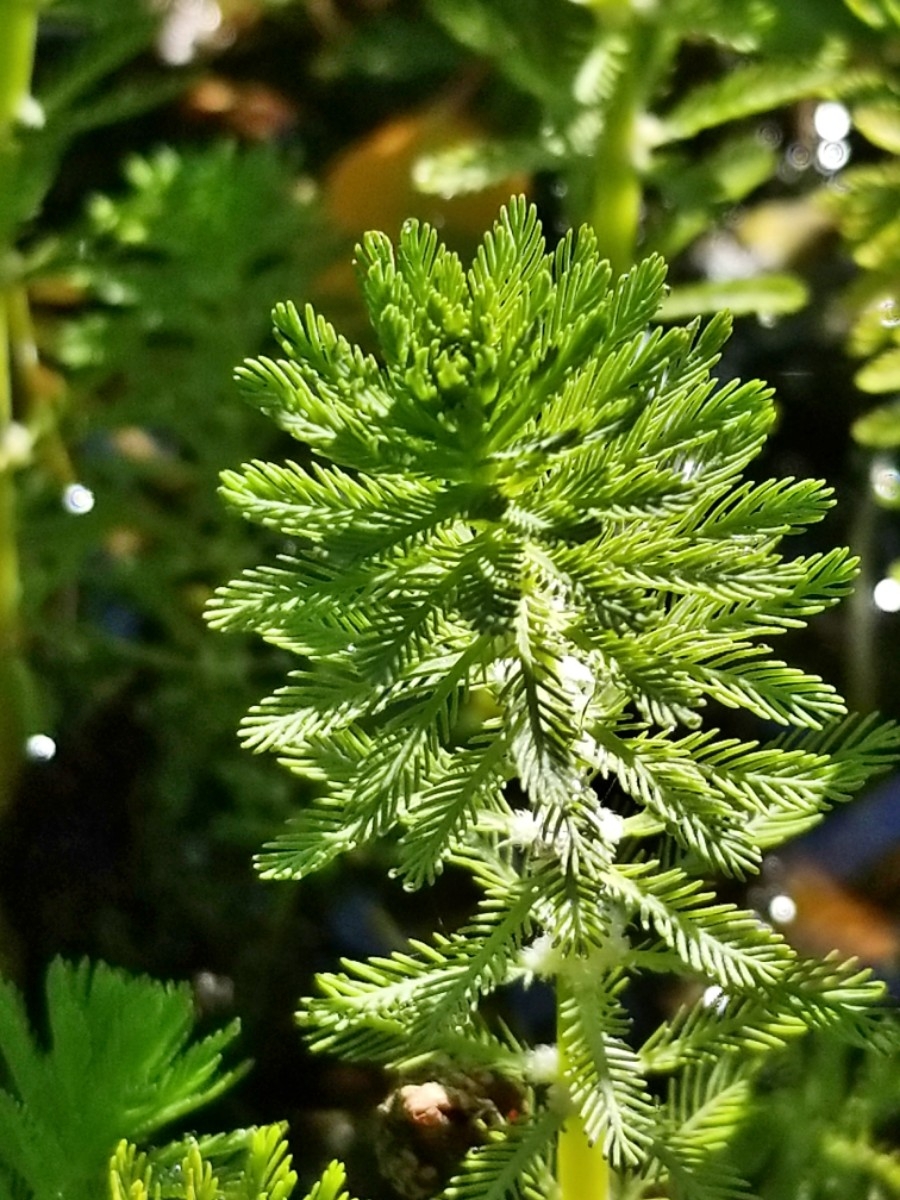
Myriophyllum aquaticum  (Vell.) Verdc.
Parrot feather watermilfoil, Parrot's feather, Parrotfeather
photo on Calflora
2019 Patrick Furtado
photo on Calflora
2016 Ross Hinderer
photo on Calflora
2019 David popp
photo on Calflora
2020 Alice Cummings
photo on Calflora
2011 Michael Perlmutter
photo on Calflora
2017 Nick Graver
photo on Calflora
2011 Tony Morosco
photo on Calflora
2018 Sarah Inman
photo on Calflora
2025 Ron Vanderhoff
photo on Calflora
2025 Ron Vanderhoff
photo on Calflora
2025 Ron Vanderhoff
photo on Calflora
2024 Donald Burk
photo on Calflora
2020 Alice Cummings
photo on Calflora
2020 Diana Wahl
photo on Calflora
2023 David popp
Myriophyllum aquaticum is a perennial herb (aquatic) that is not native to California.
Cal-IPC rating: high
Siskiyou Del Norte Modoc Humboldt Shasta Lassen Trinity Plumas Tehama Butte Mendocino Glenn Sierra Yuba Lake Nevada Colusa Placer Sutter El Dorado Yolo Alpine Napa Sonoma Sacramento Mono Amador Solano Calaveras Tuolumne San Joaquin Marin Contra Costa Alameda Santa Cruz Mariposa Madera San Francisco San Mateo Merced Fresno Stanislaus Santa Clara Inyo San Benito Tulare Kings Monterey San Bernardino San Luis Obispo Kern Santa Barbara Ventura Los Angeles Riverside Orange San Diego Imperial
DJJJASONAFMM

Bloom Period
Genus: Myriophyllum
Family: Haloragaceae  
Category: angiosperm  
PLANTS group:Dicot
Jepson eFlora section: eudicot
Wetlands: Occurs in wetlands

Communities: wetland-riparian, escaped cultivar

Name Status:
Accepted by JEF + PLANTS + POWO
Alternate Names:
PLANTSEnydria aquatica
JEF + PLANTSMyriophyllum brasiliense
JEF + PLANTSMyriophyllum proserpinacoides
External links:

[Cal-IPC] Invasiveness: Myriophyllum aquaticum (parrotfeather) is a stout aquatic perennial (family Haloragaceae) that forms dense mats of intertwined brownish stems (rhizomes) in water. Myriophyllum aquaticum can be found in freshwater lakes, ponds, and canals with slow-moving waters in northern and central California. This invasive plant may compete with native aquatic plants, eliminating them or reducing their numbers in infested sites. It forms dense mats that can entirely cover the surface of the water in shallow lakes and other waterways. The species does not produce viable seed and its distribution is limited to vegetative dispersal mechanisms. (link added by Mary Ann Machi)

[Wikipedia] Amazon River, South America native: Parrot feather is native to the Amazon River in South America, but it can now be found on every continent except Antarctica.[7][8] It is thought that this plant was introduced to North America around the late 1800s. It was first discovered in the United States in the 1890s in Washington, D.C.[4] Parrot's feather typically grows in freshwater streams, ponds, lakes, rivers, and canals that have a high nutrient content. During the 20th century it colonized areas in South Africa, Japan, England, New Zealand, and Australia.[8] As it prefers a warmer climate, it is chiefly found in the southern parts of the United States.[4] (link added by Mary Ann Machi)

Suggested Citation
“Calflora - Taxon Report.” The Calflora Database, a non-profit organization. .

Accessed: