2021 Mary Ann Machi 2023 Mary Ann Machi 2013 James Gonsman 2016 Jennifer Wheeler 2022 Mary Ann Machi 2022 Jamie Spielmann 2022 Jamie Spielmann 2011 Zoya Akulova 2024 Ryan O'Dell 2024 Ryan O'Dell 2024 Ryan O'Dell 2018 Saskia Raether 2014 Barry Rice
Lilium columbianum is a perennial herb that is native to California, and also found elsewhere in western North America.
[Wikipedia] Distribution, Habitat, Description, Uses: Lilium columbianum is a lily native to western North America.[2][3] It is also known as the Columbia lily, Columbia tiger lily, or simply tiger lily (sharing the latter common name with several other lily species in its genus).
Distribution and habitat
Lilium columbianum occurs in lowland and montane forest openings and meadows from southern British Columbia in Canada south to northern California and east to Montana in the northwestern United States.[2][4] Mostly occurring below 2,000 m (6,600 ft), it usually blooms in June through early August.[2] There are a few isolated populations at high elevations in the Sierra Nevada as far south as Fresno County.[5][6]
Description
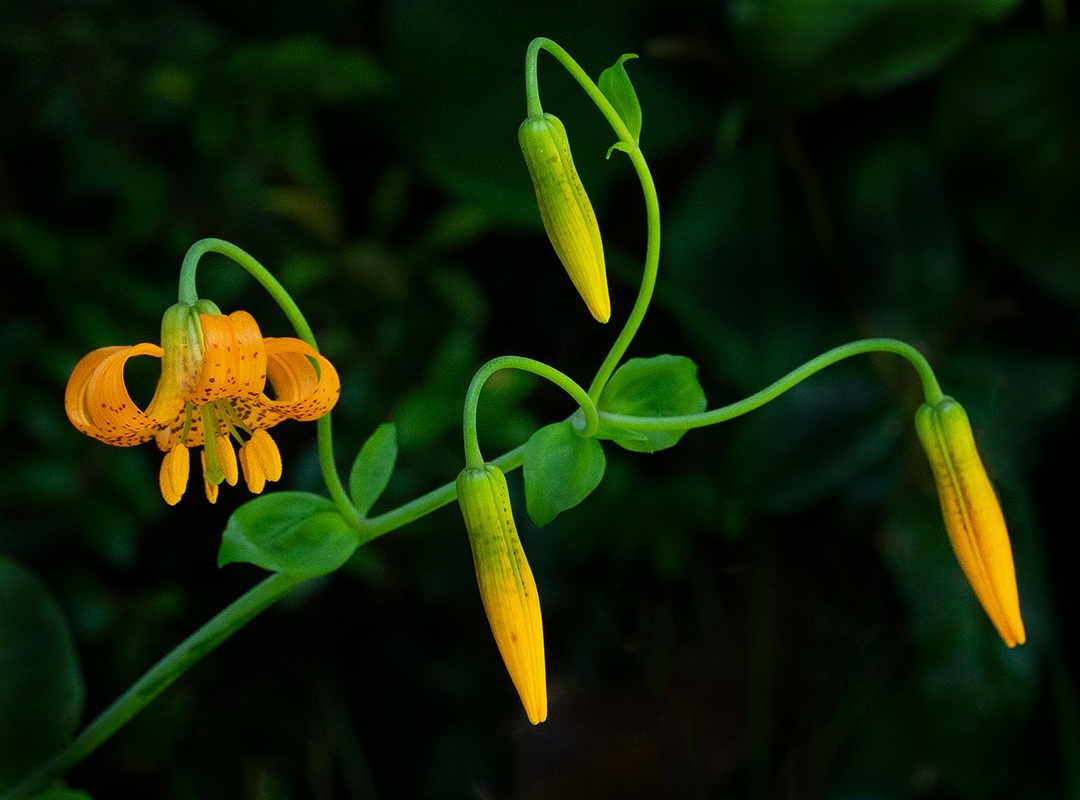
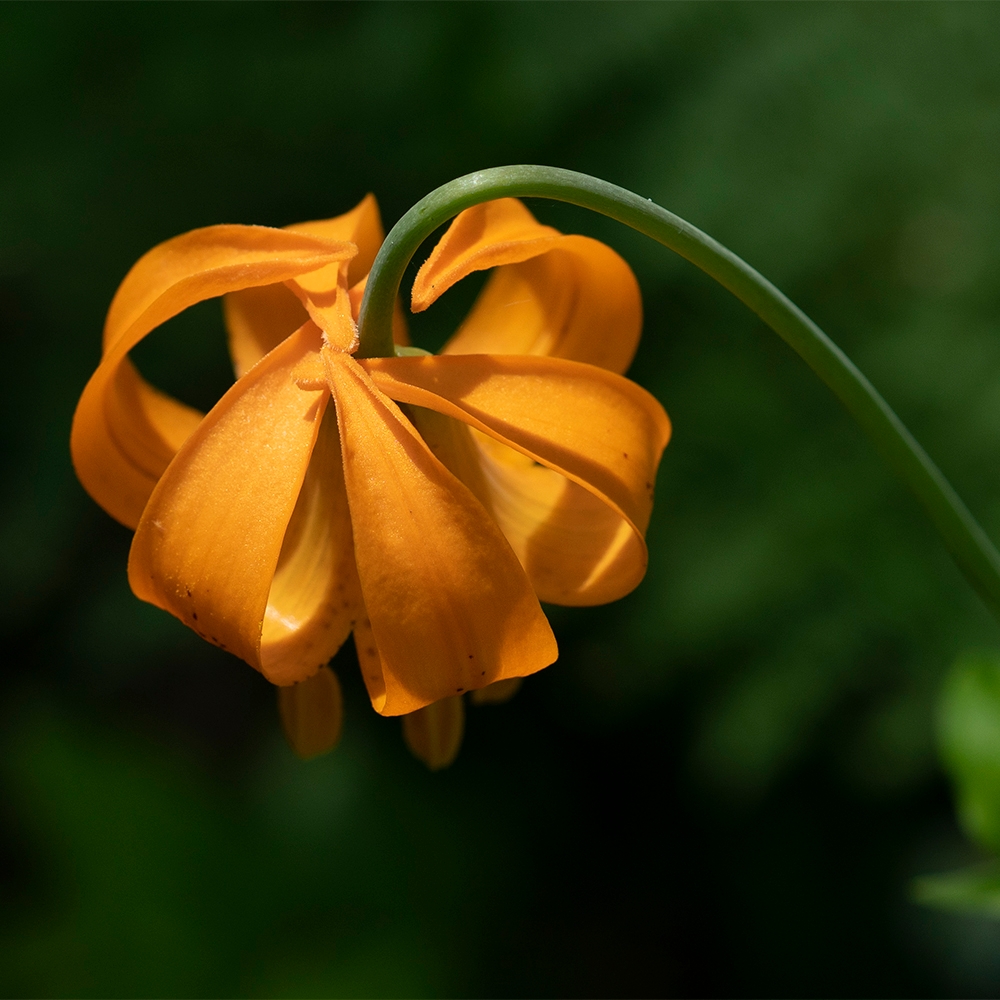
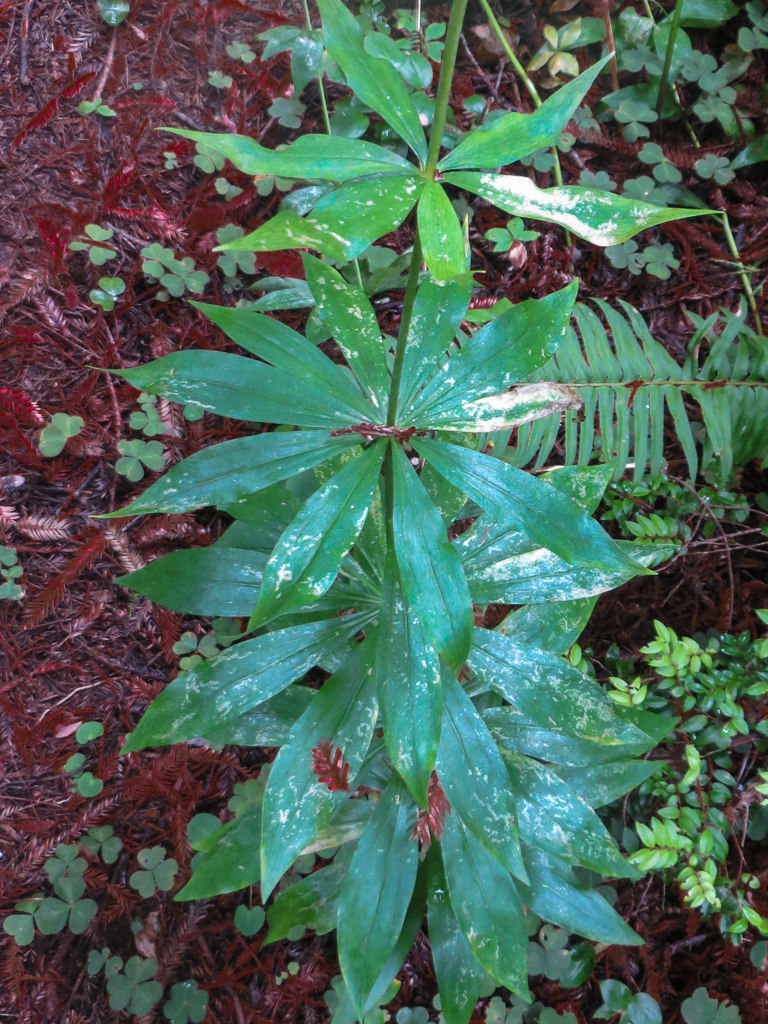
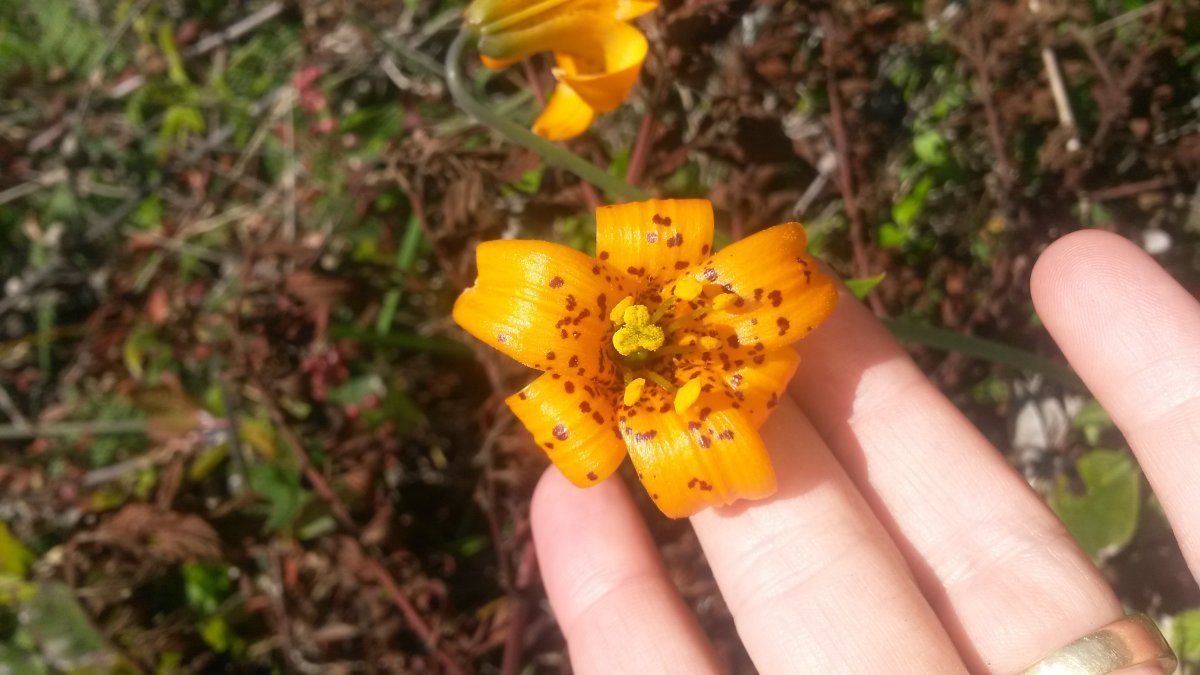
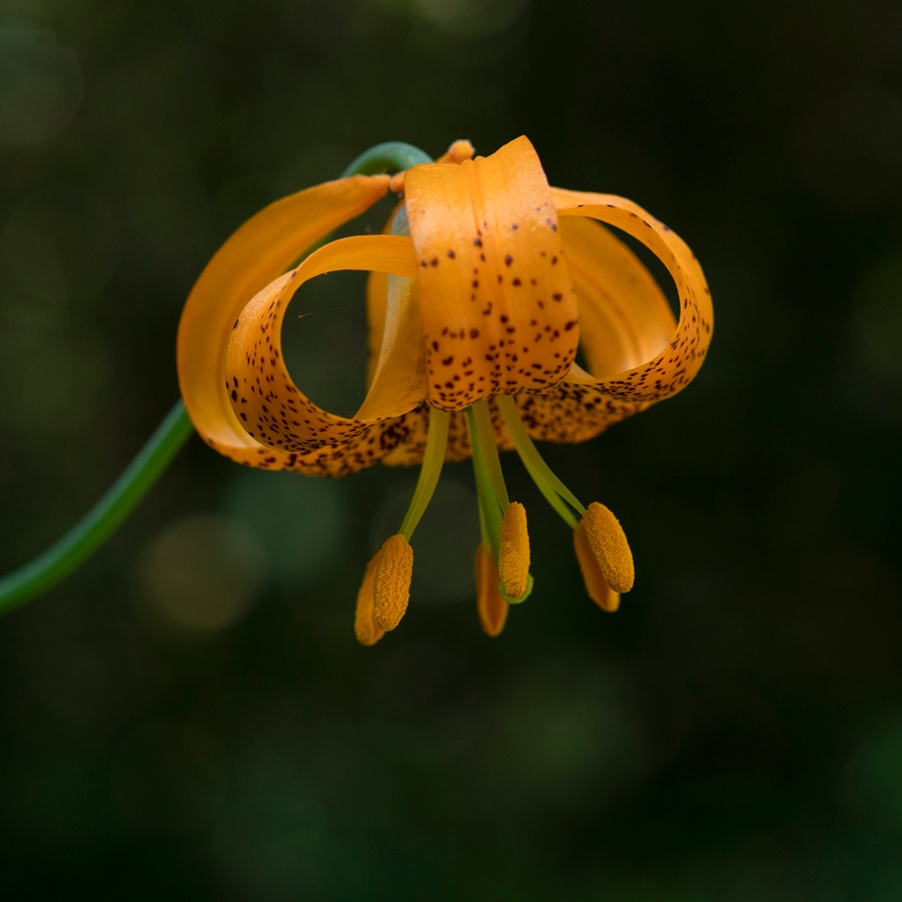
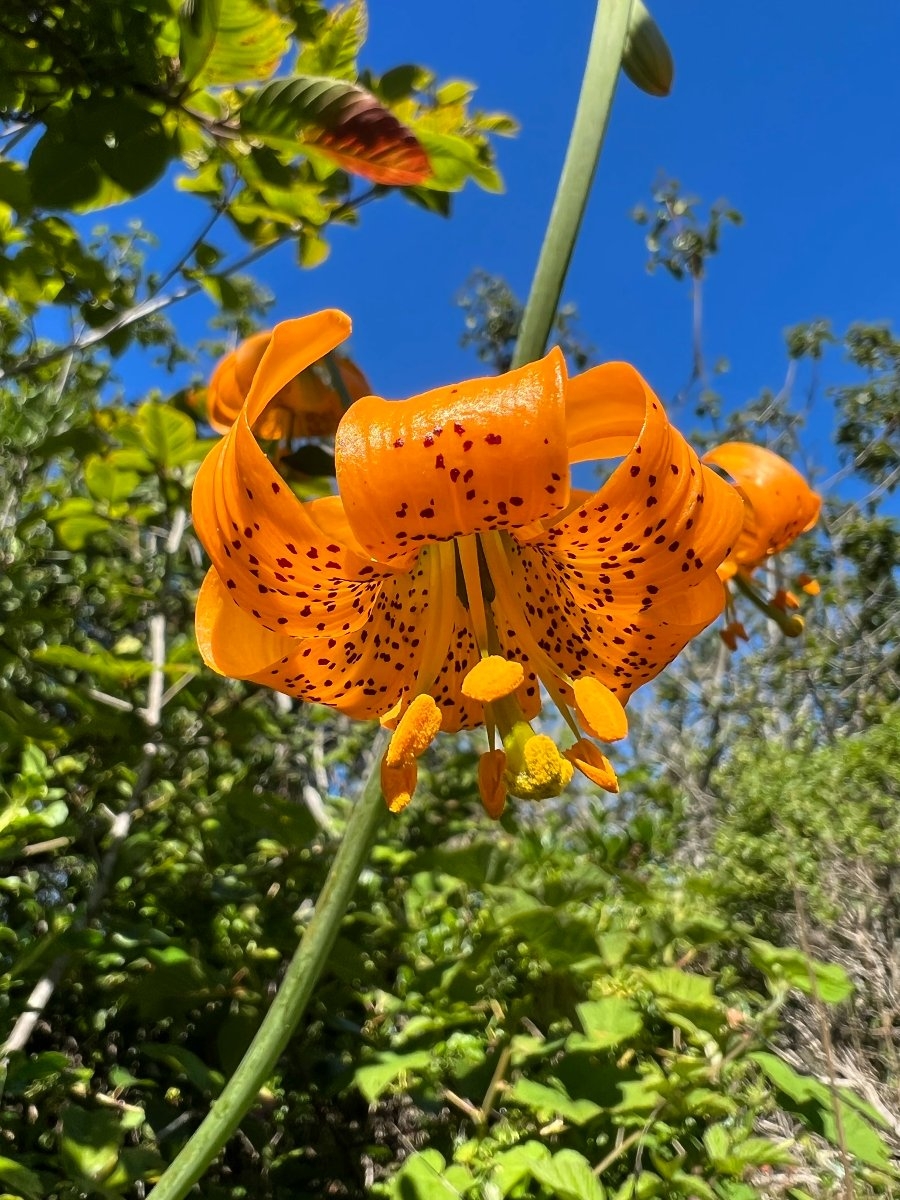
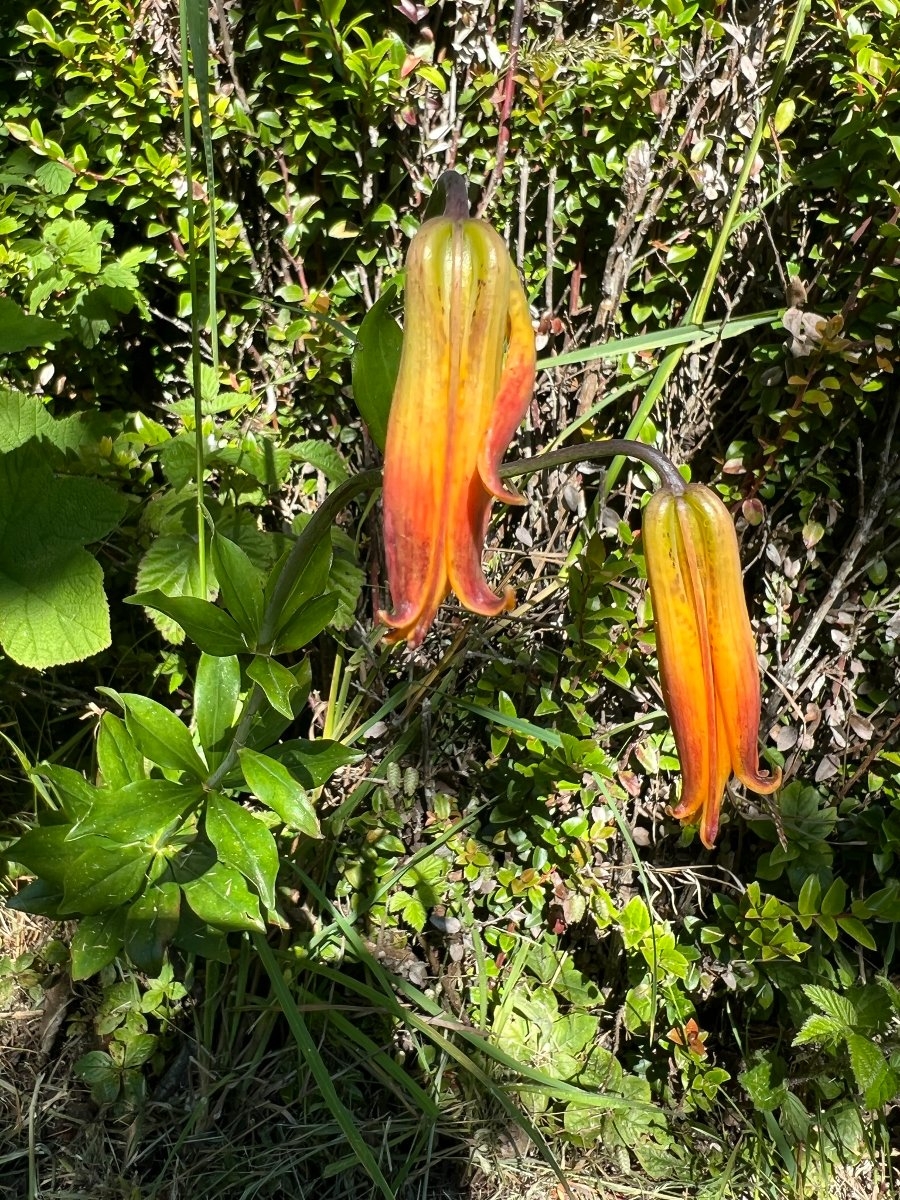
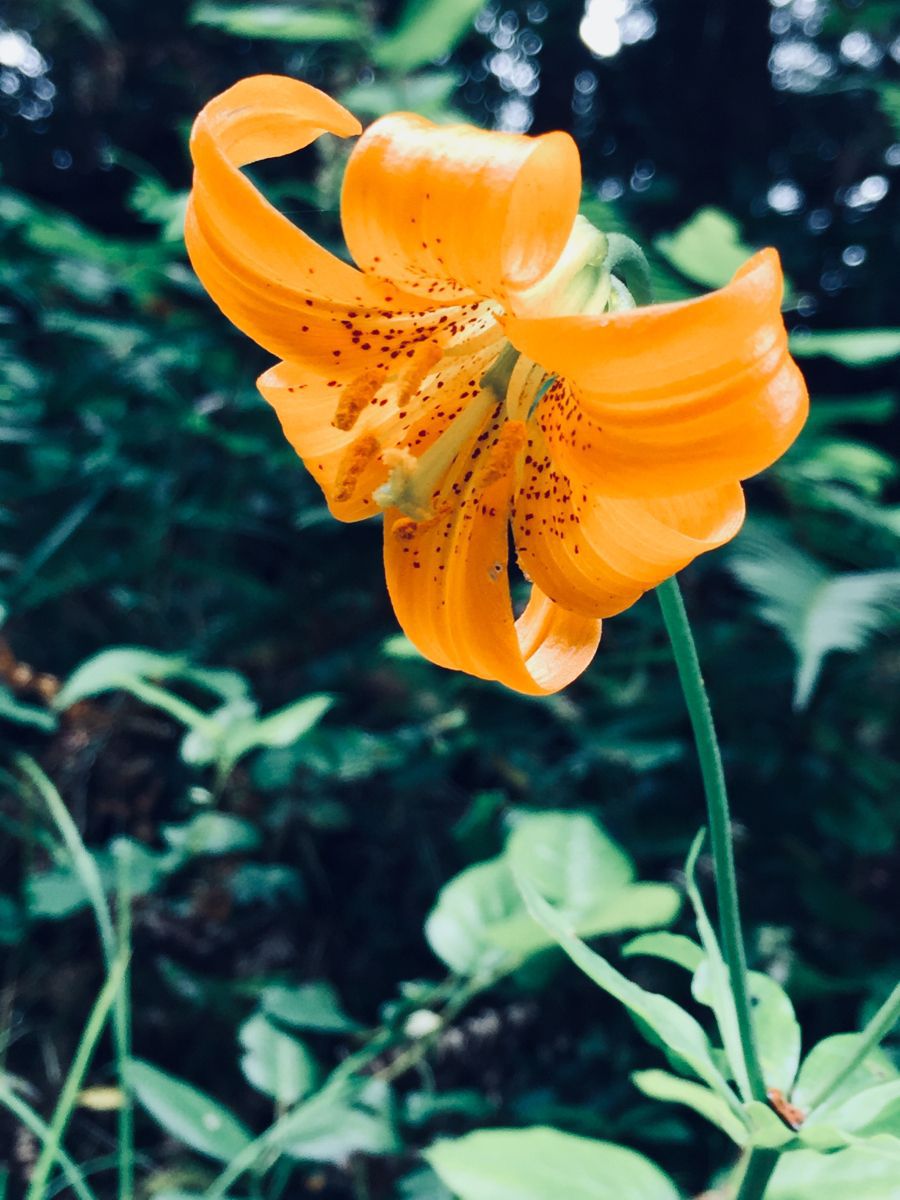
Lilium columbianum is a perennial herb[7] that grows up to 1.2 metres (3.9 ft) tall, and bears from few to numerous orange flowers with darker spots. The tepals are 3 to 6 cm long and the flowers are lightly scented. Like many true lilies, the leaves are arranged in whorls around the stem of the plant.[8][9][10][5][11]
Uses
Food
Coast Salish, Nuu-chah-nulth and most western Washington peoples steamed, boiled or pit-cooked its bulbs. Bitter or peppery-tasting, they were mostly used as a flavoring, often in soup with meat or fish.[12] (link added by Mary Ann Machi)
/app/up/entry/304/th/91263.jpg:!/app/up/entry/491/th/147519.jpg:!/app/up/gp/25/th/5175.jpg:!/app/up/mg/20/th/6066.jpg:!/app/up/entry/412/th/123677.jpg:!/app/up/entry/537/th/161378.jpg:!/app/up/entry/537/th/161371.jpg:!0000 0000 0411 2160:!/app/up/mg/839/th/mg251954-3.jpg:!/app/up/mg/839/th/mg251954-1.jpg:!/app/up/mg/839/th/mg251951-1.jpg:!/app/up/entry/67/th/20387.jpg:!0000 0000 0614 1752:!
2021 Mary Ann Machi:!2023 Mary Ann Machi:!2013 James Gonsman:!2016 Jennifer Wheeler:!2022 Mary Ann Machi:!2022 Jamie Spielmann:!2022 Jamie Spielmann:!2011 Zoya Akulova:!2024 Ryan O'Dell:!2024 Ryan O'Dell:!2024 Ryan O'Dell:!2018 Saskia Raether:!2014 Barry Rice:!
po188620:!po188620:!gp5175:!po10371:!po188620:!mu31641:!mu31639:!null:!mg251954:!mg251954:!mg251951:!po109229:!null:!
Suggested Citation
Calflora:
Information on California plants for education, research and conservation,
with data contributed by
public and private institutions and individuals.
[web application]. 2024. Berkeley, California:The Calflora Database
[a non-profit organization].Available:
https://www.calflora.org/(Accessed: 07/26/2024).