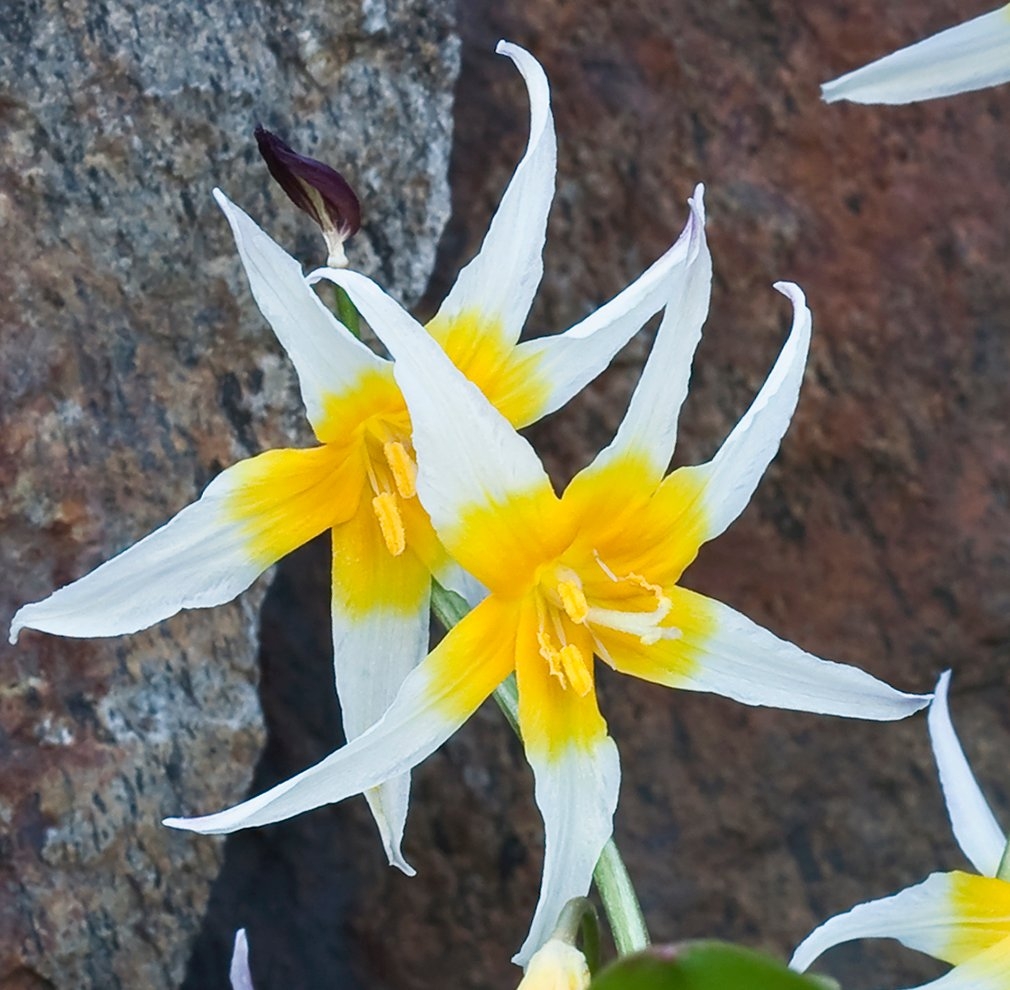
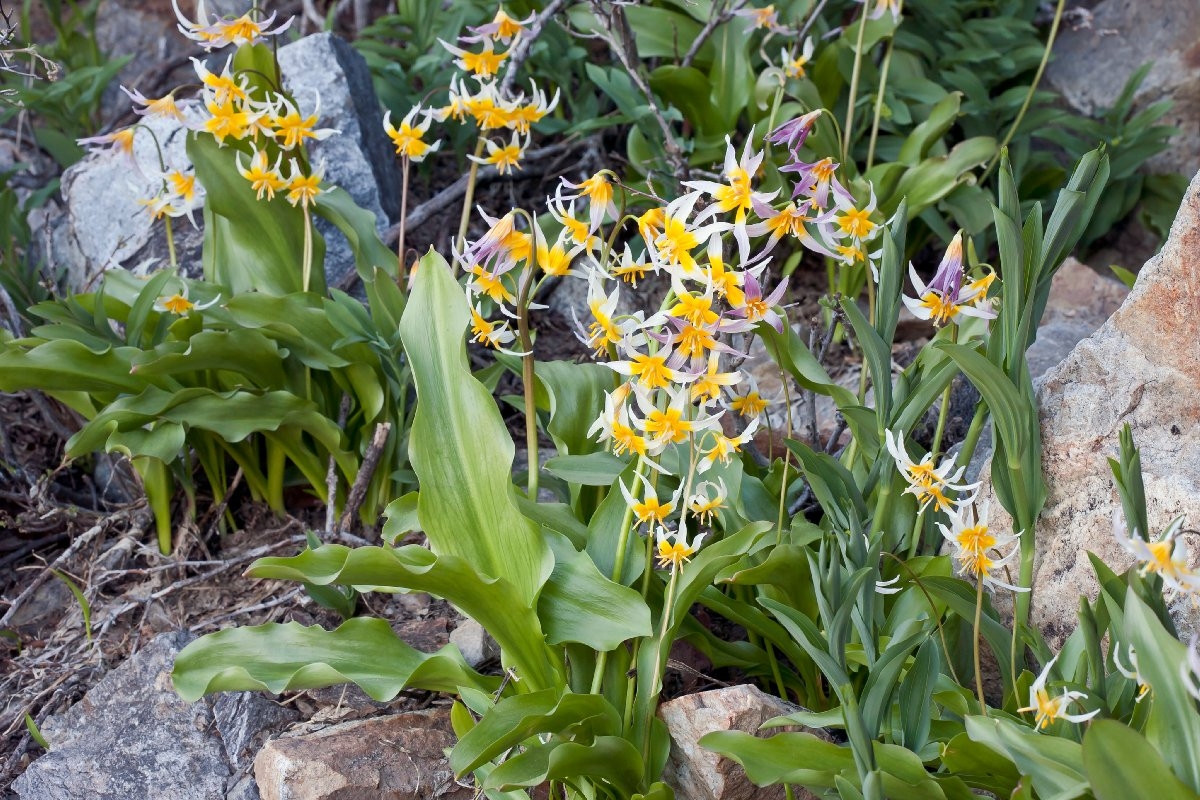
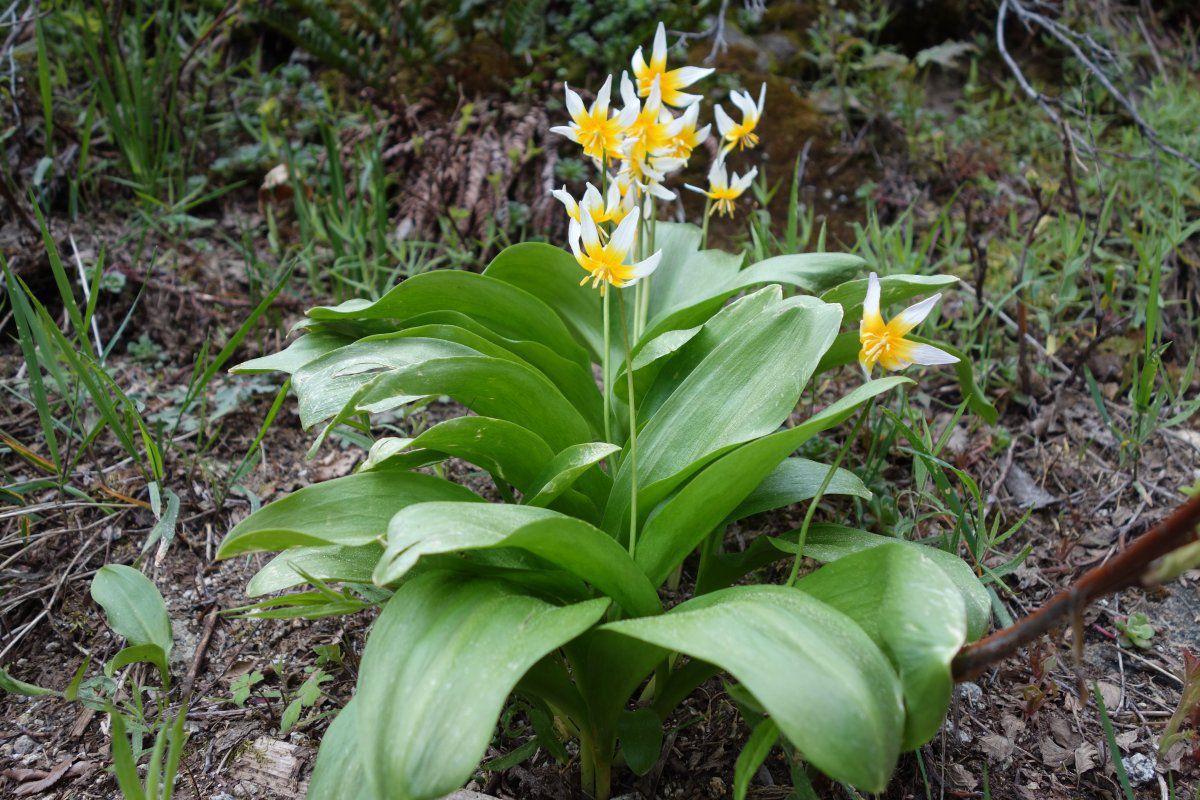
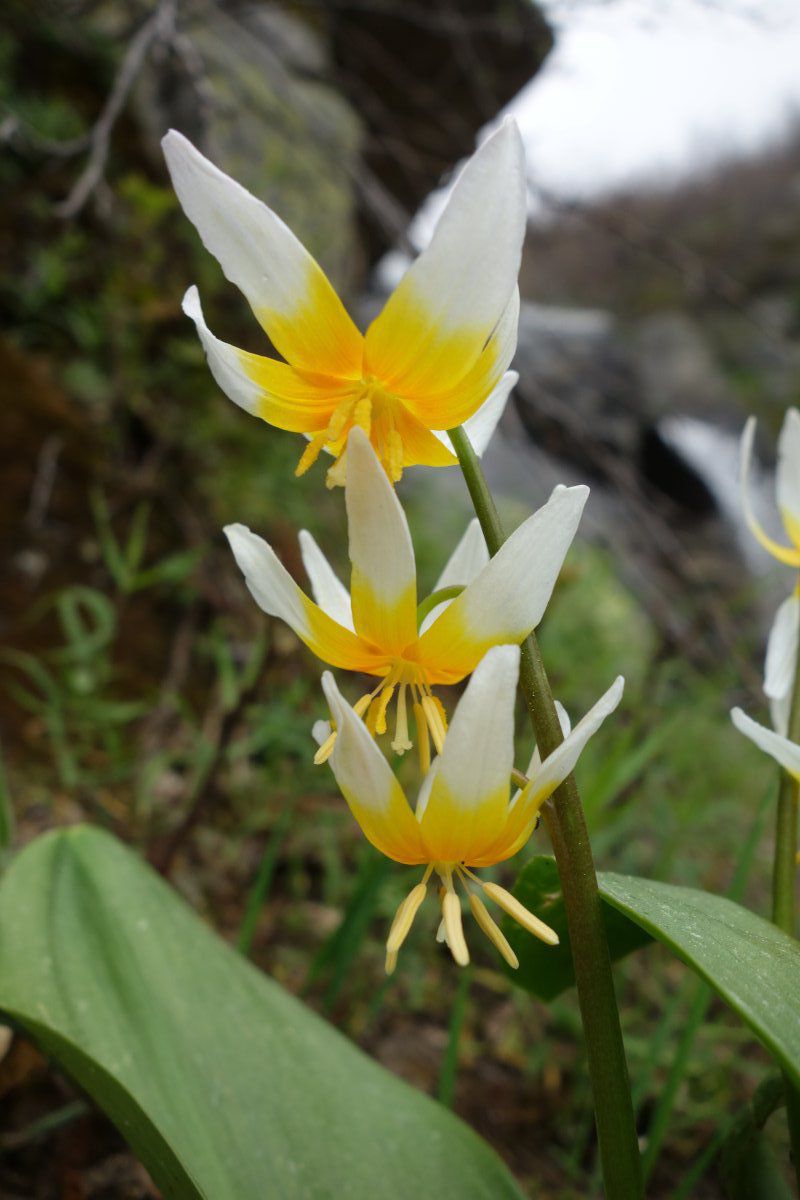
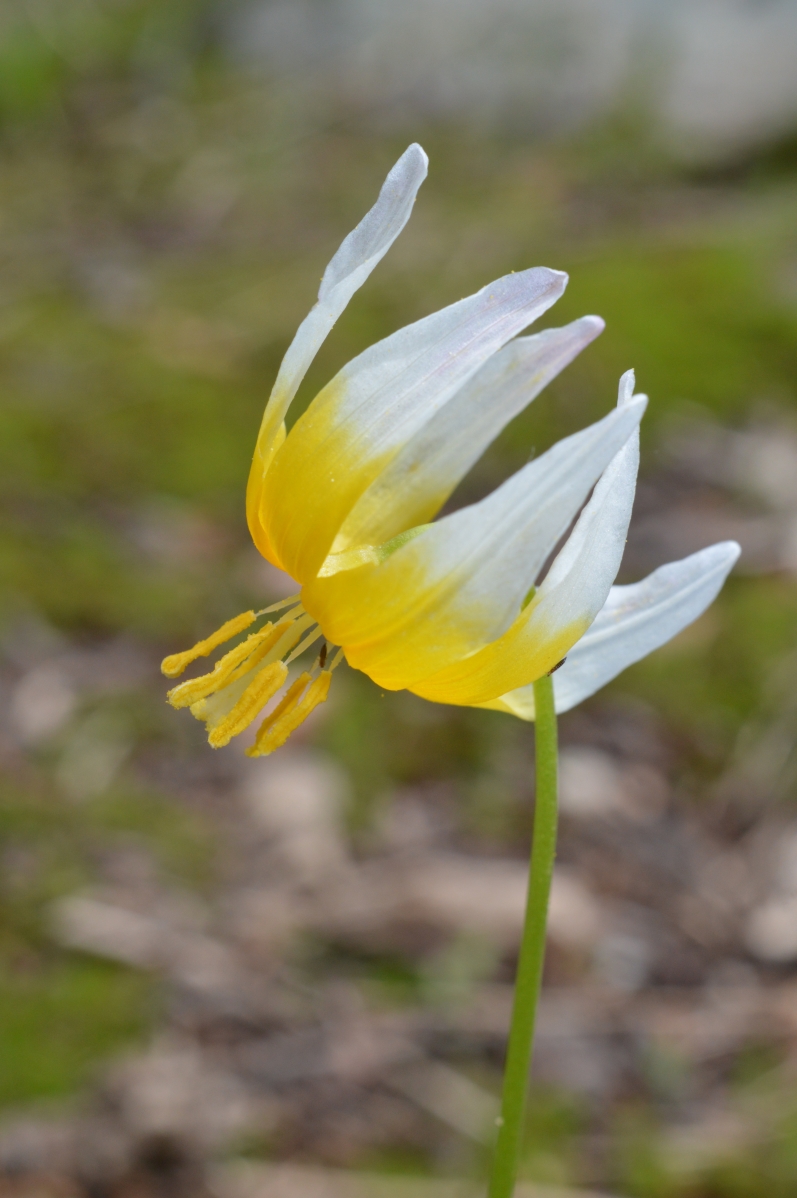
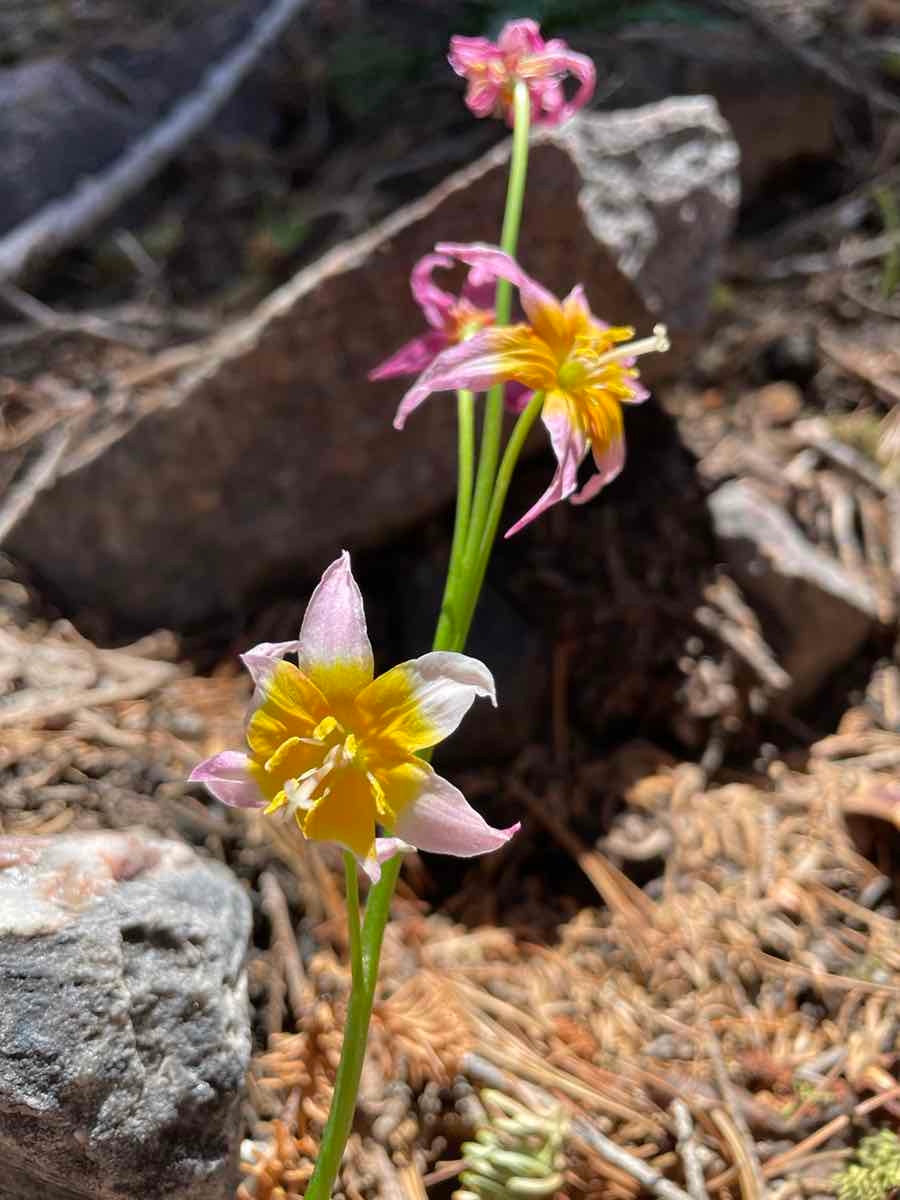
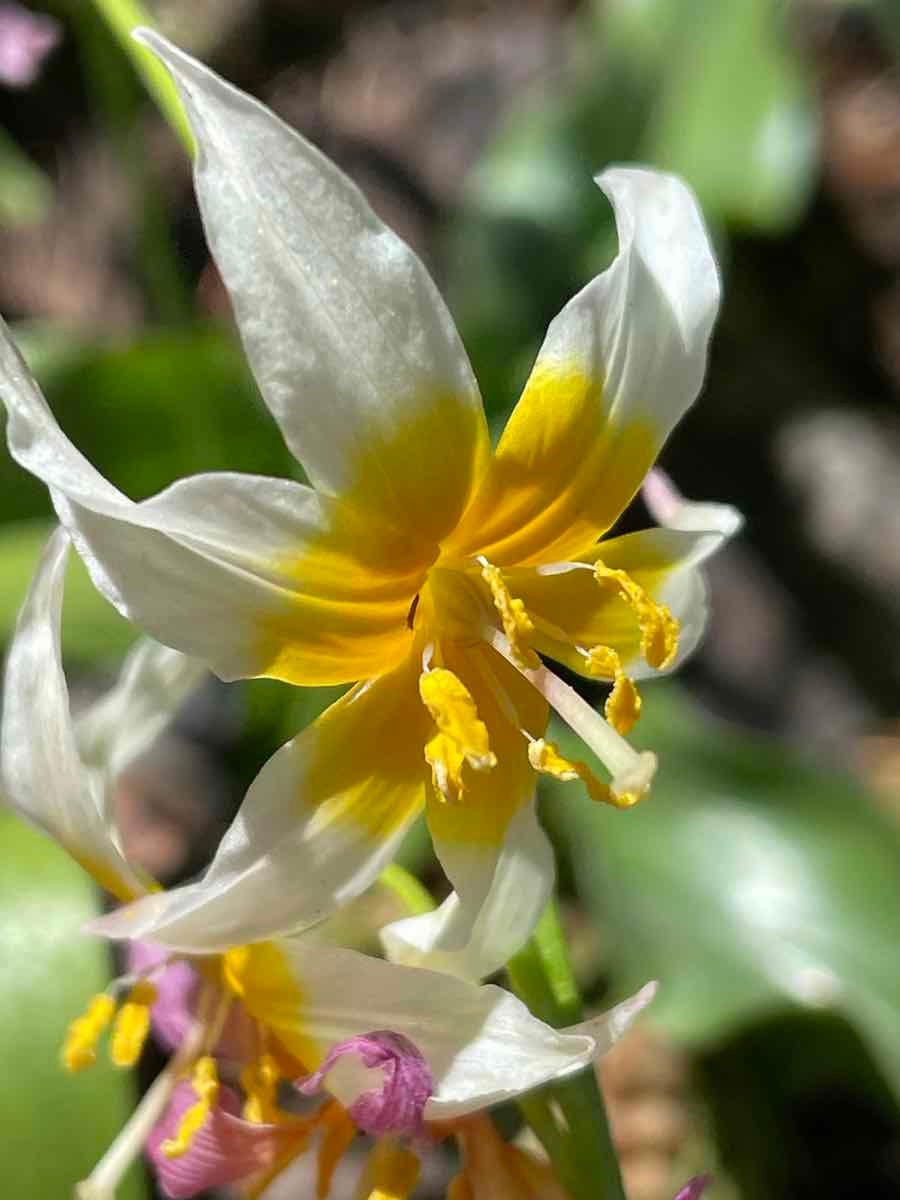
[Wikipedia] Range, Rarity, Name Source: Erythronium pusaterii is a species of flowering plant in the lily family known by the common names Kaweah Lakes fawn lily and Hocket Lakes fawn lily.[2]
It is endemic to Tulare County, California, where it is known from only about ten sites in the Sierra Nevada.[2][3]
The epithet pusaterii was chosen in honor of Samuel J. Pusateri, of the College of the Sequoias, collector of the original type material.[4] (link added by Mary Ann Machi)
/app/up/entry/168/th/50552.jpg:!/app/up/entry/168/th/50553.jpg:!/app/up/cbo/23/th/7099.jpg:!/app/up/cbo/23/th/7098.jpg:!/app/up/entry/193/th/58005.jpg:!/app/up/io/235/th/io70555-1.jpg:!/app/up/io/235/th/io70555-0.jpg:!
2010 John Game:!2020 John Game:!2016 Mark Stacy:!2016 Mark Stacy:!2015 Mary Merriman:!2022 Michael Heine:!2022 Michael Heine:!
mu4341:!mu4342:!po16866:!po16866:!po162602:!io70555:!io70555:!
Suggested Citation
Calflora:
Information on California plants for education, research and conservation,
with data contributed by
public and private institutions and individuals.
[web application]. 2024. Berkeley, California:The Calflora Database
[a non-profit organization].Available:
https://www.calflora.org/(Accessed: 10/22/2024).

 one or more occurrences