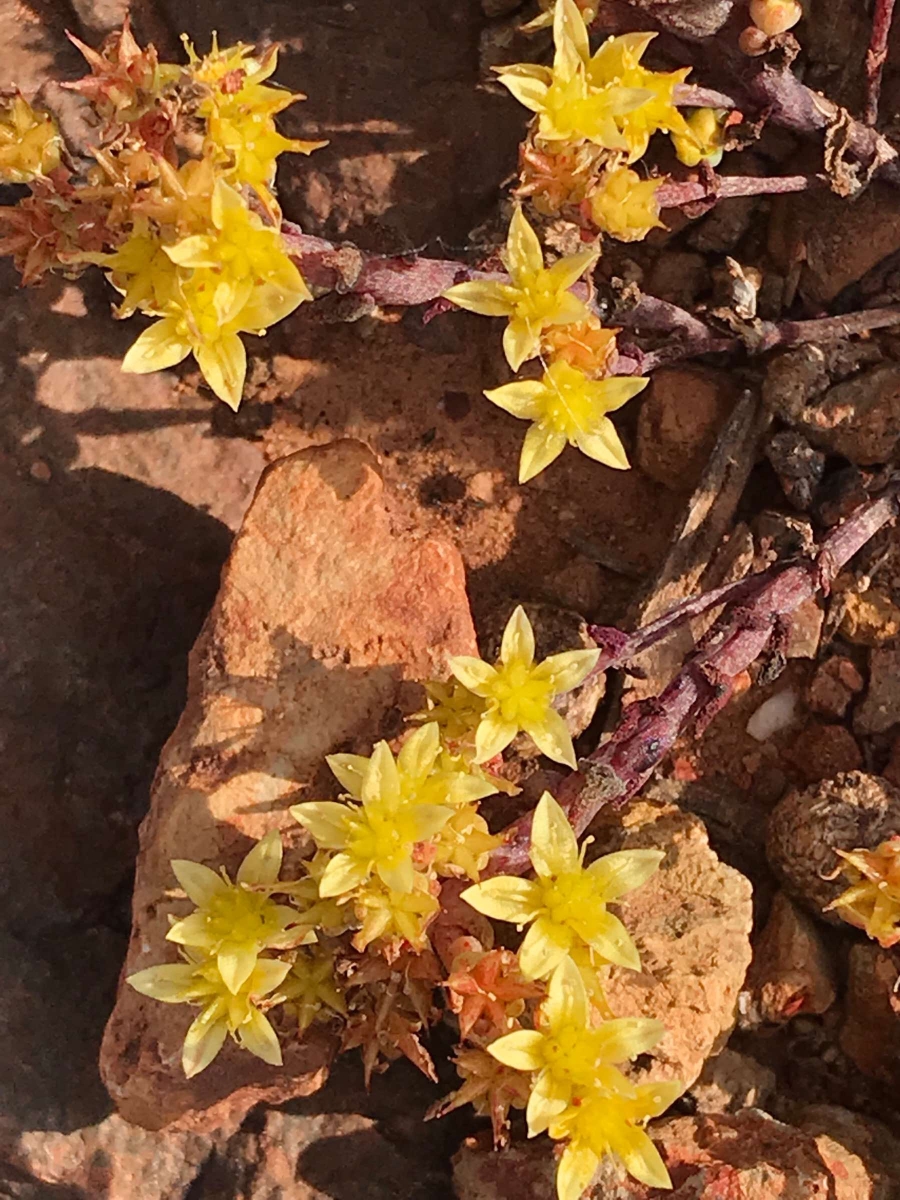
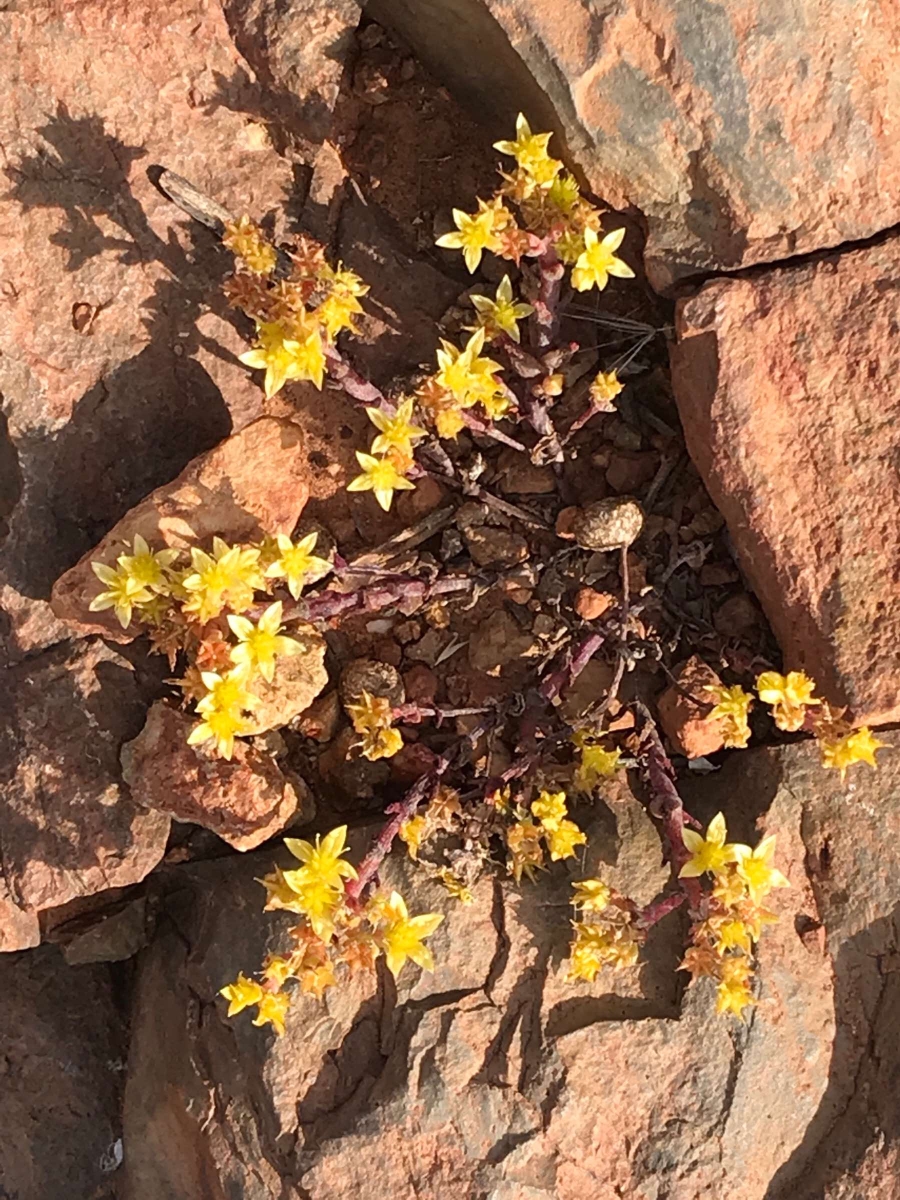
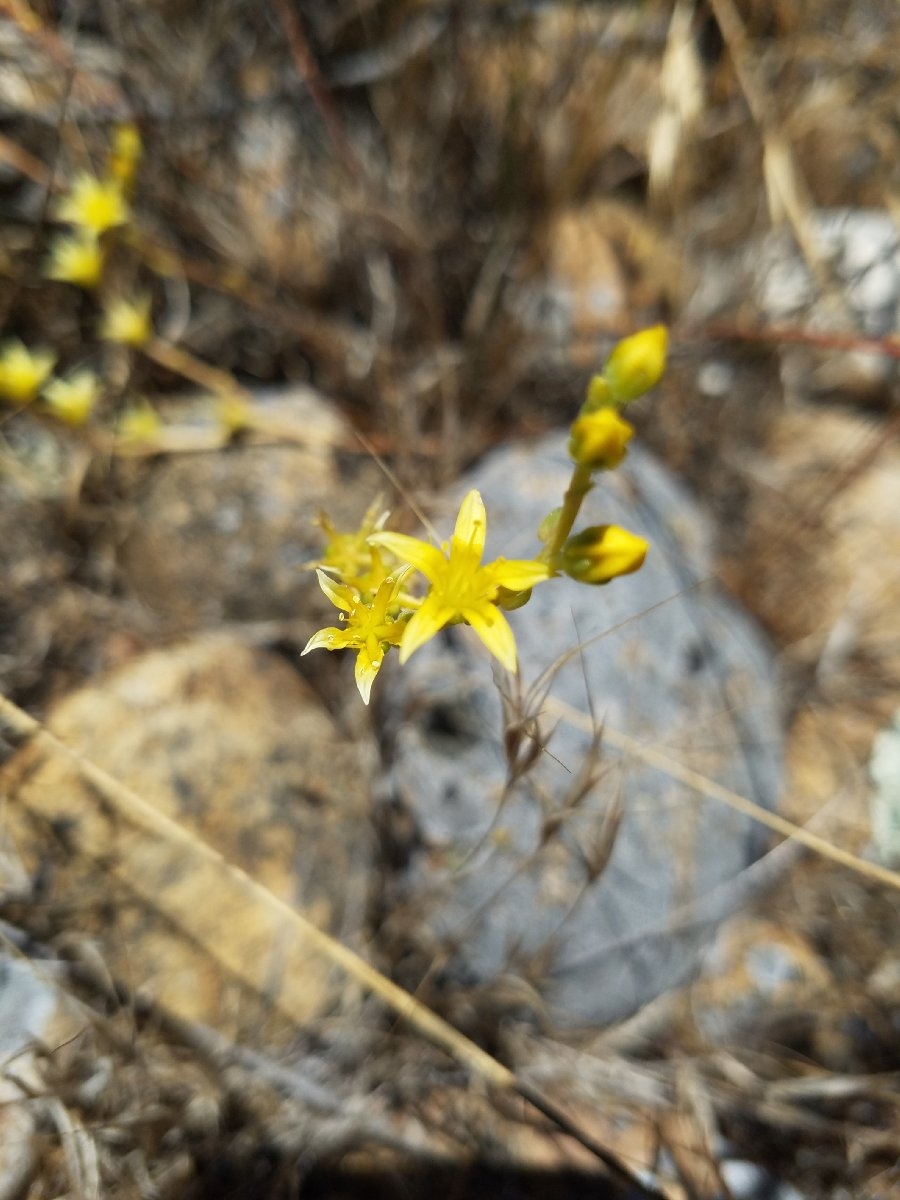
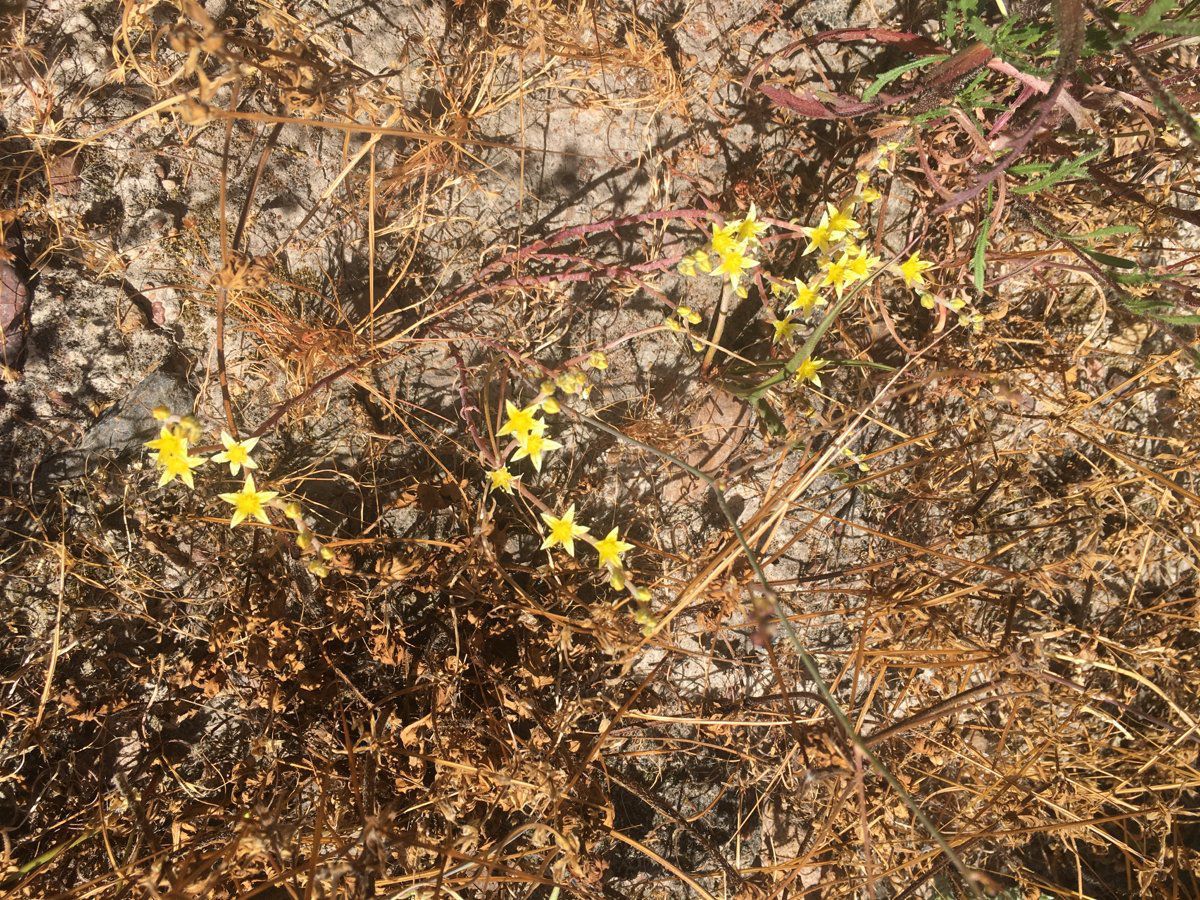
Dudleya variegata is a perennial herb that is native to California, and also found in Baja California.
California Rare Plant Rank: 1B.2 (rare, threatened, or endangered in CA and elsewhere).
[Wikipedia] Conservation, Threats: Severe reversals in the population of the variegated dudleya have been the result of continued urban expansion in the United States and Mexico. The rush to develop industrial parks and suburbs along the Mexican-American border near Otay Mesa has led to extensive devastation of major populations and colonies of the plant. Federal tax benefits for these industrial parks encouraged widespread grading on the mesa, eliminating populations of the inconspicuous plant.[12] Recreational activity is also detrimental to the species. (link added by Mary Ann Machi)
Calflora:
Information on California plants for education, research and conservation,
with data contributed by
public and private institutions and individuals.
[web application]. 2024. Berkeley, California:The Calflora Database
[a non-profit organization].Available:
https://www.calflora.org/(Accessed: 10/22/2024).


 one or more occurrences