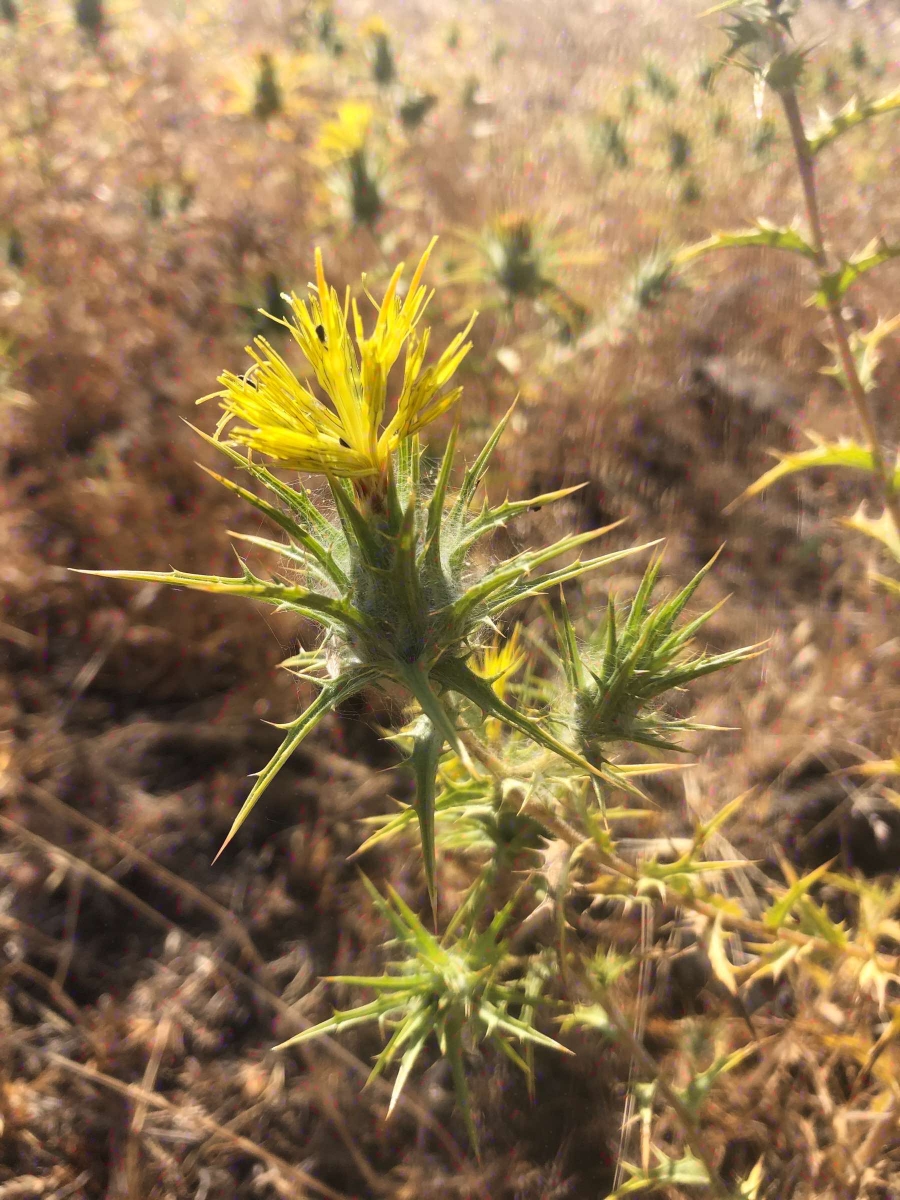
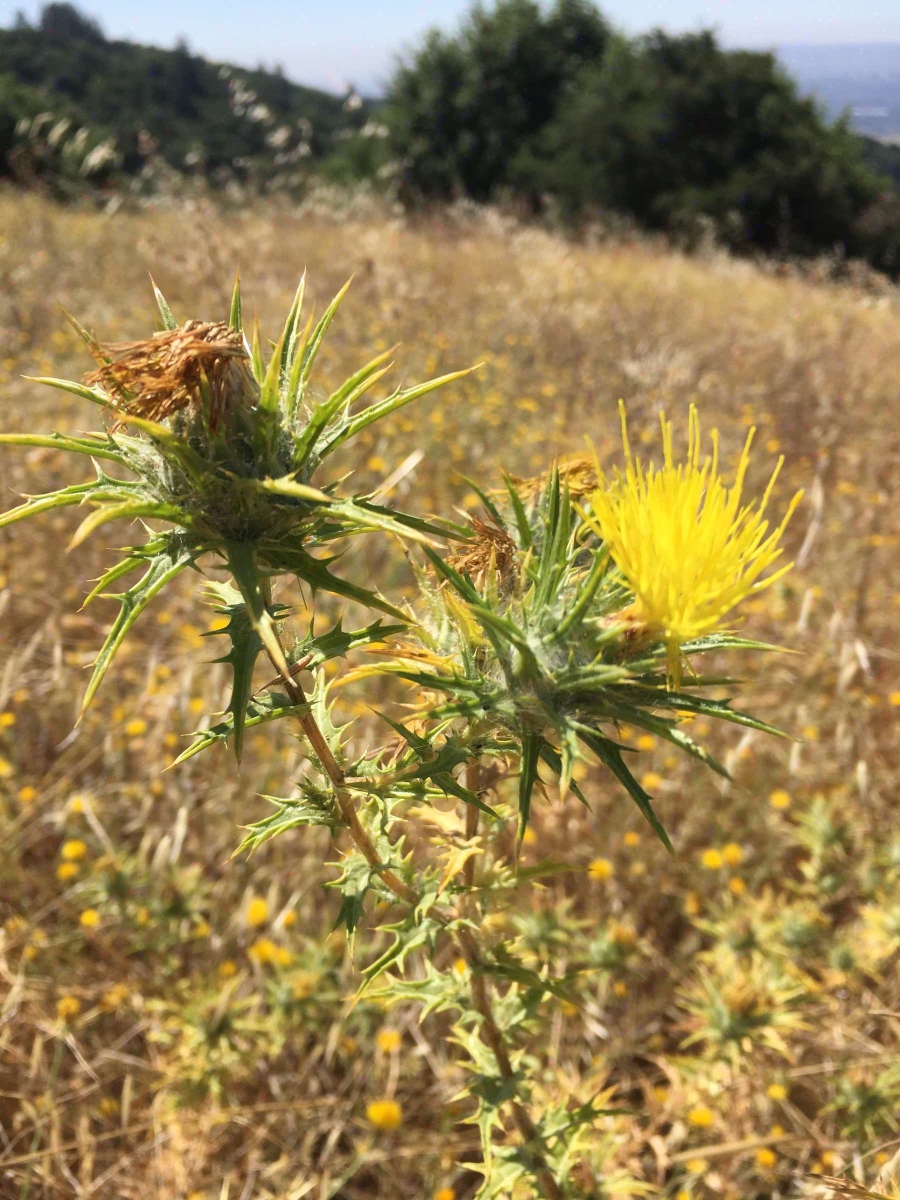
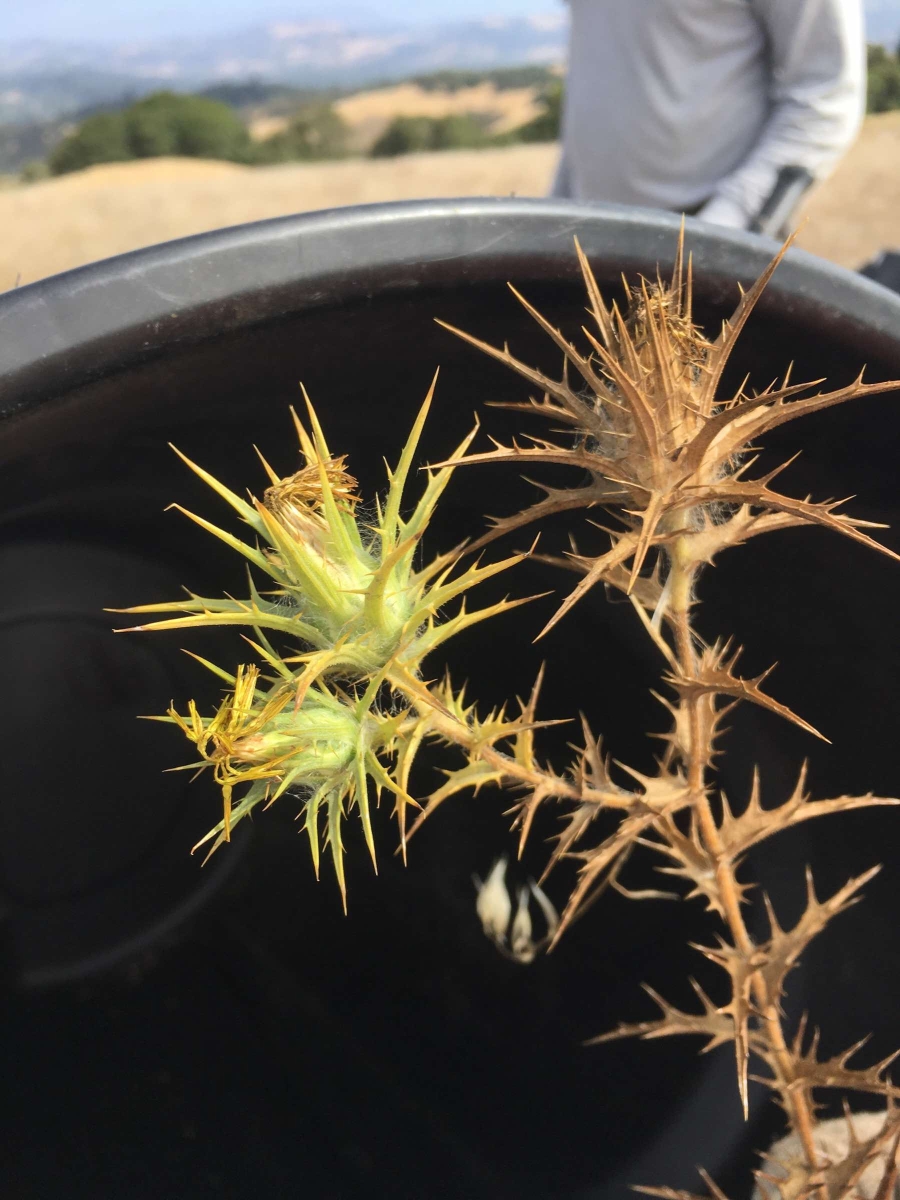
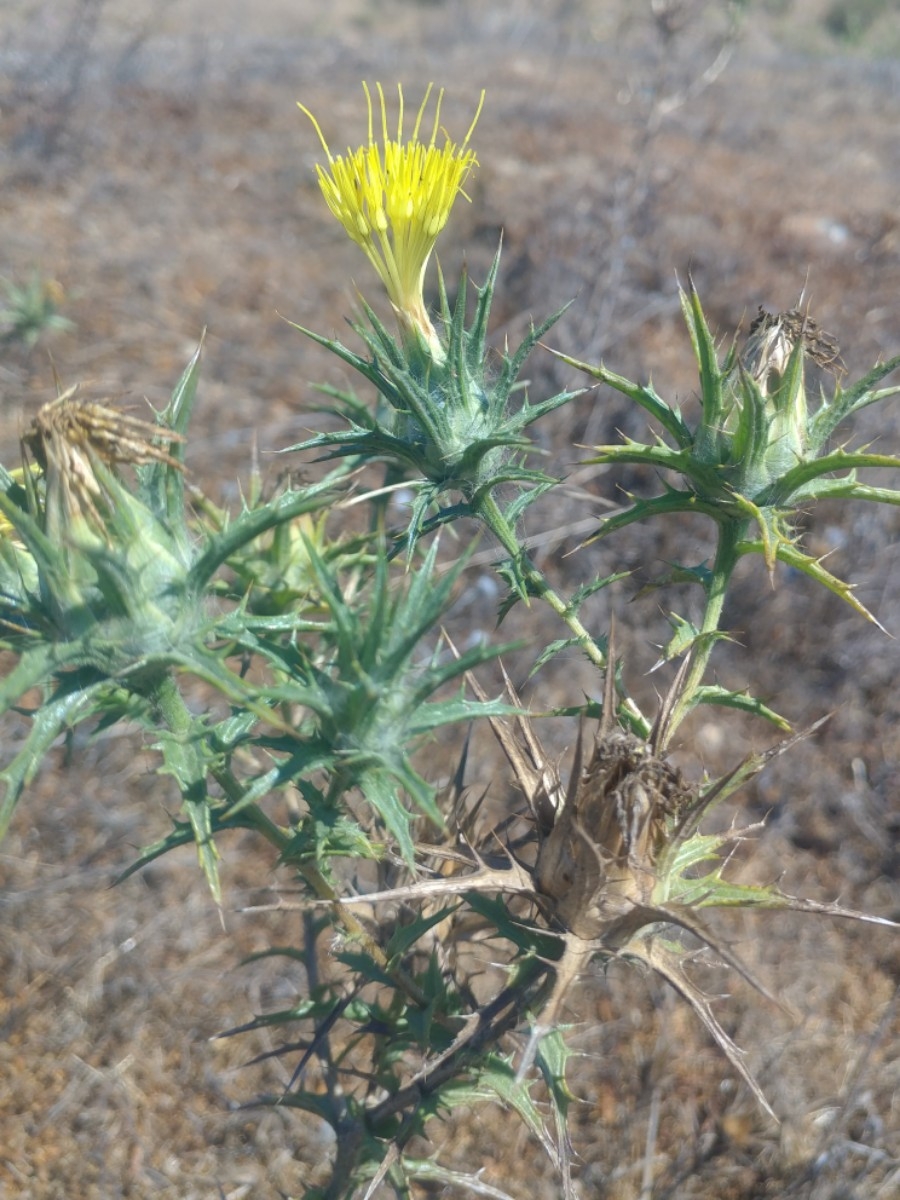
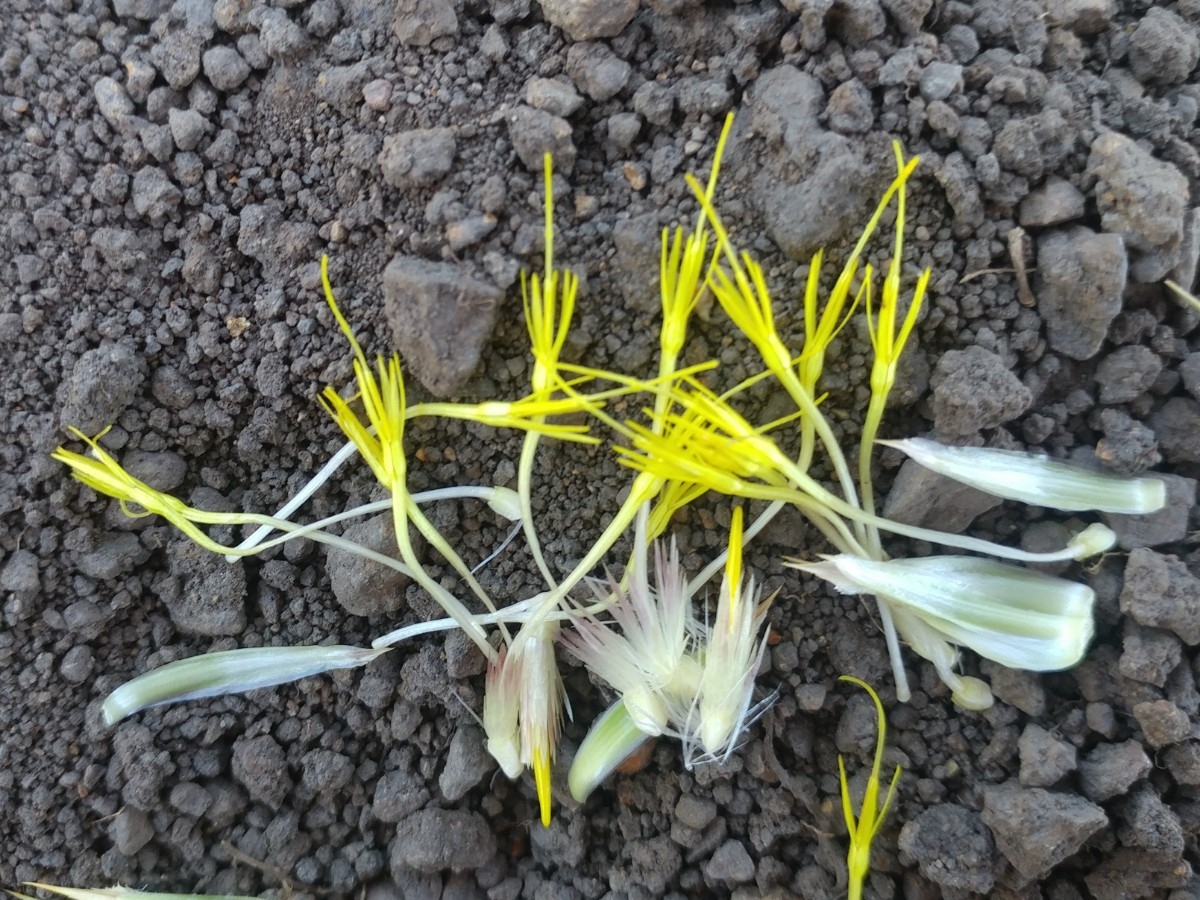
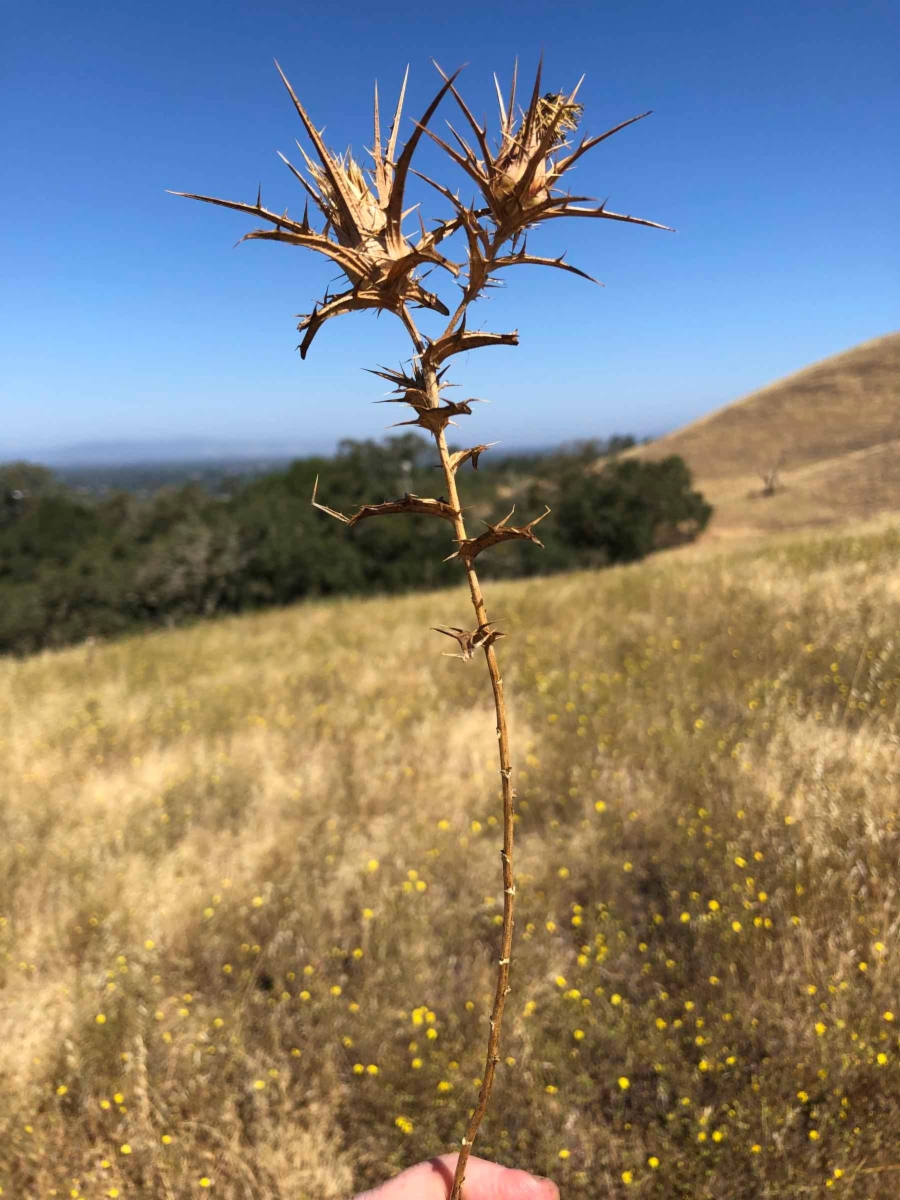
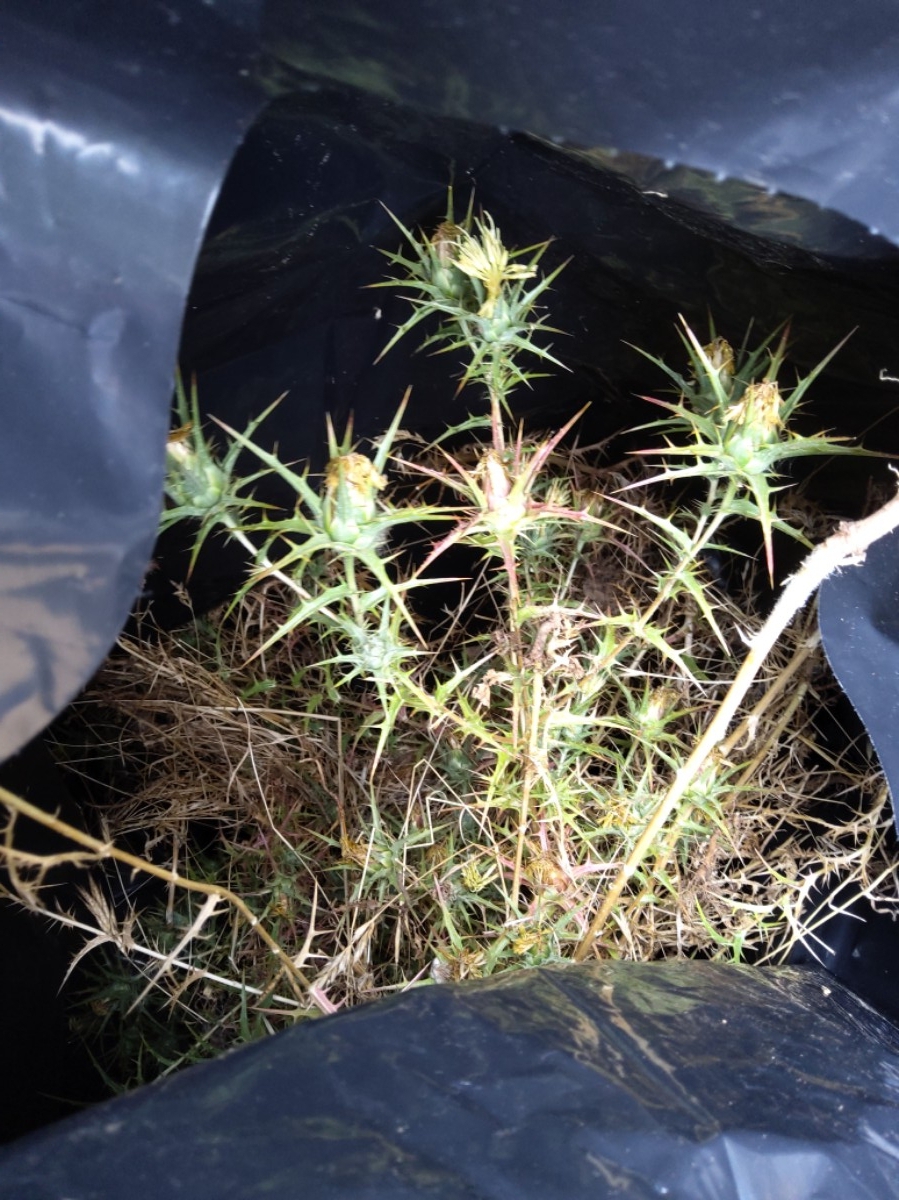
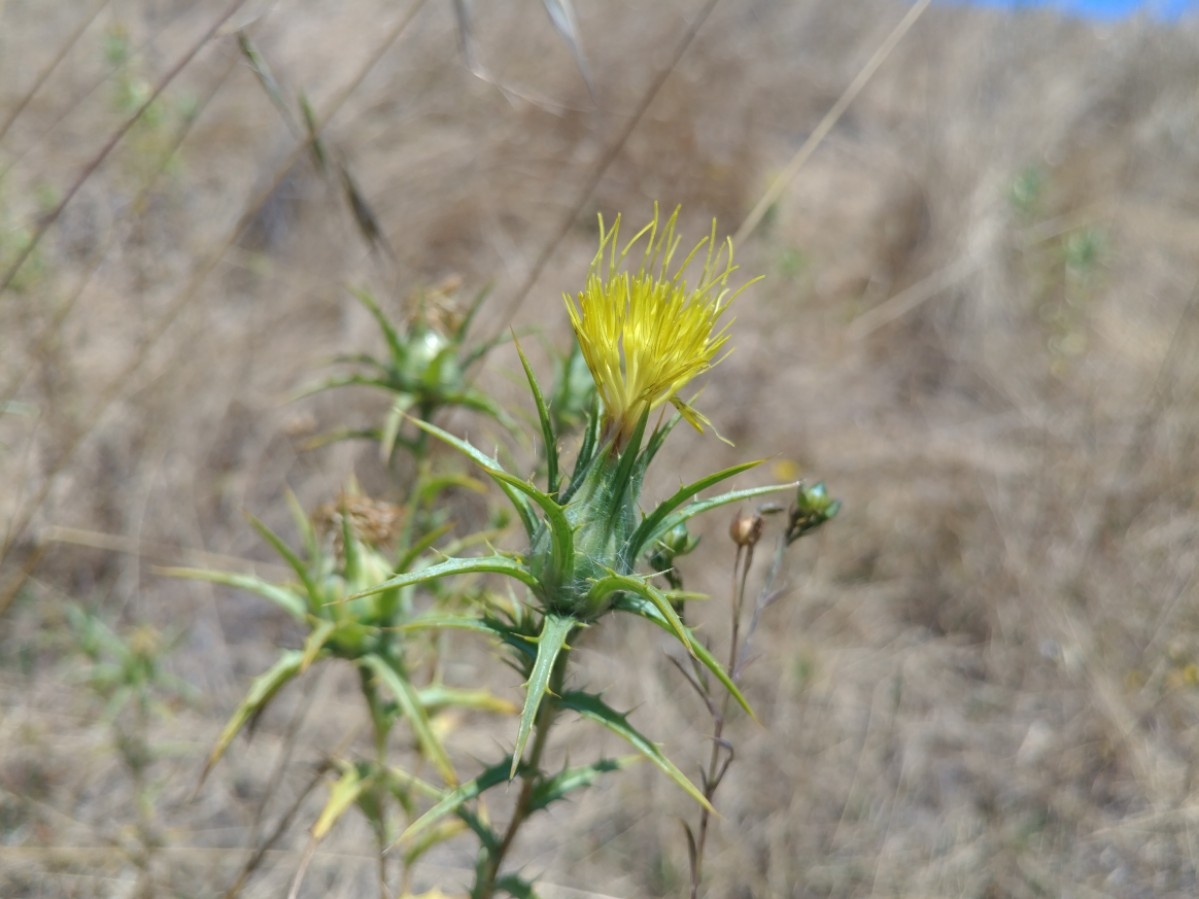
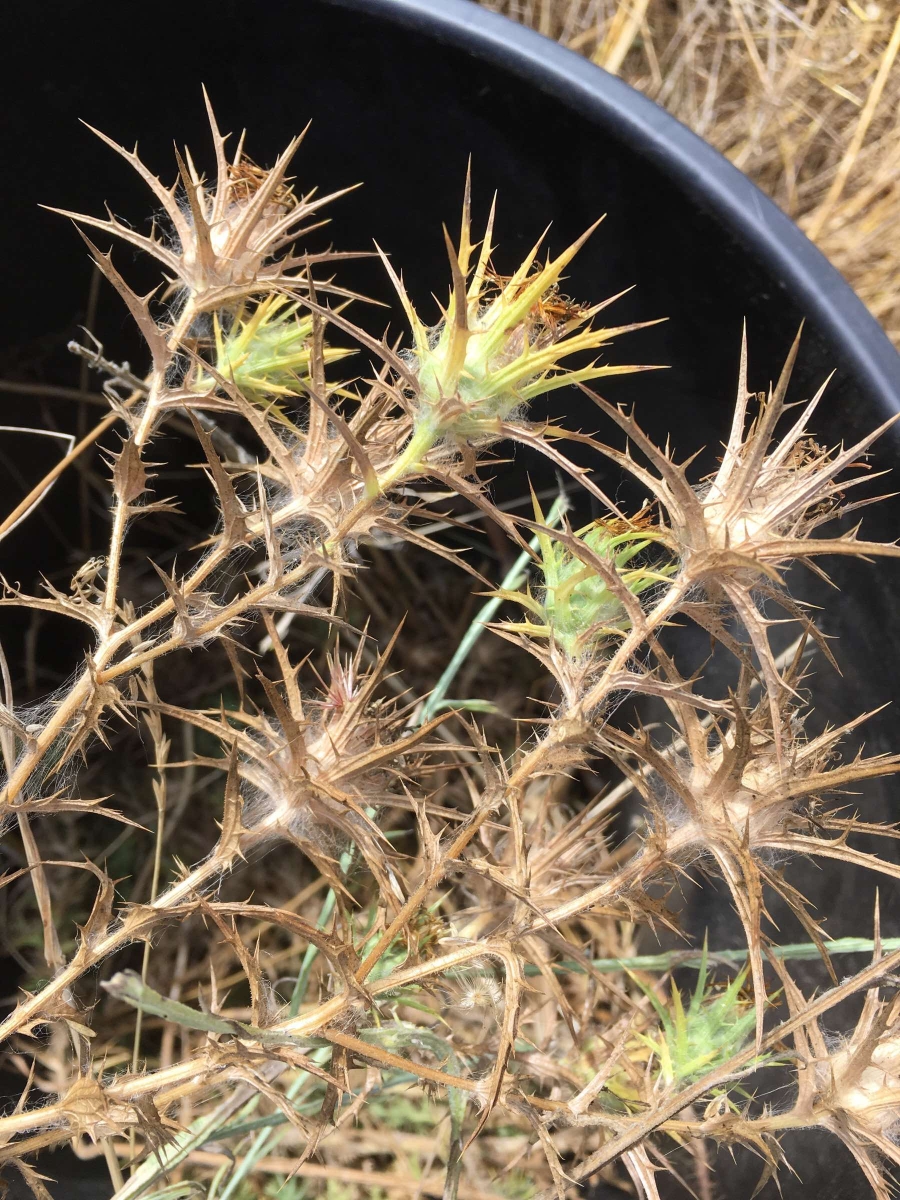
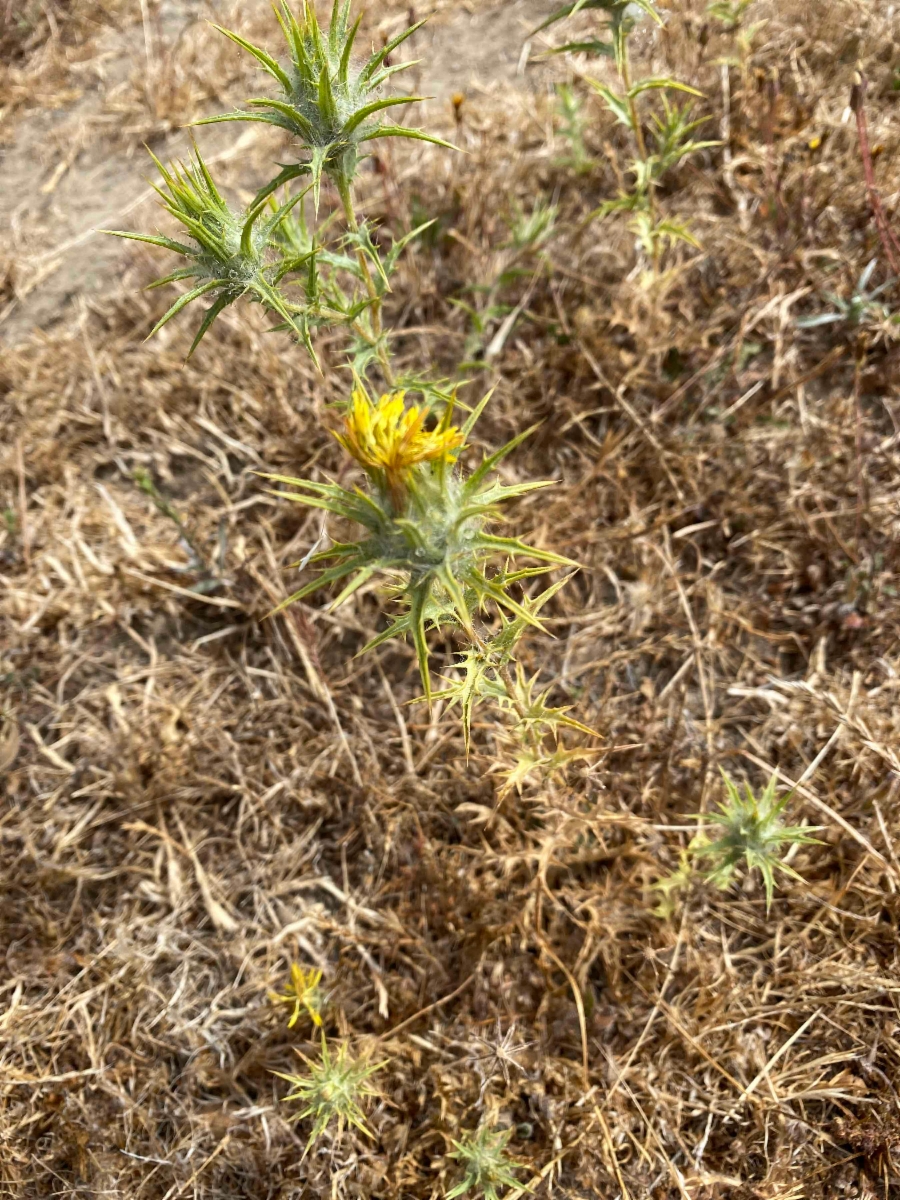
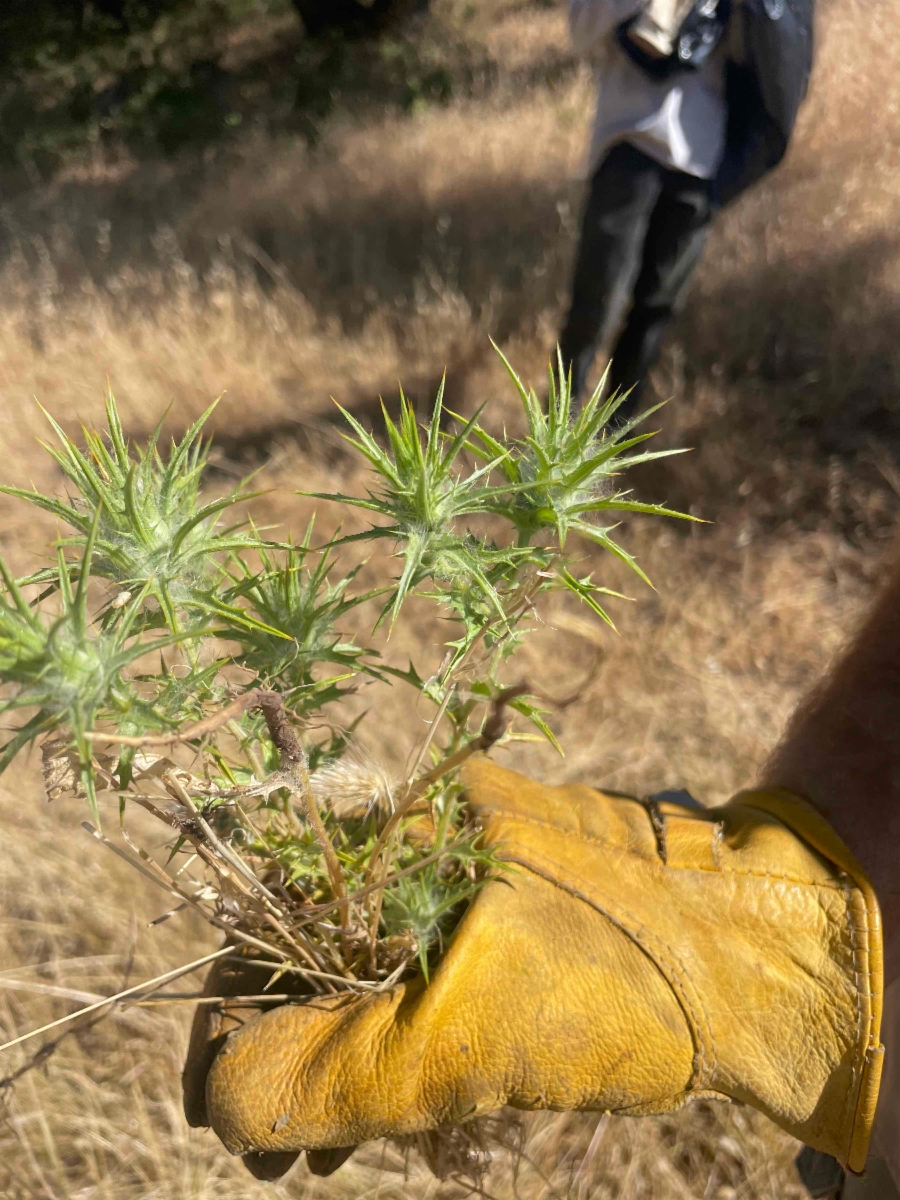
[Cal-IPC] Invasive: Carthamus lanatus (woolly distaff thistle) is a winter annual forb (family Asteraceae) found in disturbed open sites, roadsides, pastures, annual grasslands, and waste areas. Its spiny foliage can injure livestock. It is primarily found in the northern coast ranges of California.
Cal-IPC Rating High (link added by Mary Ann Machi)
[Wikipedia] Mediterranean Basin native, Noxious weed: Carthamus lanatus is a species of thistle known as woolly distaff thistle,[1] downy safflower[2] or saffron thistle. It is closely related to safflower (Carthamus tinctorius). This annual plant is a native of the Mediterranean Basin, but it is familiar in other places where it was introduced and has become a noxious weed, such as in parts of North America and southern Australia[3] with similar climates. (link added by Mary Ann Machi)
/app/up/io/58/th/io17691-0.jpg:!/app/up/io/59/th/io17738-0.jpg:!/app/up/io/69/th/io20861-1.jpg:!/app/up/mg/503/th/mg150902-0.jpg:!/app/up/mg/393/th/mg117977-0.jpg:!/app/up/io/241/th/io72469-0.jpg:!/app/up/mg/578/th/mg173427-0.jpg:!/app/up/mg/393/th/mg117977-1.jpg:!/app/up/io/69/th/io20862-0.jpg:!/app/up/io/172/th/io51791-0.jpg:!/app/up/io/430/th/io129146-0.jpg:!/app/up/io/360/th/io108298-0.jpg:!/app/up/io/236/th/io70932-0.jpg:!/app/up/mg/712/th/mg213644-0.jpg:!
2019 Lenihan Mazur:!2019 Danielle Carney:!2019 Danielle Carney:!2021 R.A. Chasey:!2020 R.A. Chasey:!2022 Lenihan Mazur:!2022 Danielle Carney:!2020 R.A. Chasey:!2019 Danielle Carney:!2021 Lenihan Mazur:!2024 Jason M. Mills:!2023 Danny Slakey:!2022 shae hopkins:!2023 Jim Xerogeanes:!
io17691:!io17738:!io20861:!mg150902:!mg117977:!io72469:!mg173427:!mg117977:!io20862:!io51791:!io129146:!io108298:!io70932:!mg213644:!
Suggested Citation
Calflora:
Information on California plants for education, research and conservation,
with data contributed by
public and private institutions and individuals.
[web application]. 2024. Berkeley, California:The Calflora Database
[a non-profit organization].Available:
https://www.calflora.org/(Accessed: 07/26/2024).





 one or more occurrences