2021 Charles Russell 2023 Morgan Stickrod 2021 Charles Russell 2020 Joey Santore 2018 Paul Aigner 2018 Paul Aigner 2021 Charles Russell 2021 Paul Aigner 2011 Vernon Smith
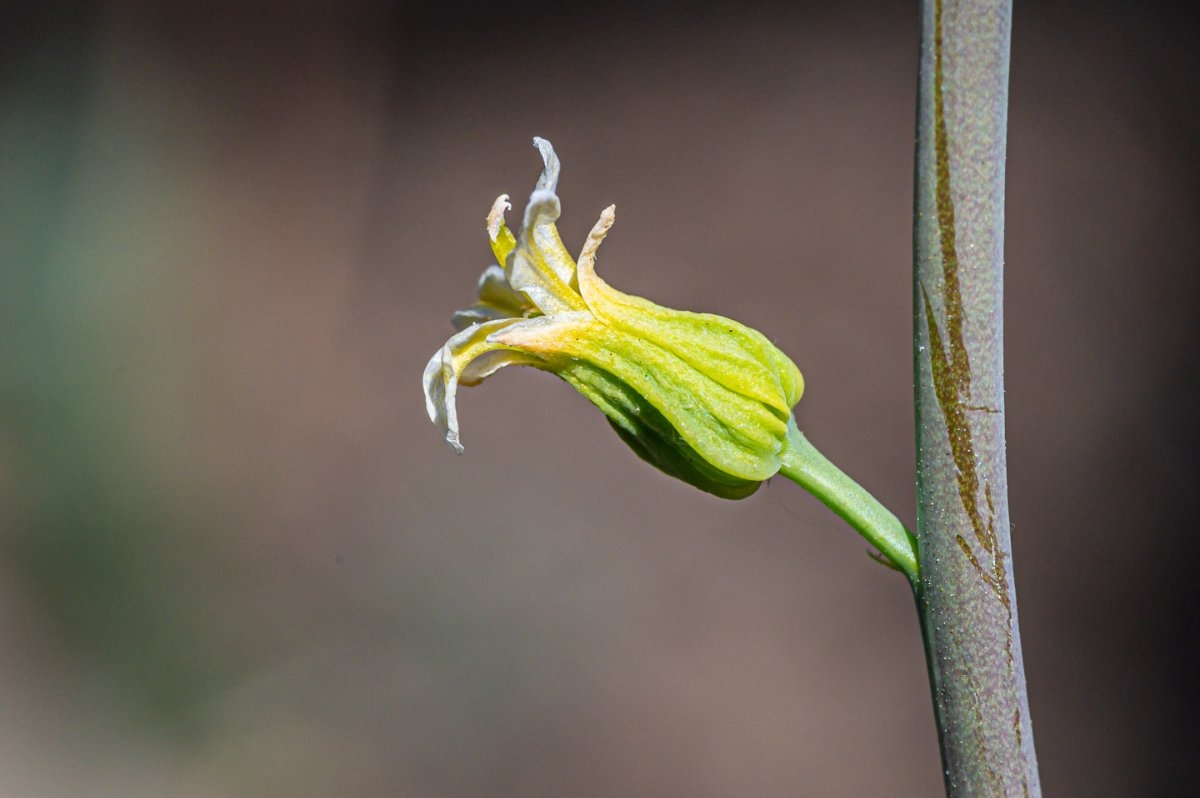
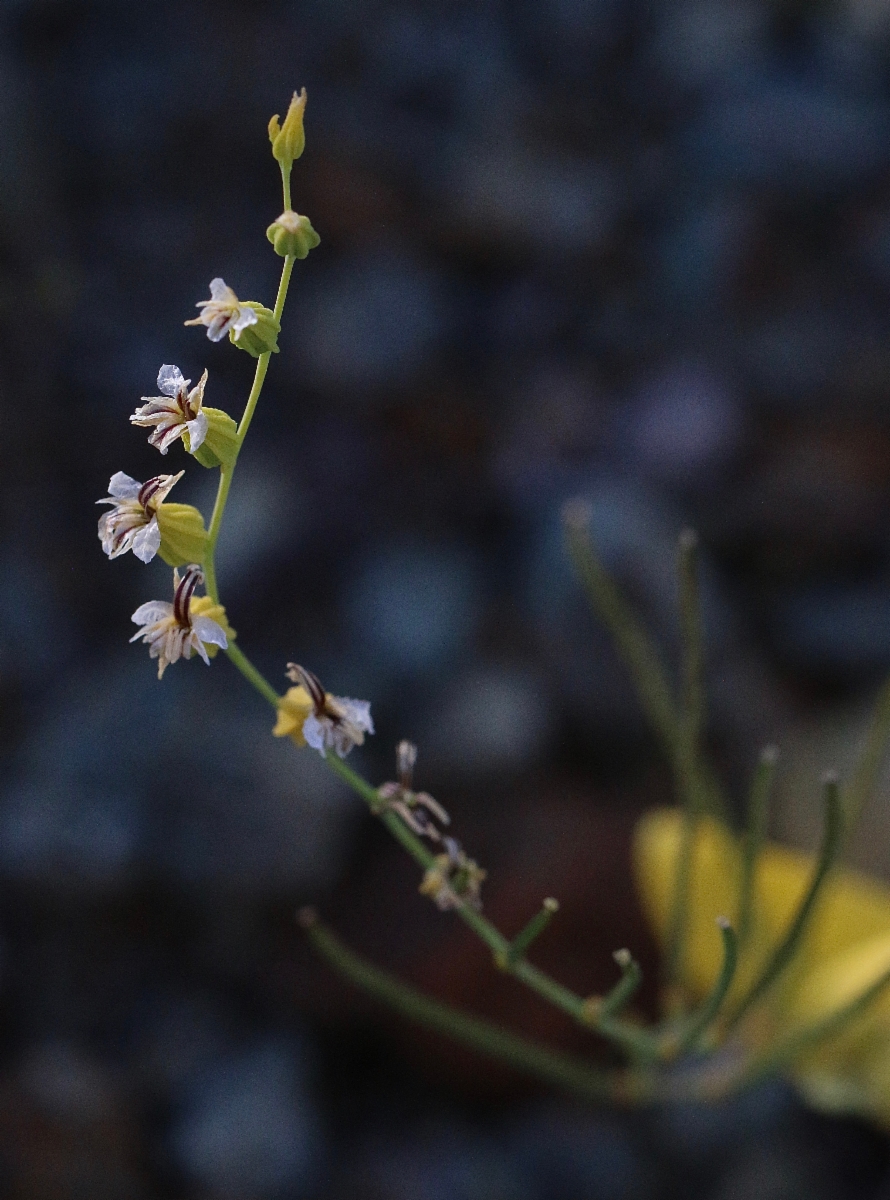
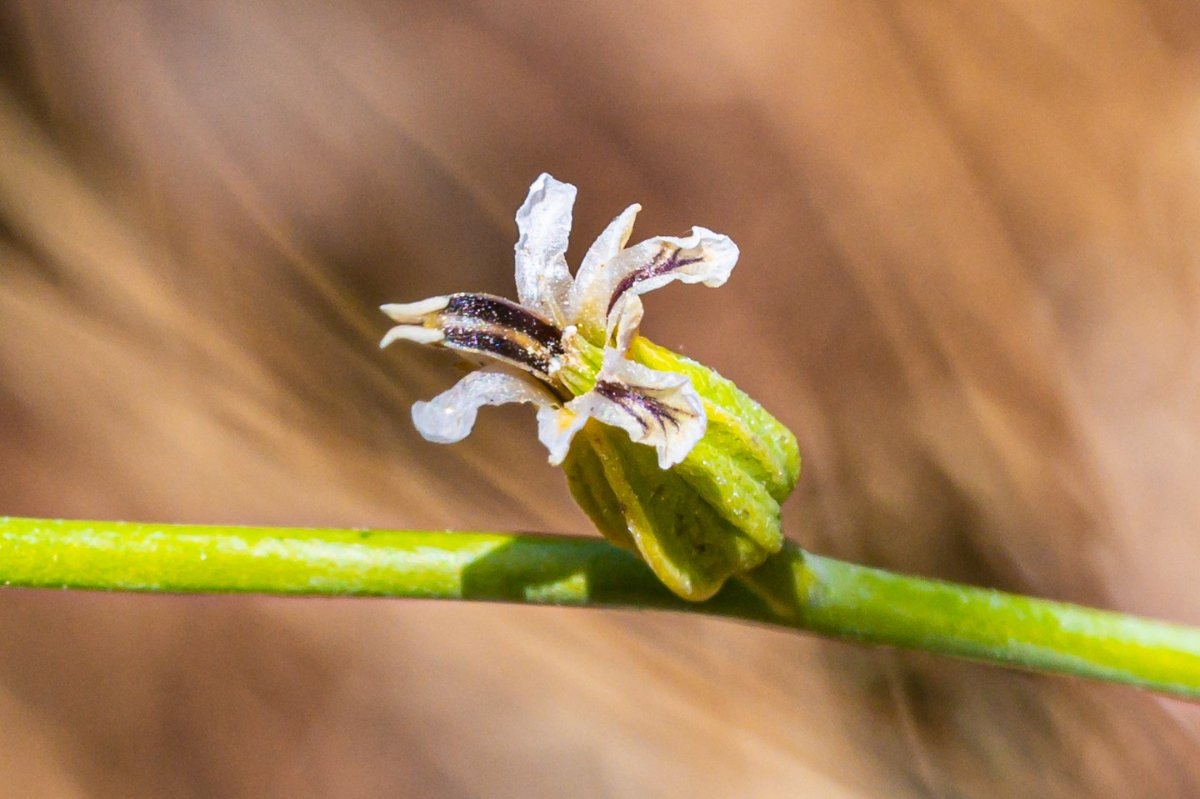
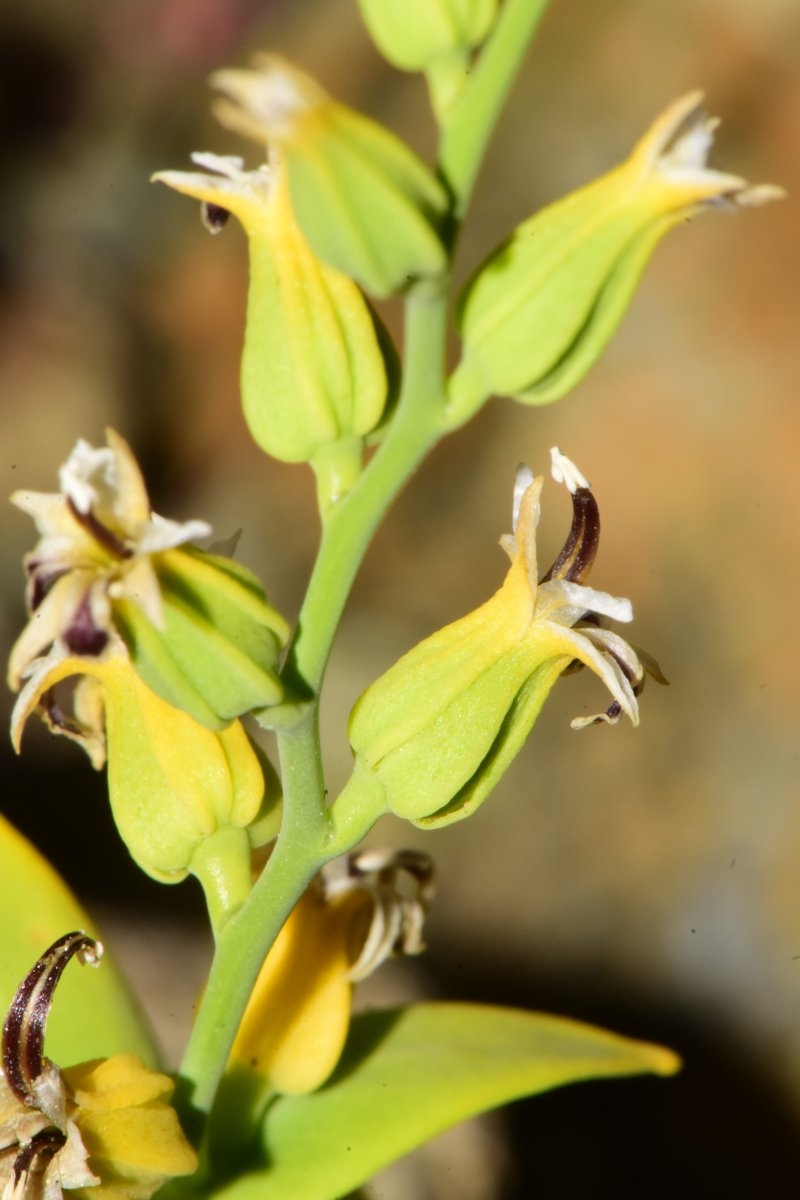
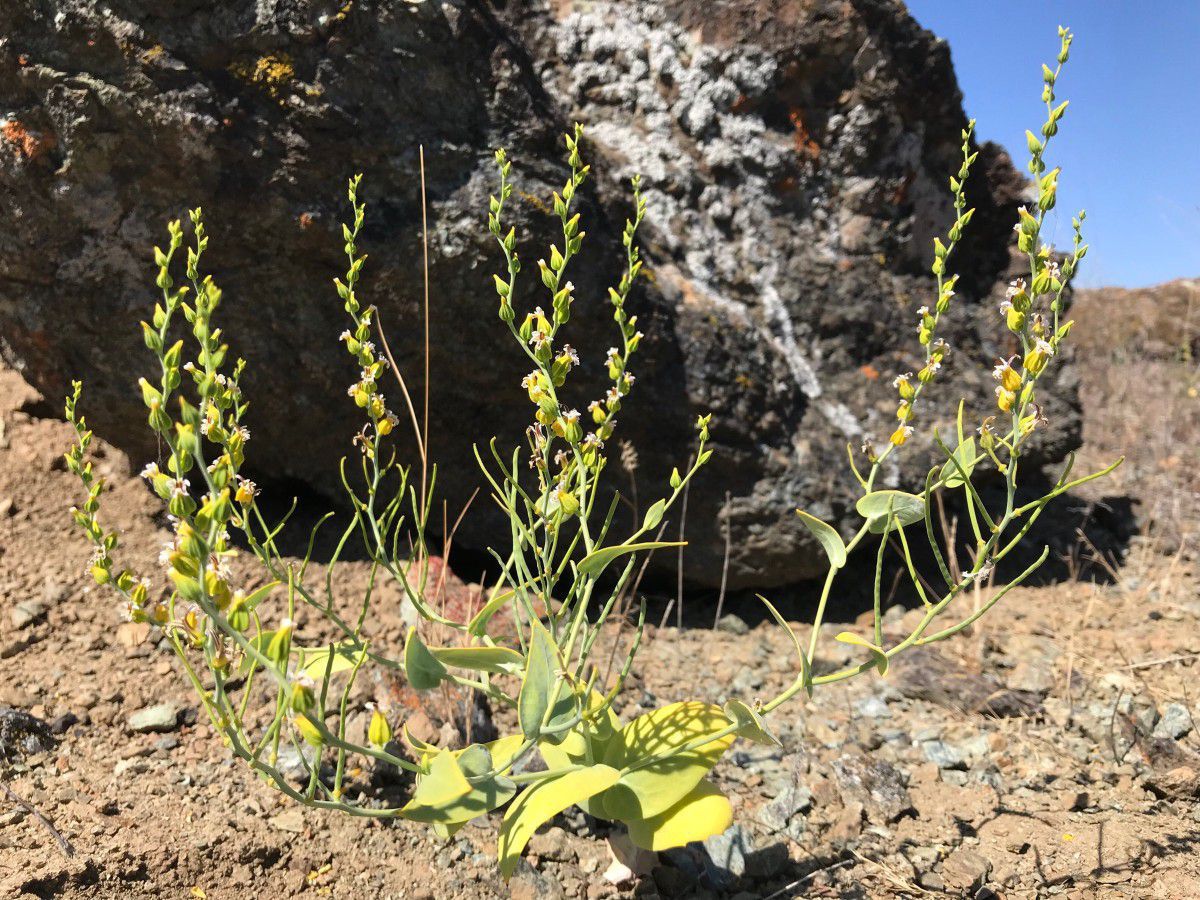
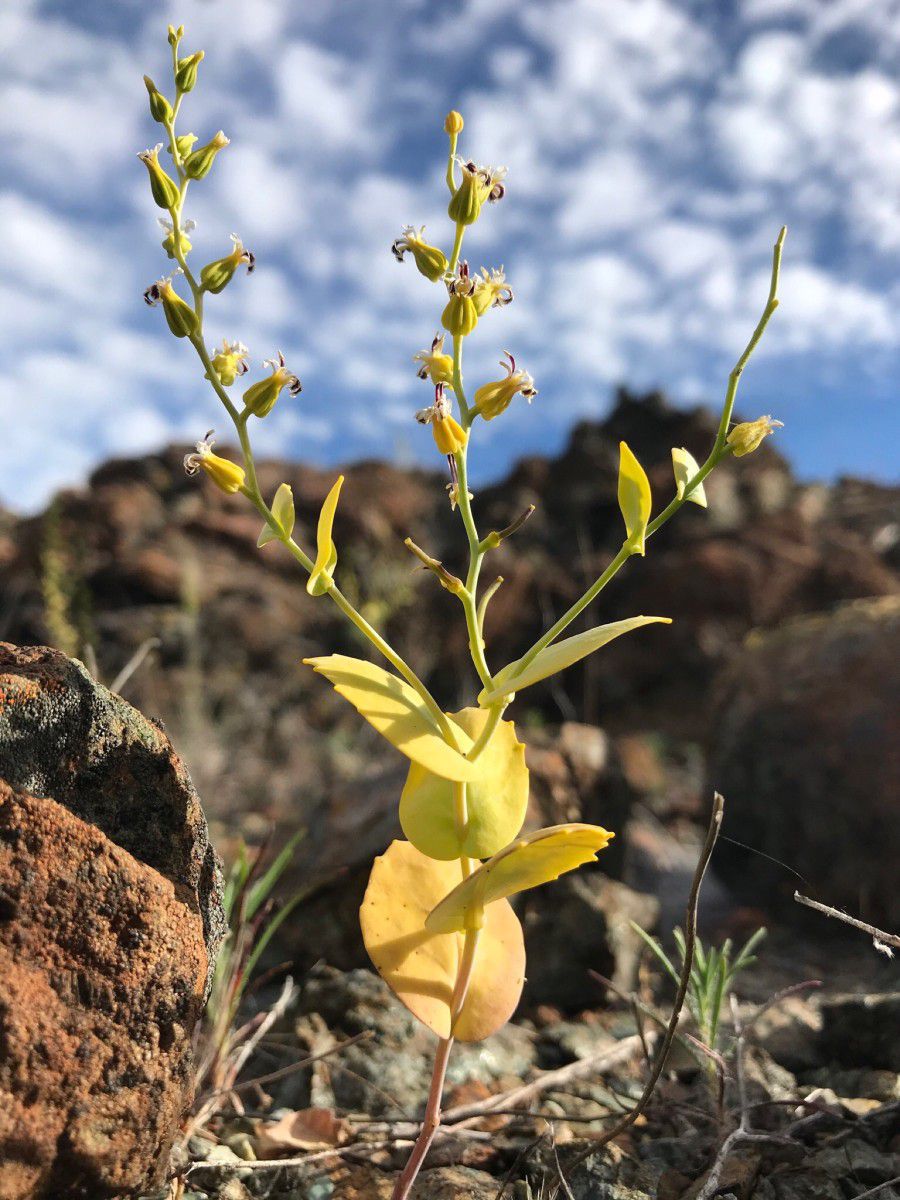
Streptanthus hesperidis is an annual herb that is native to California, and endemic (limited) to California.
[efloras.org] Description, Habitat: Pleiocardia hesperidis (Jepson) Greene; Streptanthus breweri A. Gray var. hesperidis (Jepson) Jepson
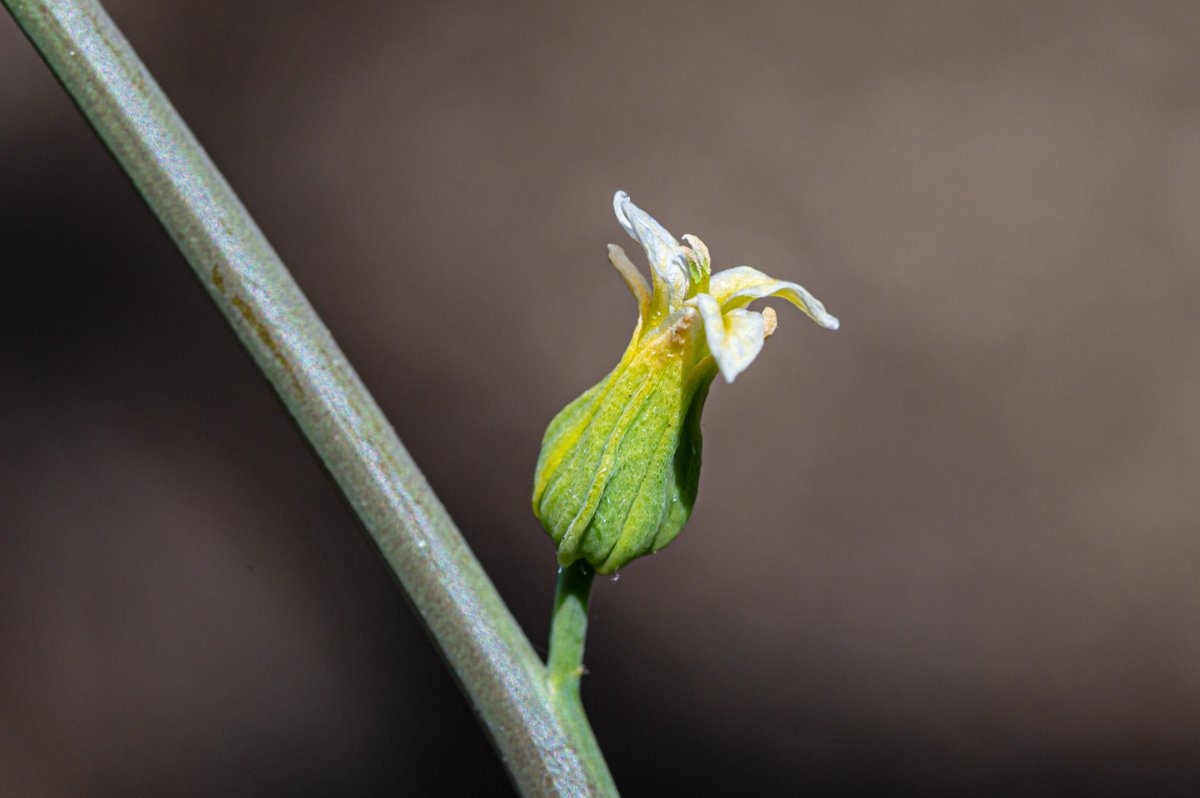
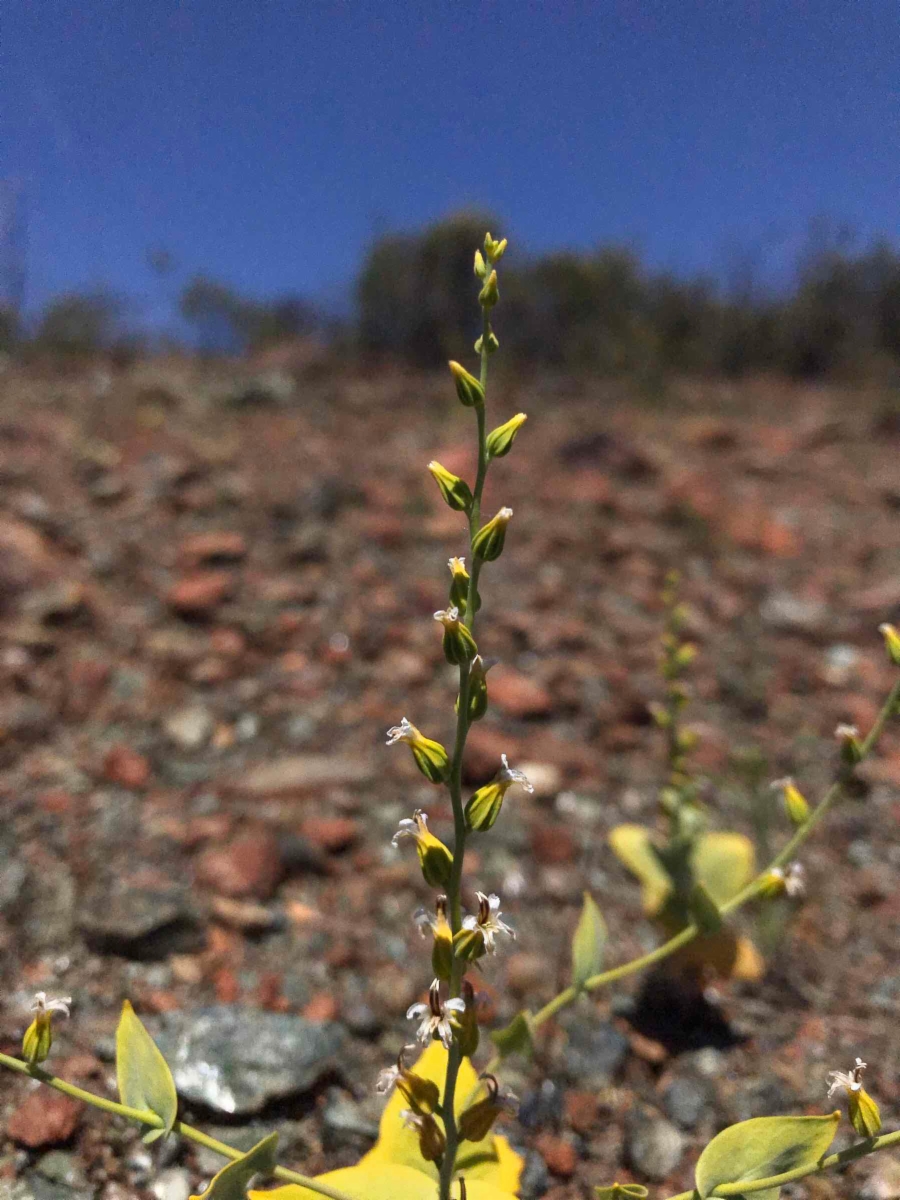
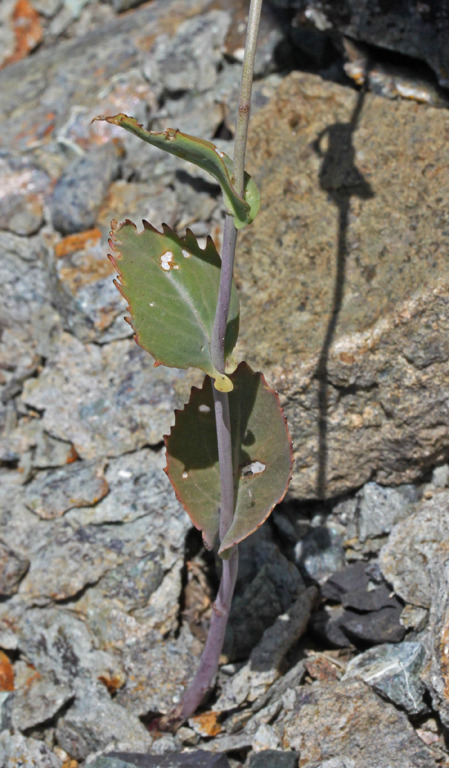
Annuals; glabrous. Stems unbranched or branched basally, 1-3 dm. Basal leaves (soon withered); not rosulate; shortly petiolate; blade broadly obovate, 2-3 cm, margins coarsely and bluntly dentate distally. Cauline leaves: blade (mostly yellowish), ovate to lanceolate, 1-4 cm × 5-15 mm, (smaller distally), base amplexicaul, margins often entire. Racemes ebracteate, (secund, rachis flexuous). Fruiting pedicels divaricate-ascending, (straight), 1-2 mm. Flowers: calyx urceolate; sepals yellow-green, (ovate-lanceolate), 5-8 mm, keeled, (apex recurved or flaring); petals whitish (with purplish veins), 6-8 mm, blade 2-3 × 1-1.3 mm, margins not crisped, claw 4-5 mm, about as wide as blade; stamens in 3 unequal pairs; filaments: abaxial pair (connate 1/2 their length), 3-5 mm, lateral pair 2-3.5 mm, adaxial pair (connate entire length, recurved), 6-9 mm; anthers: abaxial and lateral pairs fertile, 1.7-2.5 mm, adaxial pair sterile, 0.7-1.2 mm; gynophore 0.2-0.5 mm. Fruits divaricate-ascending, somewhat torulose, nearly straight to, rarely, arcuate, flattened, 3-6 cm × 0.9-1.1 mm; valves each with obscure midvein; replum straight; ovules 26-38 per ovary; style 0.1-0.3 mm; stigma entire. Seeds oblong, 1.2-1.5 × 0.6-0.8 mm; wing (0-)0.05-0.1 mm wide, distal. 2n = 28.
Flowering May-Jul. Serpentine barrens and associated openings in chaparral-oak woodland and cypress woodland; of conservation concern; 200-600 m; Calif.
Streptanthus hesperidis is known from Lake and Napa counties. R. E. Buck et al. (1993) reduced it to a variety of S. breweri, but the two are sufficiently distinct to be recognized as independent species. It differs from S. breweri by having flexuous (versus straight) raceme rachises, yellowish (versus glaucous green) foliage, smaller petals (6-8 versus 8-12 mm), and often straight (versus often arcuate) fruits. (link added by Mary Ann Machi)
/app/up/entry/310/th/93031.jpg:!/app/up/entry/544/th/163497.jpg:!/app/up/entry/344/th/103482.jpg:!/app/up/entry/159/th/47977.jpg:!/app/up/io/12/th/io3809-0.jpg:!/app/up/io/10/th/io3298-0.jpg:!/app/up/entry/310/th/93030.jpg:!/app/up/io/162/th/io48610-0.jpg:!0000 0000 0611 1048:!
2021 Charles Russell:!2023 Morgan Stickrod:!2021 Charles Russell:!2020 Joey Santore:!2018 Paul Aigner:!2018 Paul Aigner:!2021 Charles Russell:!2021 Paul Aigner:!2011 Vernon Smith:!
mu16064:!po249439:!mu19040:!mu3332:!io3809:!io3298:!mu16064:!io48610:!null:!
Suggested Citation
Calflora:
Information on California plants for education, research and conservation,
with data contributed by
public and private institutions and individuals.
[web application]. 2024. Berkeley, California:The Calflora Database
[a non-profit organization].Available:
https://www.calflora.org/(Accessed: 07/26/2024).


 one or more occurrences